Autism Spectrum Disorder (ASD) is a complex neurodevelopmental disorder characterized by a range of challenges in social interaction, communication, and behavior. With an increasing number of diagnoses worldwide, there is a profound need for effective therapies and interventions tailored to the unique needs of individuals with autism. As we delve into the intricate landscape of autism therapies, one may ponder: what happens when conventional methods fail to yield the desired outcomes? Navigating the multifaceted nature of autism interventions may present challenges, but it also opens avenues for hope and progress.
There exists a myriad of therapeutic approaches, each possessing its distinctive philosophies and methodologies. The efficacy of these interventions can vary considerably based on individual differences, necessitating a personalized approach. Let us explore some of the most prominent therapies designed to support individuals with autism.
1. Applied Behavior Analysis (ABA)
Considered one of the most widely recognized and empirically supported interventions for autism, Applied Behavior Analysis focuses on understanding and modifying behavior. ABA employs techniques such as reinforcement strategies to promote desirable behaviors while reducing maladaptive ones. With the potential to enhance social skills, improve communication, and foster independent living skills, ABA therapy is often adapted to suit the developmental needs of the individual. However, challenges may arise, particularly related to the intensity of therapies and the subjective experience of clients.
2. Speech and Language Therapy
Given that communication deficits are a hallmark of autism, Speech and Language Therapy plays a pivotal role. Therapists work collaboratively with individuals to develop effective communication skills, encompassing both verbal and non-verbal forms. Goals in speech therapy may include improving articulation, expanding vocabulary, and enhancing pragmatic language skills. The path to improved communication can be fraught with obstacles; ongoing engagement, motivation, and environmental factors can significantly influence progress.
3. Occupational Therapy (OT)
Occupational Therapy targets the development of daily living skills, addressing challenges in sensory integration and motor skills. Through tailored interventions, occupational therapists assist individuals in developing skills necessary for everyday tasks, from personal hygiene routines to social interactions. Therapy often incorporates playful activities, making it engaging and beneficial. One of the central challenges faced in occupational therapy is the vast spectrum of sensory sensitivities among individuals with autism, requiring practitioners to adopt uniquely personalized strategies.
4. Cognitive Behavioral Therapy (CBT)
Cognitive Behavioral Therapy has emerged as a valuable intervention for adolescents and adults with autism, addressing co-occurring mental health issues such as anxiety and depression. CBT empowers individuals to identify negative thought patterns and behaviors, equipping them with coping mechanisms to navigate daily challenges. Through structured guidance, it facilitates the development of emotional regulation skills. Despite its potential benefits, the application of CBT may present challenges, particularly in engaging individuals with severe cognitive impairments.
5. Social Skills Training
Social Skills Training is crucial, as social ineptitude often exacerbates feelings of isolation and distress for individuals with autism. These programs employ various techniques, such as role-playing and group activities, to improve social interaction capabilities and enhance peer relationships. However, a significant challenge remains in adequately replicating natural social environments, often leading to difficulties in generalizing skills beyond the therapeutic setting.
6. Medication Management
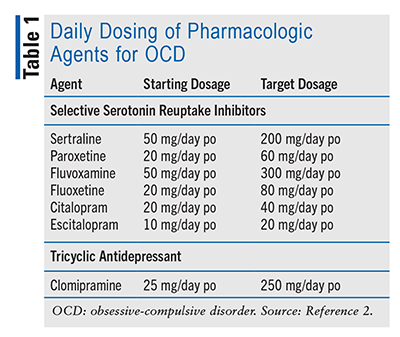
While not a direct therapy, medication can play a role in managing co-existing conditions associated with autism, such as attention deficit hyperactivity disorder (ADHD) or anxiety disorders. Psychopharmacological interventions may help manage symptoms, thereby enhancing the effectiveness of other therapeutic approaches. However, the decision to utilize medications prompts significant considerations regarding side effects, long-term implications, and the ethical paradigms surrounding their use in children.
7. Family Support and Training
Family involvement is paramount in supporting individuals with autism. Educating families about the disorder equips them with the tools necessary to provide consistent support and understanding. Training programs designed for parents can enhance skills to effectively communicate and advocate for their children. An obstacle within this domain is the need for ongoing support; families may grapple with emotional fatigue and the complexities of their child’s behaviors.
8. Complementary and Alternative Therapies
In addition to traditional therapeutic modalities, many families explore complementary and alternative therapies, such as art therapy, music therapy, and animal-assisted therapy. These approaches can offer unique avenues for expression and engagement, promoting emotional well-being. However, challenges arise, particularly concerning the lack of empirical support and the variability in individual responses to these interventions. Families must navigate the fine line between exploring innovative therapies and remaining anchored in scientifically validated treatments.
As we reflect on the diverse landscape of therapies and interventions for autism, it becomes evident that a multifaceted approach is essential. Collaboration among therapists, educators, families, and the individuals themselves is paramount to foster growth and development. Each therapy offers unique benefits and potential hurdles, presenting the challenge of discerning which paths to pursue for optimal outcomes. Ultimately, through persistence, understanding, and innovative approaches, the journey toward unlocking the full potential of individuals with autism can be a rewarding endeavor filled with hope and possibilities.