Have you ever watched a middle school cafeteria in motion? The clatter of trays, the hum of overlapping conversations, the way laughter can either warm a room or freeze someone in their tracks. Now, imagine navigating that space with the world feeling like it’s speaking in a language you only half-understand—where a sideways glance isn’t just a glance, but a potential storm. For autistic students transitioning into middle school, this isn’t just a scene from a coming-of-age movie. It’s their daily reality. And in that reality, bullying isn’t just a rite of passage—it’s a silent epidemic, one that thrives in the shadows of crowded hallways and unmonitored playgrounds.
Middle school is supposed to be a crucible of growth, a place where identity begins to take shape. But for autistic adolescents, it often becomes a minefield of social missteps and sensory overload. Anxiety isn’t just a side dish to this experience—it’s the main course, served piping hot and relentless. How do we bridge the gap between the neurotypical world and the neurodivergent mind when the very environment meant to nurture growth feels like a gauntlet designed to exclude?

The Middle School Maze: Where Autism Meets Adolescence
Middle school is a liminal space—neither childhood nor adulthood, but a threshold where everything feels magnified. For autistic students, this threshold is often lined with invisible barriers. Social cues, which many take for granted, become cryptic hieroglyphs. A joke that lands with laughter for one student might land with confusion for another. A well-intentioned comment about a favorite hobby could be misinterpreted as bragging. The result? A perfect storm for misunderstanding, and in some cases, deliberate exclusion.
Autistic students may struggle with pragmatic language—the ability to use language in socially appropriate ways. They might speak in monotone voices, avoid eye contact, or take longer to process verbal exchanges. These traits, while not inherently negative, become targets in an environment where conformity is king. The cafeteria table that’s “reserved” for the popular kids isn’t just a seat—it’s a social contract. Breaking that contract, even unintentionally, can lead to whispers, exclusion, or worse.
Sensory sensitivities add another layer of complexity. The fluorescent lights that hum overhead, the smell of cafeteria food wafting through the air, the cacophony of voices—these aren’t just background noise. They’re assaults on the nervous system. A student overwhelmed by sensory input may retreat inward, becoming an easy target for bullies who mistake withdrawal for weakness. Or worse, they may react in ways that invite ridicule, creating a cycle of misunderstanding and harm.
Bullying: The Invisible Wound in Plain Sight
Bullying in middle school isn’t always the overt shoving or name-calling we picture. It’s often more insidious—a whispered insult in the locker room, a group of students “jokingly” mimicking a peer’s speech pattern, or the silent treatment meted out in the form of ignored invitations. For autistic students, these behaviors aren’t just hurtful; they’re destabilizing. They chip away at self-esteem, erode trust in peers, and can lead to long-term psychological scars.
Research shows that autistic students are two to three times more likely to experience bullying than their neurotypical peers. The reasons are multifaceted. Autistic students may lack the social scripts to navigate conflict, making them vulnerable to manipulation. They might also struggle to recognize when they’re being targeted, dismissing harmful behavior as “just how things are.” And in a culture where “just kidding” is a shield for cruelty, autistic students often bear the brunt of jokes they don’t understand.
But bullying isn’t just about the actions of others—it’s about the environment that allows it to flourish. Middle schools, with their sprawling campuses and transient student bodies, are breeding grounds for anonymity. A bully can disappear into the crowd, leaving their victim isolated and unsupported. Teachers, stretched thin by large class sizes, may miss the subtle signs of distress. Parents, unaware of the daily microaggressions, might only hear about the problem when it’s already a crisis.

Anxiety: The Shadow That Follows
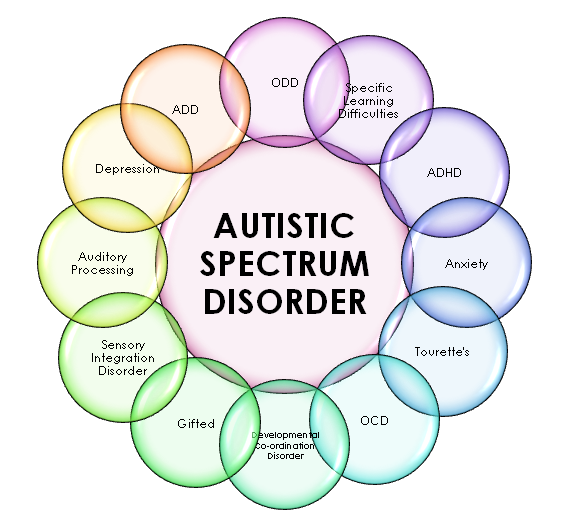
Anxiety in middle school isn’t a fleeting worry—it’s a chronic companion. For autistic students, it’s not just about the fear of failing a test or disappointing a teacher. It’s the dread of walking into a classroom where the social dynamics feel like a puzzle missing half its pieces. It’s the anticipation of a fire drill that might trigger a meltdown. It’s the constant calculation of risks—Do I sit here? Will they laugh at me? What if I say the wrong thing?
Anxiety manifests in different ways. Some students may become hypervigilant, scanning the room for threats like a soldier on patrol. Others may shut down entirely, retreating into silence or repetitive behaviors as a coping mechanism. Sleep disturbances, stomachaches, and headaches are common, as the body’s stress response becomes a relentless drumbeat. And in a world where mental health is still stigmatized, these symptoms are often dismissed as “just a phase” or “teen drama.”
The connection between bullying and anxiety is cyclical. Bullying exacerbates anxiety, and anxiety makes students more vulnerable to further bullying. A student who freezes during a confrontation may be seen as “weird” or “easy prey.” A student who melts down in response to sensory overload may be labeled “dramatic” or “attention-seeking.” The narrative around their behavior shifts from one of understanding to one of judgment, further deepening the isolation.
Strategies for Support: Building Bridges, Not Barriers
So how do we create a middle school experience that doesn’t feel like a gauntlet for autistic students? The answer lies in a combination of systemic change, individual support, and community education.
Systemic Change: Schools must move beyond reactive measures and implement proactive strategies. This includes comprehensive anti-bullying policies that specifically address disability-based harassment. It means training staff not just on the signs of bullying, but on the nuances of neurodiversity. A teacher who recognizes that a student’s “disruptive” behavior is actually a sensory meltdown is better equipped to intervene effectively.
Individual Support: Autistic students thrive when they have a safety net. This could mean assigning a peer mentor who understands neurodiversity, or creating a quiet space where students can retreat when overwhelmed. It could also involve social skills training tailored to the student’s specific needs—teaching them how to recognize sarcasm, for example, or how to advocate for themselves in a way that feels authentic to them.
Community Education: The most effective interventions are those that involve the entire community. Workshops for students can demystify autism, replacing stereotypes with real understanding. Parents can be educated on how to support their children without inadvertently adding to their stress. And most importantly, autistic students themselves should be given a voice in shaping the solutions that affect them.

From Surviving to Thriving: The Path Forward
Middle school doesn’t have to be a minefield. With the right support, autistic students can not only survive but thrive. They can learn to navigate social complexities without losing themselves in the process. They can find their tribe—whether that’s a group of like-minded peers or a single friend who “gets it.” And they can develop resilience, not by enduring hardship, but by being met with understanding and compassion.
The goal isn’t to make autistic students conform to neurotypical expectations. It’s to create a world where their differences are not just tolerated, but celebrated. Where a student who stims in the hallway isn’t seen as “weird,” but as someone who expresses joy in their own way. Where a student who takes literal interpretations of language isn’t ridiculed, but appreciated for their honesty. Where anxiety isn’t dismissed as “just part of growing up,” but addressed with the seriousness it deserves.
Middle school is a crucible, but it doesn’t have to be a crucible of suffering. It can be a place of growth, discovery, and connection—if we’re willing to do the work. The question isn’t whether we can afford to make these changes. It’s whether we can afford not to.