Have you ever wondered what it would be like to navigate the world with a mind wired differently—where the hum of a fluorescent light feels like a jackhammer, where a single spoken word unfolds like an unsolvable puzzle, and where the simplest social cues are written in an ancient, forgotten language? For individuals with autism, these aren’t hypotheticals; they’re daily realities. But what if technology could act as a translator—not just for words, but for the entire sensory and social landscape? Welcome to 2026, where assistive technology isn’t just a tool; it’s a bridge to connection, independence, and self-expression. Let’s explore the most transformative innovations shaping the future for autistic individuals today.
The Rise of Emotion-Sensing Wearables: Decoding the Unspoken
Imagine wearing a device so attuned to your physiology that it can detect a spike in anxiety before you even realize it. In 2026, emotion-sensing wearables—like smart wristbands and chest patches—use advanced biometric tracking to monitor heart rate variability, skin conductance, and even subtle facial micro-expressions. These devices translate internal emotional states into gentle vibrations, visual cues, or even haptic feedback, offering real-time emotional coaching.
For autistic individuals who may struggle with interoception—the ability to sense internal body signals—this technology acts as a lifeline. A student in a bustling classroom might receive a subtle pulse from their wristband when frustration begins to build, prompting them to take a breath or step away. Meanwhile, a professional navigating a networking event could glance at their smartwatch to see a calm-inducing animation bloom across the screen. The result? Fewer meltdowns, more confidence, and a newfound sense of agency over one’s emotional landscape.
Augmented Reality Social Scripts: Rehearsing the Unscripted
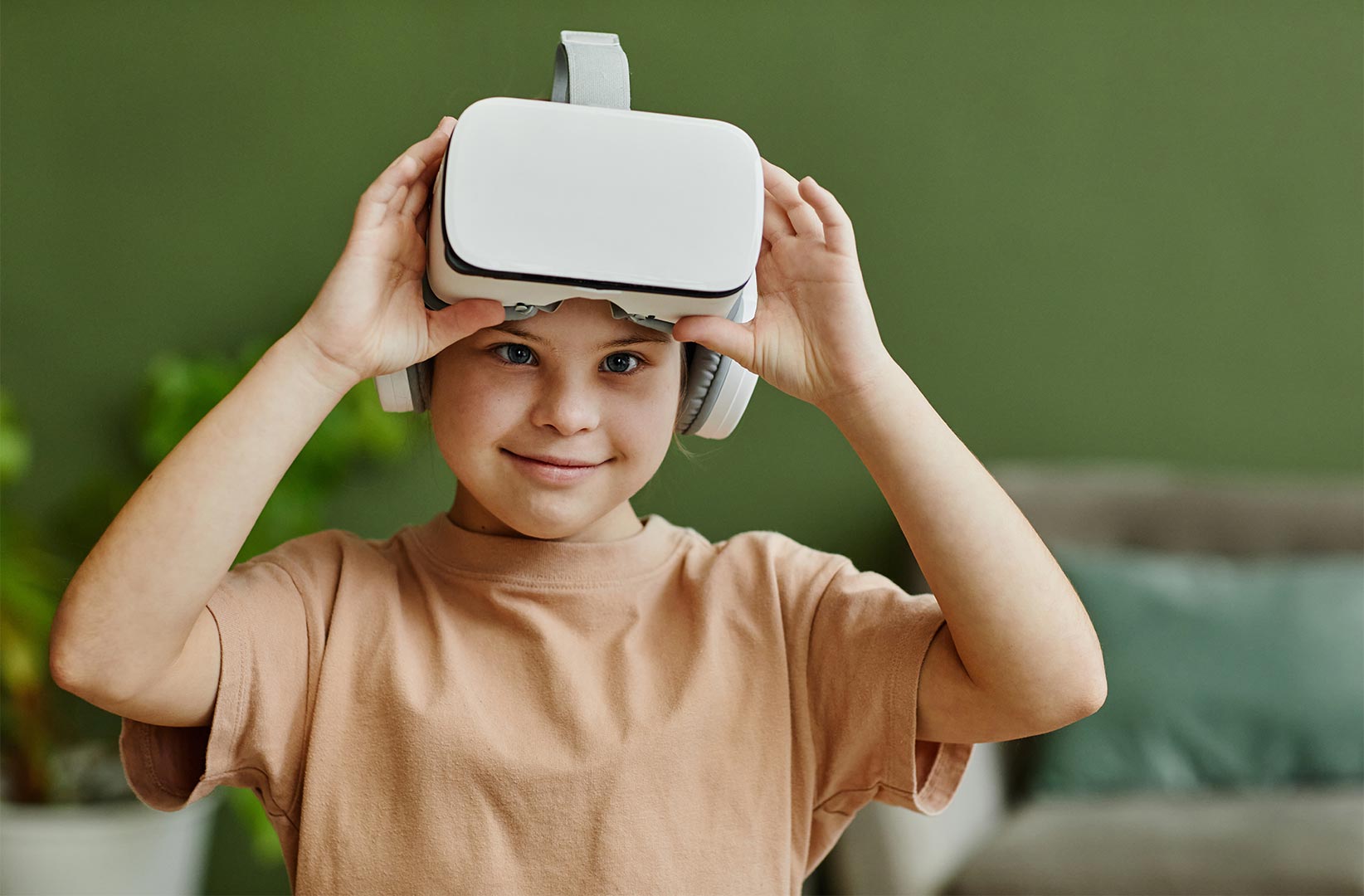
Social interactions are often like improvisational theater—fast-paced, unpredictable, and riddled with unspoken rules. For autistic individuals, this can feel like being handed a script in a language they’ve never studied. Enter augmented reality (AR) social scripts, which overlay real-time guidance onto the physical world. Using smart glasses or AR-enabled apps, users receive contextual cues during conversations: a gentle glow around a speaker’s face to indicate it’s their turn to talk, or a floating icon suggesting they might want to ask a follow-up question.
These tools don’t just provide instructions; they demystify the subtleties of body language and tone. A teenager practicing a job interview might see a virtual mentor nodding encouragingly when they pause too long, or a red highlight around their own fidgeting hands, prompting them to still them. The technology adapts to the user’s pace, offering support without judgment. Over time, these augmented interactions help build neural pathways for social intuition, making real-world exchanges feel less like a high-stakes performance and more like a familiar dance.
AI-Powered Speech and Language Companions: Giving Voice to Silence
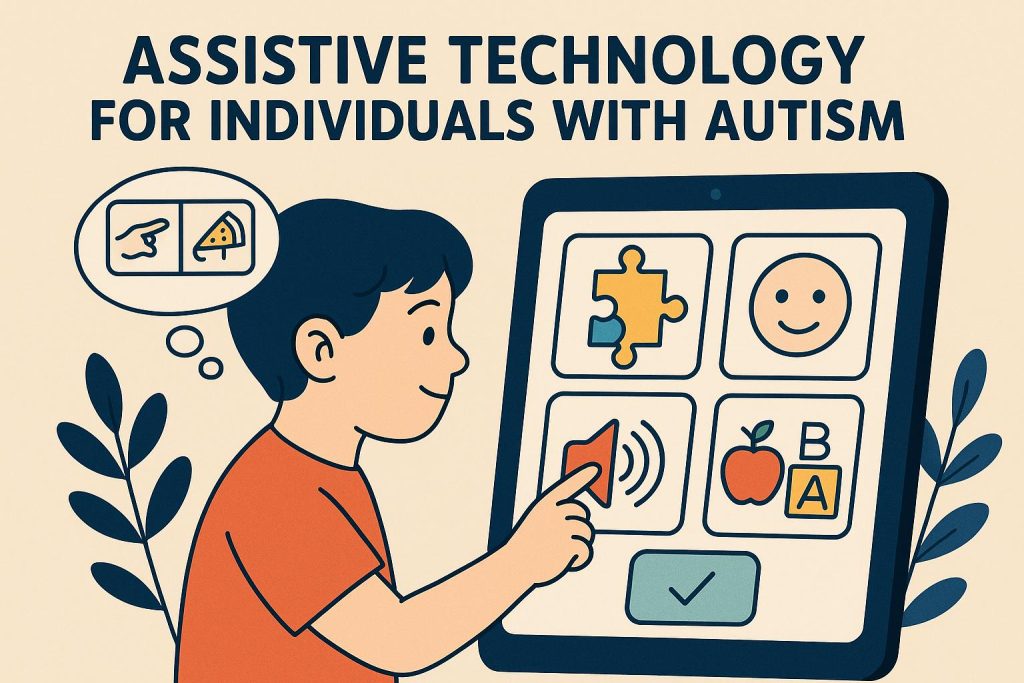
Communication is the cornerstone of human connection, yet for nonverbal or minimally verbal autistic individuals, expressing needs, thoughts, and emotions can feel like shouting into a void. In 2026, AI-driven speech companions are changing that equation. These tools—ranging from wearable devices to smartphone apps—use predictive language models to translate subtle gestures, eye movements, or even brainwave patterns into coherent speech.
One standout innovation is the NeuroLingo Band, a headset that reads neural signals via non-invasive EEG sensors. When the user focuses on a specific object or emotion, the device generates a synthesized voice output tailored to their vocal characteristics. For a child who has never spoken, hearing their own “voice” for the first time—even if it’s AI-generated—can be a revelation. Meanwhile, adults with autism who experience speech delays can use these companions to participate in meetings, order coffee, or share stories with loved ones, reclaiming a sense of autonomy.
Sensory Regulation Pods: A Sanctuary in a Stimulating World
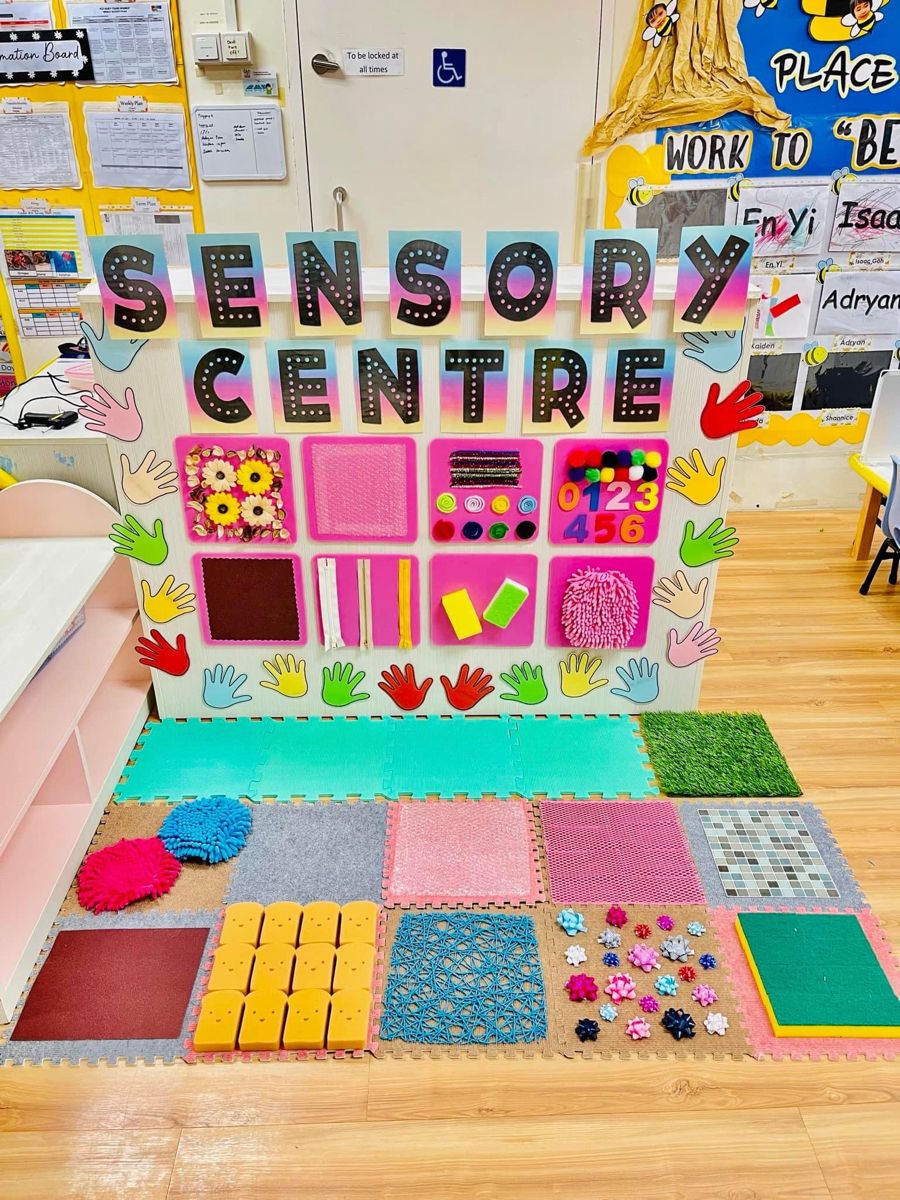
Sensory overload isn’t just uncomfortable—it’s exhausting. In 2026, portable sensory regulation pods are revolutionizing how autistic individuals manage their environments. These compact, pod-like structures use adaptive lighting, sound-dampening materials, and even scent diffusion to create personalized calming spaces. Some models are wearable, like a hooded cloak lined with weighted fabric and embedded with gentle vibration nodes, while others are freestanding booths in schools, offices, or public spaces.
The technology behind these pods is nothing short of ingenious. AI algorithms analyze the user’s biometric data in real time, adjusting the pod’s environment to their needs—lowering the brightness if their pupils dilate, introducing white noise if their heart rate spikes, or releasing a familiar scent (like lavender or citrus) to trigger relaxation. For a student overwhelmed by a noisy cafeteria, stepping into a regulation pod for five minutes can mean the difference between a meltdown and a productive afternoon. These pods aren’t just tools; they’re lifelines in a world that often feels too loud, too bright, and too fast.
The Challenge of Over-Reliance: Balancing Tech and Human Connection
With all these advancements, it’s tempting to envision a future where technology handles every challenge. But what happens when the tools we rely on become crutches? The risk of over-reliance is real. A child who depends entirely on an emotion-sensing wristband may struggle to develop their own interoceptive awareness. An adult who outsources their social cues to an AR script might find themselves lost when the technology fails or isn’t available.
The key lies in intentional integration. Assistive technology should empower, not replace. It’s about using these tools to build skills, not bypass them. For example, a speech companion might help a nonverbal individual communicate in the moment, but the long-term goal is to gradually reduce reliance as natural speech develops. Similarly, sensory pods should be a temporary refuge, not a permanent escape. The ultimate aim? To create a world where technology fades into the background, leaving behind only the confidence and independence it helped cultivate.
Looking Ahead: A Future of Inclusive Innovation
As we peer into the horizon of 2026, one thing is clear: assistive technology for autism is no longer about fixing what’s “wrong.” It’s about unlocking what’s possible. These innovations aren’t just changing lives; they’re redefining what it means to be human in a world that often fails to accommodate neurodiversity.
Yet, the work is far from over. Accessibility remains a hurdle—cost, availability, and cultural stigma still exclude many from these life-changing tools. The next frontier lies in democratizing technology, ensuring that every autistic individual, regardless of geography or socioeconomic status, can benefit from these advancements. It’s a challenge worth tackling, one byte at a time.
So, as you navigate your own world today, spare a thought for the silent symphonies playing out in the minds of those around you. The tools of tomorrow aren’t just for the future—they’re for the people who need them right now. And with each innovation, we inch closer to a world where no mind is left unheard.