Autism and standardized testing exist in a complex, often fraught relationship—one that reveals as much about the limitations of conventional assessment as it does about the unique cognitive profiles of neurodivergent learners. For many autistic students, the rigid structure of standardized tests can feel like an exercise in navigating a labyrinth designed for someone else’s cognitive map. The discrepancy between their potential and the way that potential is measured isn’t just a matter of fairness; it’s a reflection of deeper systemic assumptions about how knowledge is acquired, processed, and demonstrated. This tension underscores the need for thoughtful accommodations, but it also invites a broader reconsideration of what standardized testing is meant to achieve—and whether it’s the right tool for every learner.
The Cognitive Dissonance of Standardized Testing for Autistic Students
Standardized tests are built on the premise of uniformity—same questions, same time limits, same format for all test-takers. Yet autistic individuals often process information in ways that defy this homogeneity. Executive function challenges, sensory sensitivities, and atypical communication styles can transform what should be a straightforward task into a series of obstacles. A student who excels in pattern recognition or hyperfocused analytical thinking may stumble over the arbitrary pacing of a test, not due to a lack of ability, but because the medium itself is misaligned with their cognitive rhythm. The frustration isn’t merely academic; it’s existential. When a test measures not knowledge but compliance with an unspoken set of rules, the message to autistic students can feel punitive rather than evaluative.
Consider the experience of a student who thrives in open-ended problem-solving but freezes when confronted with multiple-choice questions that rely on rapid, intuitive leaps. The format demands a kind of mental agility that privileges those who can “think fast” over those who “think deep.” For autistic learners, whose strengths often lie in precision, detail orientation, or systematic reasoning, this can create a paradox: they may perform poorly on tests that claim to measure their abilities, not because they lack those abilities, but because the assessment tool is ill-suited to reveal them. The cognitive dissonance here isn’t just between the student and the test—it’s between the test’s design and the reality of neurodivergent cognition.
Accommodations That Bridge the Gap—or Widen It
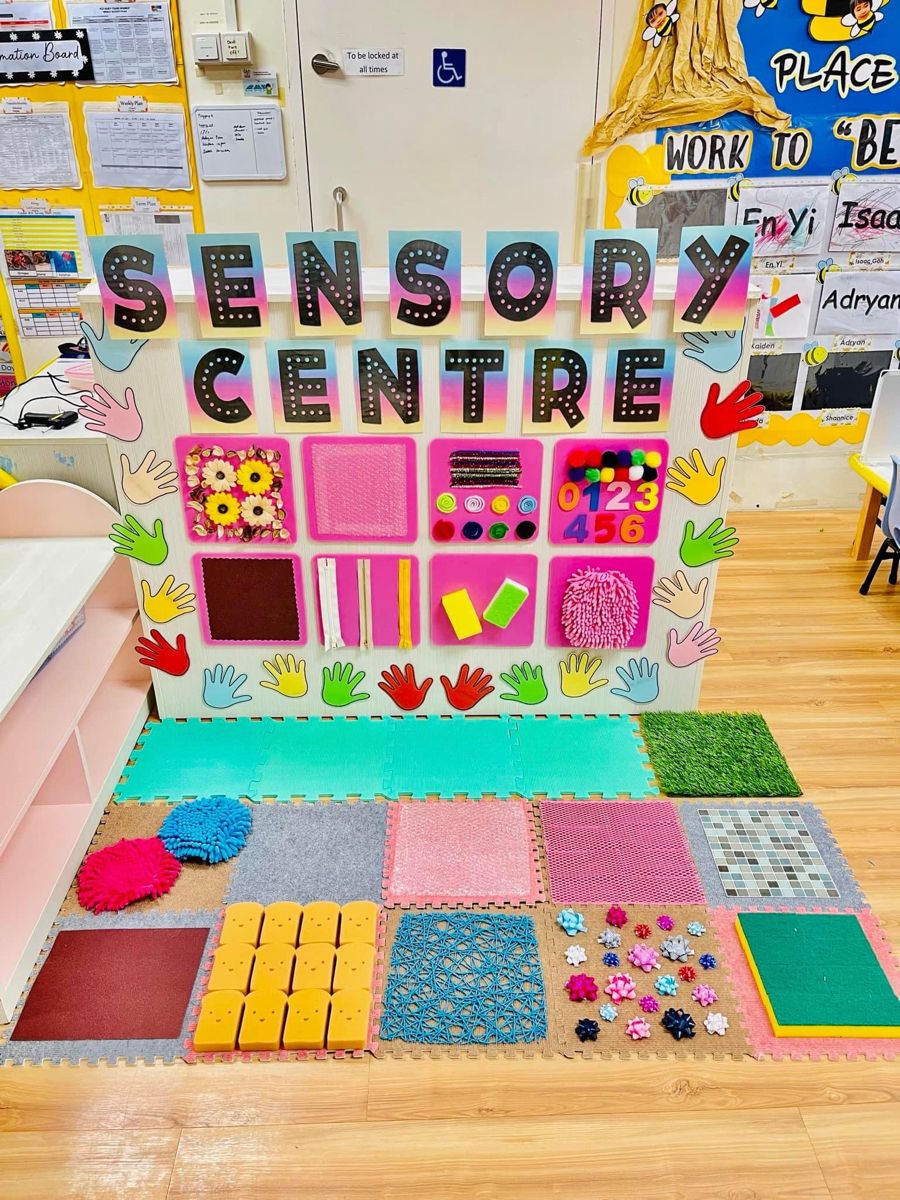
In theory, accommodations exist to level the playing field. Extended time, quiet testing environments, or the use of assistive technology are meant to mitigate barriers that aren’t related to the content being tested. Yet in practice, these accommodations often fall short of addressing the root of the problem. Extended time, for example, may help a student with slow processing speed, but it does nothing to alleviate the anxiety triggered by sensory overload in a fluorescent-lit testing room. Similarly, a student who relies on verbal reasoning might benefit from oral administration of the test, but only if the proctor is trained to recognize and respond to their communication style without judgment.
Some accommodations, while well-intentioned, can inadvertently reinforce the very structures that marginalize autistic students. Take the use of a calculator for math sections. For a student who struggles with fine motor skills or visual-spatial reasoning, this tool is invaluable. But if the test’s design assumes mental computation as a proxy for mathematical fluency, the accommodation becomes a Band-Aid on a systemic wound. The deeper issue isn’t the lack of a calculator; it’s the assumption that speed and accuracy in basic arithmetic are the sole indicators of mathematical competence. Accommodations must do more than patch over symptoms—they must challenge the assumptions underlying the assessment itself.
Another critical but often overlooked accommodation is the provision of clear, unambiguous instructions. Autistic students frequently benefit from explicit, step-by-step guidance, yet many standardized tests deliver instructions in dense, jargon-heavy prose. The failure here isn’t in the student’s ability to follow directions, but in the test’s inability to communicate them in a way that aligns with neurodivergent processing. This isn’t a minor oversight; it’s a fundamental misalignment between the tool and the user. When instructions are delivered in a language that feels like a riddle, the test ceases to measure academic ability and instead becomes a test of deciphering the tester’s expectations.
The Myth of Objectivity in Standardized Assessment
Standardized tests are often touted as objective measures of ability, free from the biases that plague subjective evaluations. Yet this objectivity is an illusion, particularly when it comes to autistic students. The very structure of these tests embeds cultural and cognitive assumptions that privilege certain ways of thinking over others. A question that assumes familiarity with colloquial language or pop culture references disadvantages students who process information more literally or who come from different linguistic backgrounds. For autistic students, whose language use may be precise but non-conventional, these biases can be magnified. A test that rewards quick, intuitive answers over deliberate, analytical ones doesn’t just measure knowledge—it measures conformity to a narrow cognitive style.
Moreover, the pressure to perform within rigid time constraints can distort the results entirely. Autistic students often need time to transition between tasks, to process instructions, or to manage the emotional toll of high-stakes testing. When a test measures not just what a student knows, but how quickly they can retrieve and deploy that knowledge under stress, the results become a commentary on endurance rather than aptitude. This is particularly troubling given that many autistic individuals experience executive dysfunction, which can make sustained attention and task-switching uniquely challenging. The assumption that speed equals competence is a relic of an industrial-era mindset, one that has no place in a modern understanding of neurodiversity.
Alternatives That Honor Diverse Cognitive Profiles
If standardized testing is ill-equipped to capture the abilities of autistic students, what alternatives exist? One promising approach is the use of portfolio assessments, where students compile evidence of their learning over time through projects, essays, or presentations. This method allows for a more nuanced evaluation of skills like creativity, persistence, and depth of understanding—qualities that standardized tests often overlook. For autistic students who excel in hands-on or visual-spatial tasks, portfolios can provide a platform to demonstrate their strengths in ways that written tests cannot. The key here is flexibility: the assessment must adapt to the student, not the other way around.
Another alternative is competency-based education, which focuses on mastery of specific skills rather than rote memorization or timed performance. In this model, students progress only when they’ve demonstrated true understanding, allowing for the kind of iterative learning that many autistic individuals thrive in. This approach also reduces the pressure of high-stakes testing, replacing it with a more organic, growth-oriented evaluation process. For students who struggle with the performative aspects of standardized tests, competency-based assessments can feel like a breath of fresh air—an acknowledgment that learning isn’t a sprint, but a journey.
Project-based learning offers yet another pathway. By engaging students in real-world problems that require sustained focus and interdisciplinary thinking, these projects can reveal abilities that standardized tests would never capture. An autistic student who designs a complex model of a sustainable city, for example, might demonstrate advanced skills in systems thinking, engineering, and environmental science—none of which would be measured in a traditional test. The beauty of project-based learning is that it doesn’t just accommodate neurodivergent students; it celebrates their strengths, turning what might otherwise be seen as deficits into assets.

Rethinking the Purpose of Assessment
The conversation about autism and standardized testing ultimately forces us to ask a fundamental question: what is the purpose of assessment? If it’s to rank students, to sort them into categories of “success” and “failure,” then standardized tests may serve that function—albeit imperfectly. But if the goal is to understand what each student knows and can do, then the current system is woefully inadequate. For autistic students, the mismatch between their abilities and the way those abilities are measured isn’t just an inconvenience; it’s a barrier to recognition, to opportunity, and to self-worth.
This isn’t to say that all standardized testing should be abandoned. There are contexts where objective, comparable data is valuable—such as tracking progress in foundational skills or ensuring accountability in large-scale educational systems. But these contexts must be the exception, not the rule. The default should be assessments that are flexible, authentic, and responsive to the diverse ways in which students learn and demonstrate their knowledge. For autistic students, this means moving beyond accommodations that merely tweak the existing system and toward a fundamental reimagining of what assessment can be.
The path forward requires a shift in mindset—one that views neurodiversity not as a challenge to be managed, but as a source of innovation and insight. When we design assessments that honor the strengths of autistic learners, we don’t just improve outcomes for those students; we enrich the educational experience for everyone. After all, the most meaningful tests aren’t the ones that tell us who is “good enough,” but the ones that help us discover what each student is truly capable of.