In the labyrinth of early childhood development, few decisions carry as much weight—or as much potential for transformation—as selecting the right daycare for a child with autism. This isn’t merely about supervision or socialization; it’s about sculpting an environment where growth isn’t just possible, but inevitable. The right daycare becomes a crucible where challenges are reframed as opportunities, where the unique cadence of an autistic child’s mind is not just accommodated but celebrated. Yet, the path to finding such a place is fraught with uncertainty. How do you discern between a facility that pays lip service to inclusivity and one that embodies it? What does “right fit” even mean when the needs of neurodivergent children are as varied as the colors of a sunset? This exploration isn’t just about avoiding pitfalls; it’s about unlocking a future where your child doesn’t just survive the daycare experience, but thrives within it.
Imagine a setting where the hum of fluorescent lights doesn’t trigger sensory overload, where the rhythm of the day isn’t a relentless metronome of chaos but a symphony of structured flexibility. Picture caregivers who don’t just tolerate stimming but recognize it as a form of communication, who see a meltdown not as defiance but as a cry for help in a world that hasn’t yet learned to listen. This is the promise of a daycare that truly understands autism—not as a deficit to be managed, but as a different way of being to be nurtured. The journey to such a place begins with dismantling assumptions, questioning the status quo, and daring to demand more than the bare minimum for your child’s formative years.
The Myth of the “One-Size-Fits-All” Daycare
Conventional wisdom often peddles the idea that all daycares are created equal, that a child with autism simply needs a “safe” environment and a patient caregiver. This oversimplification is the first hurdle in the quest for the right fit. Autism is a spectrum as vast as the ocean, and a daycare’s ability to meet a child’s needs hinges on its understanding of that spectrum’s nuances. A child who thrives in a structured, low-stimulation environment may wither in a bustling, sensory-rich setting, while another might find solace in the controlled chaos of a play-based approach. The key lies in recognizing that “inclusion” isn’t a buzzword to slap on a brochure; it’s a living, breathing philosophy that must permeate every interaction, every policy, every corner of the facility.
Consider the child who finds comfort in routine but whose autism manifests in rigid, repetitive behaviors. A daycare that labels such behaviors as “disruptive” rather than “regulatory” is already failing before the first day begins. Or take the child who communicates through echolalia or alternative methods like sign language or picture exchange systems. A daycare that defaults to verbal praise or ignores nonverbal cues is missing the point entirely. The right daycare doesn’t just tolerate these differences; it adapts to them, weaving them into the fabric of its daily operations. It’s a place where the staff doesn’t just know the child’s diagnosis but understands the child behind it—their triggers, their joys, their silent victories.
Sensory Alchemy: Crafting an Environment for All Minds
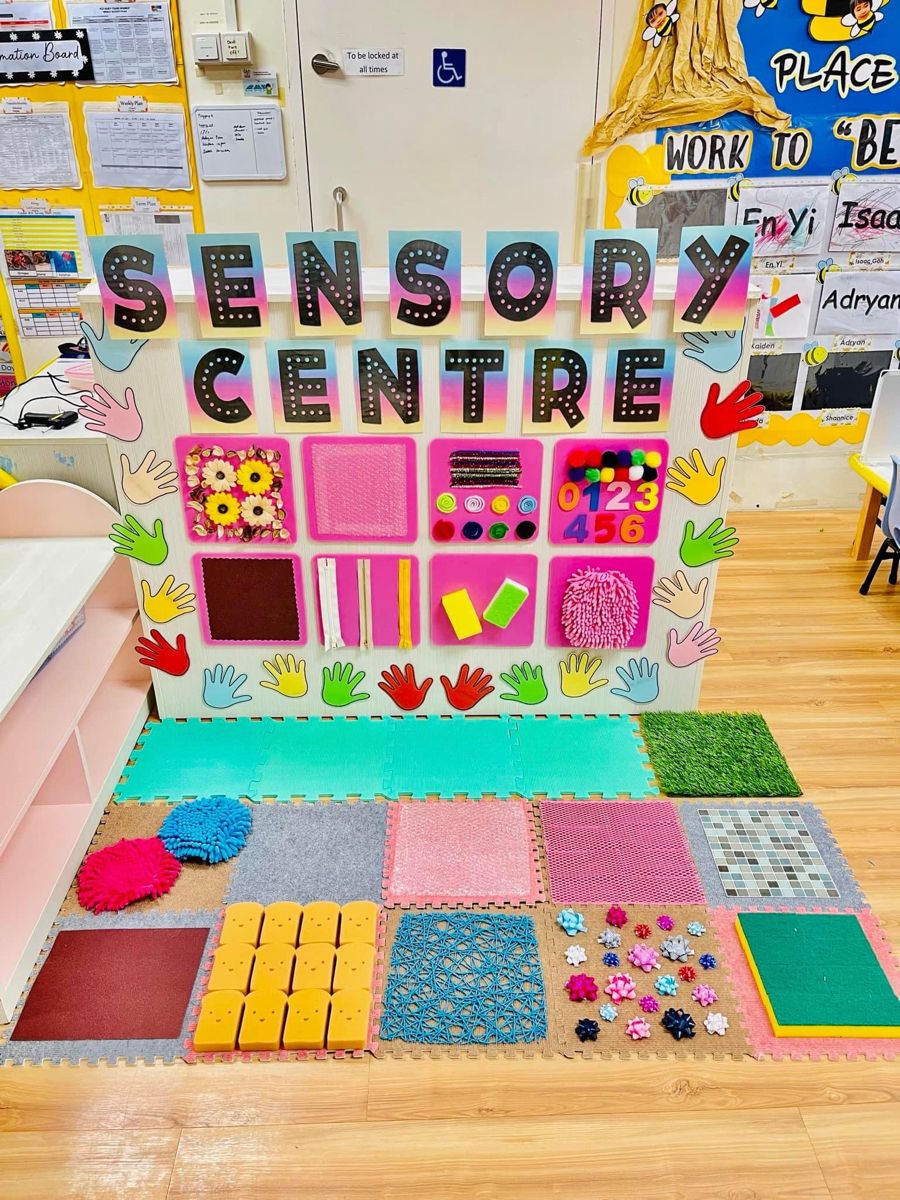
Sensory experiences are the building blocks of a child’s perception of the world, and for autistic children, these experiences can be either a source of harmony or discord. The right daycare doesn’t just acknowledge this; it harnesses it. Picture a space where the tactile surfaces are varied—soft mats for those who crave deep pressure, textured walls for those who seek stimulation, and quiet nooks for those who need to retreat. The lighting isn’t a harsh glare but a warm, diffused glow, perhaps even adjustable to mimic natural light cycles. Sound isn’t an indiscriminate cacophony but a curated soundscape, with noise-canceling panels in high-traffic areas and white noise machines in quieter zones.
 The air itself is part of the sensory equation. Some children may be overwhelmed by the scent of cleaning products or the faintest hint of perfume, while others might seek out specific aromas for comfort. A daycare that prioritizes sensory alchemy doesn’t just clean; it curates. It uses fragrance-free products, incorporates aromatherapy where appropriate, and ensures that the environment is a sanctuary rather than a stimulus dump. Even the layout of the space plays a role. Open floor plans may work for some, but for others, the lack of defined boundaries can feel like standing in the middle of a storm. The right daycare balances openness with enclosure, providing both the freedom to explore and the security of containment.
The Caregiver’s Compass: Beyond Patience to Profound Understanding
A caregiver’s role in a daycare setting transcends the traditional definition of “childcare.” It’s not enough to be patient; the caregiver must be a detective, an interpreter, and an advocate. They must recognize that a child who spins in circles isn’t just “being silly” but regulating their vestibular system. They must understand that a refusal to make eye contact isn’t rudeness but a coping mechanism. The right caregiver doesn’t just follow a script; they improvise, adapting their approach in real-time to meet the child where they are.
Training is the cornerstone of this understanding. A daycare that invests in ongoing education for its staff—covering topics like trauma-informed care, the nuances of autism, and alternative communication methods—is already leagues ahead of those that treat training as a checkbox exercise. But training alone isn’t enough. The caregiver must also possess an intuitive grasp of the child’s needs, a willingness to collaborate with parents, and the humility to admit when they don’t have all the answers. They must be comfortable with silence, with repetition, and with the idea that progress isn’t always linear. In their hands, even the smallest moments—a child finally making eye contact, a tentative attempt at sharing, a spontaneous burst of laughter—become milestones worth celebrating.
Structure with Soul: The Delicate Dance of Routine and Flexibility
Routine is the scaffolding of a child’s day, but rigidity is its silent killer. The right daycare strikes a balance between structure and spontaneity, recognizing that while predictability can be a comfort, life—and growth—requires a degree of unpredictability. The day isn’t a rigid timetable but a living document, one that can be adjusted in real-time based on the child’s needs. Perhaps today calls for an extra sensory break, or maybe the child is in the mood for a solo project rather than group play. The caregiver’s role is to read the room, to know when to enforce the schedule and when to bend it.
This balance extends to transitions, those often-dreaded moments when one activity ends and another begins. For autistic children, transitions can feel like standing at the edge of a cliff, unsure of what lies on the other side. The right daycare doesn’t just announce the change; it prepares for it. Visual schedules, timers, and verbal cues become tools of the trade, helping the child navigate the shift with less anxiety. Even the language used during transitions matters. Instead of abrupt commands like “Clean up now!” the caregiver might say, “In five minutes, we’ll start our next adventure. Let’s get ready!” The difference is subtle but profound—a shift from demand to invitation.
Collaboration as the Keystone: Parents and Caregivers as Partners
The relationship between parents and caregivers isn’t a transaction; it’s a partnership built on trust, transparency, and shared goals. The right daycare doesn’t just send home a daily report; it invites parents into the process, seeking their insights, respecting their knowledge of their child, and collaborating on strategies that extend beyond the daycare walls. This collaboration isn’t a one-way street. Parents, too, must be willing to share their child’s quirks, their triggers, and their triumphs. It’s a two-way dialogue where both parties are committed to the child’s growth.
This partnership also extends to the broader community. The right daycare doesn’t operate in a vacuum; it engages with specialists, therapists, and educators to ensure that the child’s needs are met holistically. Whether it’s incorporating speech therapy techniques into the daily routine or working with an occupational therapist to design sensory-friendly spaces, the daycare becomes a hub of coordinated care. It’s a place where everyone—parents, caregivers, and professionals—speaks the same language, even if they use different dialects.
The Unseen Metrics: Measuring Success Beyond Academics
In a world obsessed with quantifiable outcomes, it’s easy to fall into the trap of measuring a daycare’s success by academic benchmarks or socialization quotients. But for a child with autism, success looks different. It might be a child who finally tolerates the cafeteria noise for five minutes longer than yesterday. It might be a child who initiates a conversation without prompting. It might be a child who, for the first time, chooses to sit with peers during storytime. These aren’t just small wins; they’re seismic shifts in a child’s development.
The right daycare doesn’t just celebrate these moments; it documents them, not as a formality but as a testament to the child’s progress. It uses tools like video recordings, anecdotal notes, and collaborative assessments to paint a picture of growth that transcends traditional metrics. It recognizes that a child who spends the day in a quiet corner isn’t failing; they’re recharging. It understands that a child who flaps their hands isn’t just “being autistic”; they’re expressing joy, frustration, or a need for regulation. Success, in this context, isn’t a destination but a journey—a journey that the daycare walks alongside the child and their family.
Finding the right daycare for a child with autism isn’t just about ticking boxes on a checklist. It’s about discovering a place where the child’s uniqueness isn’t just tolerated but revered, where their challenges aren’t just managed but transformed into strengths. It’s about recognizing that the right fit isn’t a static destination but a dynamic relationship, one that evolves as the child grows. The journey may be fraught with uncertainty, but it’s also laced with possibility—a possibility that, with the right daycare, can set the stage for a lifetime of growth, confidence, and joy. The search isn’t just for a daycare; it’s for a second home, a place where the child isn’t just cared for but truly seen.