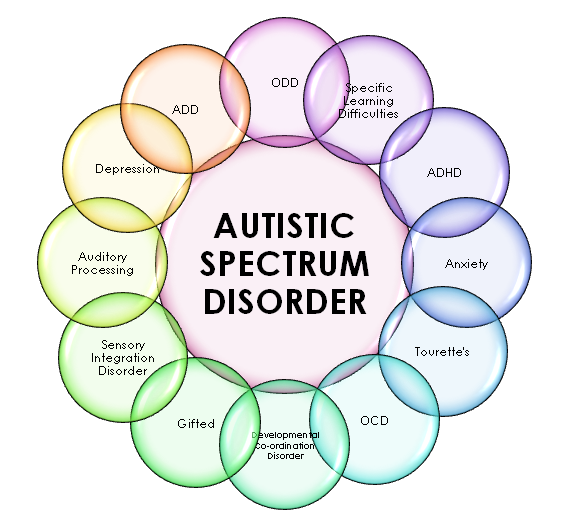
What if the key to understanding life’s most profound mysteries isn’t found in grand philosophical treatises or sweeping existential declarations, but in the quiet, often overlooked corners of human experience? Consider, for a moment, the world as perceived by someone with autism—a realm where sensory input is a cacophony of unfiltered sensations, where social cues dissolve into cryptic puzzles, and where meaning is constructed not from shared narratives but from the raw, unadulterated data of existence. Autism, often mischaracterized as a deficit in social connection, may instead be a different operating system for the human mind—one that processes the world with a precision and intensity that challenges our conventional notions of meaning, purpose, and even reality itself.
This isn’t just an academic curiosity. It’s a doorway into redefining what it means to be human. If we strip away the layers of societal expectations and neurotypical norms, we might discover that autistic individuals are not merely navigating a world that feels alien to them, but are, in fact, offering us a radical reimagining of how meaning is constructed. What if the “big questions” of life—those that have haunted philosophers for millennia—aren’t just abstract puzzles to be solved, but lived experiences waiting to be decoded through a different lens? To explore this, we must first ask: What does it mean to seek meaning when the world speaks in a language you were never taught?

The Paradox of Perception: When the World Feels Like a Foreign Language
Imagine waking up each day to a world that assaults your senses with unrelenting intensity—a fluorescent light that hums like a swarm of bees, a fabric tag that scratches against your skin like sandpaper, or the distant sound of a conversation that feels like a symphony of unintelligible noise. For many autistic individuals, this isn’t an occasional inconvenience; it’s the baseline of their existence. The challenge isn’t just in navigating these sensations but in extracting meaning from them. How does one find purpose when the very fabric of reality is a barrage of stimuli that others filter effortlessly?
This perceptual divergence isn’t limited to sensory experiences. It extends to how time, emotion, and social interaction are processed. An autistic person might experience time as a series of discrete, unconnected moments rather than a fluid continuum. Emotions, too, can feel like foreign entities—intense, overwhelming, and difficult to categorize. Social interactions, often taken for granted by neurotypical individuals, become a minefield of unspoken rules and unpredictable variables. The result? A life lived in a state of perpetual translation, where every interaction requires decoding, every environment demands adaptation, and every moment is a test of resilience.
Yet, within this chaos lies a profound question: Is meaning lost in translation, or is it simply waiting to be rewritten? Autistic individuals don’t just experience the world differently; they construct meaning differently. While neurotypical minds might rely on shared narratives, emotional cues, and social scripts to derive purpose, autistic minds often turn inward, finding meaning in patterns, systems, and the raw data of their own perceptions. This isn’t a flaw—it’s a feature of a mind that sees the world as it is, unfiltered and unadorned.
The Architecture of Meaning: Building a Life from the Ground Up
Consider the metaphor of an architect designing a building. Most neurotypical individuals might start with a blueprint—social expectations, cultural norms, and personal goals—before laying the foundation. Autistic individuals, however, often begin with the raw materials themselves: their sensory experiences, their intellectual fascinations, and their need for structure. The result isn’t a building that conforms to pre-existing designs but one that is uniquely theirs—a structure built from the ground up, brick by brick, with each piece serving a specific, intentional purpose.
This approach to meaning isn’t about rejecting societal norms; it’s about creating a framework that makes sense within the individual’s own reality. For some, this might mean dedicating their lives to a particular interest, whether it’s the intricate patterns of train schedules, the mathematical precision of music, or the biological intricacies of fungi. For others, it might involve crafting a life that minimizes sensory overload, where every element is carefully curated to provide comfort and control. The key isn’t conformity—it’s coherence.
But here’s the challenge: a world that values conformity above all else. Autistic individuals who build their lives this way often face a fundamental tension—do they suppress their natural inclinations to fit in, or do they risk the isolation that comes with being misunderstood? The answer isn’t binary. It’s a constant negotiation between authenticity and acceptance, between the need for structure and the desire for connection. And in this negotiation, they offer a radical insight: Meaning isn’t something you find; it’s something you create.
The Infinite Staircase: Climbing Toward Understanding
Dr. Geoffrey, in his exploration of “The Infinite Staircase,” posits that meaning is not a destination but a journey—a series of steps that lead not to a final answer but to a deeper understanding of the questions themselves. For autistic individuals, this staircase isn’t a metaphor; it’s a lived experience. Each step represents a challenge, a discovery, or a moment of clarity, but the path is never linear. It’s a spiral, looping back on itself, revealing new layers of complexity with each revolution.
One of the most poignant aspects of this journey is the way autistic individuals often revisit and refine their understanding of meaning over time. A child who finds solace in lining up toys might grow into an adult who finds purpose in organizing systems, whether it’s data, schedules, or even entire communities. The fascination with patterns doesn’t fade; it evolves. The need for predictability doesn’t disappear; it transforms into a desire for mastery. This isn’t regression—it’s recursion, a process of deepening engagement with the same core questions, but from ever-increasing heights.
The Infinite Staircase also highlights the role of external validation in this journey. Neurotypical society often measures success in terms of social integration, emotional expression, and conventional achievements. But for autistic individuals, success might look entirely different—finding a niche where their strengths are valued, creating art that speaks to their unique perspective, or simply existing in a way that feels authentic. The challenge, then, is not just in climbing the staircase but in redefining what the staircase itself represents. Is it a ladder to be scaled, or a spiral to be explored? The answer depends on who you ask.
The Unseen Gift: What Autistic Minds Teach Us About Meaning
If we step back from the noise of societal judgments and look at the bigger picture, we might realize that autistic individuals aren’t just navigating a different world—they’re offering us a glimpse into the raw, unfiltered process of meaning-making. They remind us that meaning isn’t a fixed destination but a dynamic, ever-evolving construct. It’s not something handed down from on high; it’s something built, moment by moment, from the materials at hand.
Consider the way autistic individuals often approach problem-solving. Without the constraints of conventional thinking, they might arrive at solutions that neurotypical minds overlook. A child who insists on wearing the same outfit every day isn’t just being stubborn; they’re creating a sense of predictability in an unpredictable world. An adult who hyperfocuses on a specific topic isn’t just being obsessive; they’re exploring the depths of a subject with a level of detail that others might never achieve. These aren’t quirks to be managed; they’re strengths to be harnessed.
But the real gift lies in the questions they pose—not just to themselves, but to society as a whole. What does it mean to be “normal”? Who decides what constitutes a meaningful life? How do we reconcile the need for structure with the desire for freedom? Autistic individuals don’t just challenge our answers; they force us to ask better questions. And in doing so, they invite us to reconsider what it means to live a life of purpose.

In the end, the exploration of autism and meaning isn’t just about understanding a different way of experiencing the world. It’s about recognizing that the “big questions” of life aren’t meant to be answered but to be lived. They’re not puzzles to be solved but mysteries to be explored. And perhaps, in the quiet persistence of autistic individuals, we might find a new kind of wisdom—one that doesn’t seek to conquer the unknown but to dance with it, step by step, up the infinite staircase.
So the next time you encounter someone who sees the world differently, ask yourself: What if their perspective isn’t a deviation from the norm, but a different kind of genius? And then, perhaps, you’ll begin to see the world—and yourself—in a whole new light.