Navigating the labyrinth of urban parking can be a Herculean task for anyone, but for individuals with autism, the challenge often transcends mere inconvenience. The cacophony of honking horns, the blinding glare of headlights, the relentless search for a space that feels just out of reach—these are not just minor frustrations but potential triggers for sensory overload. Yet, beyond the surface-level inconvenience lies a deeper narrative of autonomy, dignity, and the quiet resilience of those who refuse to let the chaos of parking lots dictate their daily lives. Understanding the nuances of accessible parking for individuals with autism is not just about compliance with regulations; it’s about fostering an environment where everyone can move through the world with a semblance of ease.
Accessible parking is more than a painted blue symbol on a slab of concrete. It represents a commitment to inclusivity, a tangible acknowledgment that the built environment must adapt to the needs of all its users. For individuals with autism, the stakes are particularly high. The sensory bombardment of a crowded parking lot—flashing lights, revving engines, the acrid tang of exhaust fumes—can be overwhelming. Accessible spots, often located closer to entrances and shielded from high-traffic areas, provide a sanctuary of sorts, a buffer against the sensory storm. Yet, these spots are frequently misused, claimed by those who do not need them, leaving those who rely on them in a precarious position.
The Psychological Landscape of Parking for Individuals with Autism
The act of parking a vehicle is, for many, a mundane chore. For individuals with autism, however, it can be a minefield of unpredictability. The rigid structure of parking regulations clashes with the fluid, often chaotic nature of real-world environments. The need for consistency and predictability is a hallmark of autism, and the inconsistency of parking availability—whether due to poor signage, lack of enforcement, or sheer bad luck—can exacerbate anxiety. The frustration of circling a lot for what feels like an eternity, only to find that the nearest accessible spot is occupied by a vehicle without a permit, is a tangible manifestation of the broader societal disregard for neurodivergent needs.
Moreover, the cognitive load of navigating parking lots can be disproportionately high. The mental gymnastics required to remember where one parked, to decode confusing signage, or to manage the stress of a tight squeeze between two cars can be exhausting. For individuals with autism, who may already expend significant energy on social navigation and sensory regulation, this additional cognitive burden can tip the scales from manageable to overwhelming. The result is not just a delayed errand but a potential shutdown, a withdrawal from the day’s activities altogether.
Designing Parking Spots with Autism in Mind
Accessible parking design must evolve beyond the basic blue symbol and ramped access. Thoughtful design can mitigate sensory triggers and reduce cognitive strain. For instance, the placement of accessible spots near building entrances is not just a convenience; it’s a necessity for those who need to minimize exposure to sensory overload. However, the design can go further. Clear, uncluttered signage with high-contrast colors can reduce visual noise, while well-lit areas can alleviate the disorientation that comes from sudden shifts between darkness and light. The use of tactile paving to demarcate accessible routes can provide a sensory cue that guides individuals with visual impairments or those who rely on proprioceptive feedback.
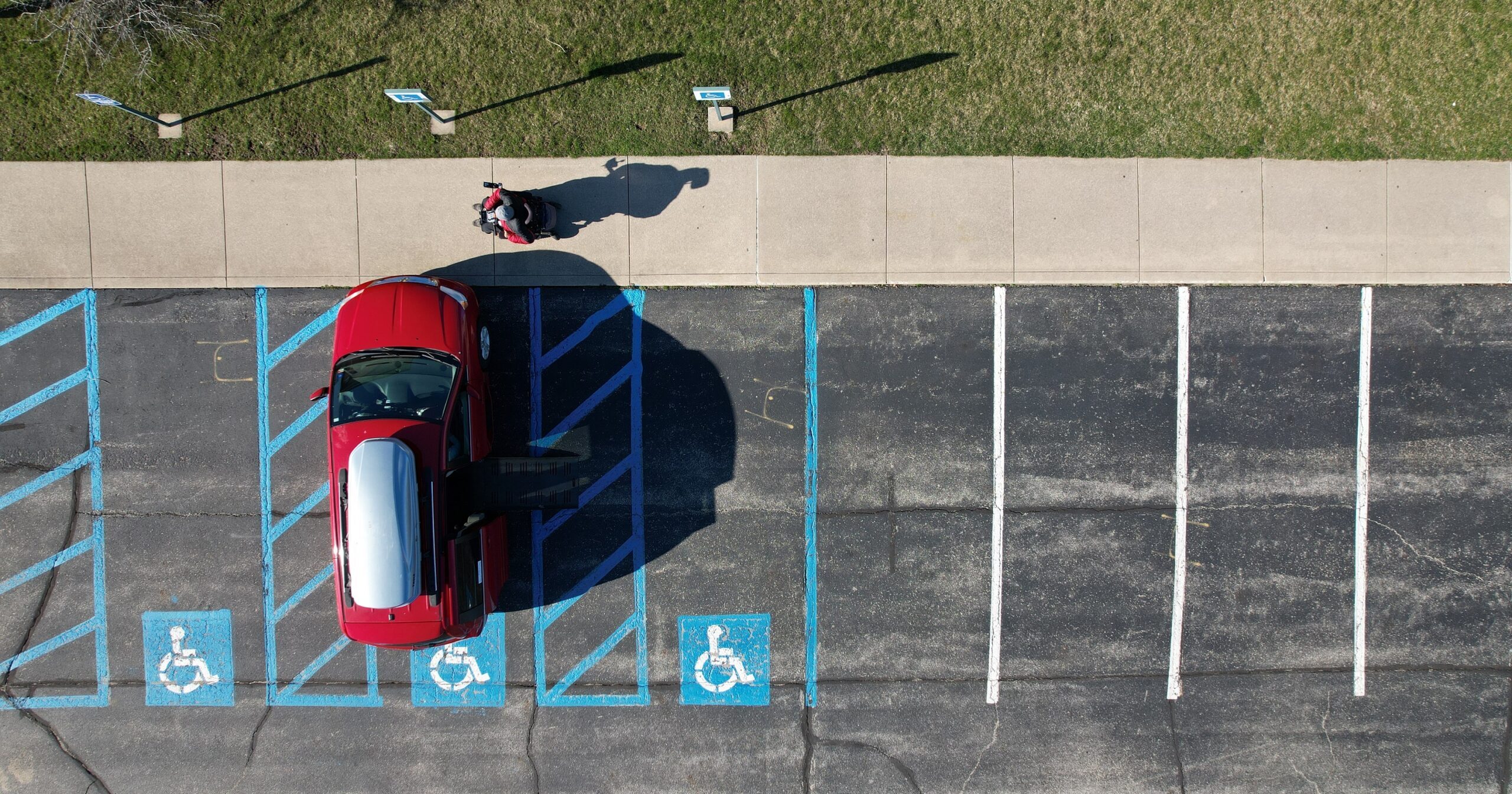
Another critical consideration is the width of accessible parking spots. Standard spots may be too narrow for vehicles with ramps or lifts, forcing drivers to navigate a precarious dance of folding mirrors and careful maneuvering. Wider spots not only accommodate these vehicles but also provide additional space for individuals who need extra room to exit their cars safely. The inclusion of vertical clearance markers can prevent the frustration of discovering, mid-parking, that one’s vehicle is too tall for the space—a scenario that can trigger intense anxiety in those who dread the possibility of damage or the hassle of relocating.

The Unseen Battle: Misuse of Accessible Parking
The misuse of accessible parking spots is a pervasive issue that undermines the very purpose of these accommodations. Non-disabled drivers often park in these spots out of convenience, ignorance, or outright entitlement, leaving individuals with legitimate needs stranded. The frustration is not merely about the inconvenience; it’s about the violation of a basic right to dignity. For individuals with autism, who may already face societal skepticism about their needs, the sight of an empty accessible spot occupied by a vehicle without a permit can feel like a slap in the face—a reminder that their struggles are not always visible, not always acknowledged.
Addressing this issue requires a multi-faceted approach. Education campaigns can raise awareness about the importance of accessible parking and the consequences of its misuse. Enforcement must be consistent, with penalties that serve as a deterrent rather than a mere slap on the wrist. Technology can also play a role, with apps that allow individuals to report misuse in real-time or systems that verify permits before allowing access to certain areas. Yet, the most effective solution may be a shift in societal attitudes—a recognition that accessible parking is not a privilege but a necessity for those who rely on it.
Beyond the Parking Spot: The Ripple Effects of Accessibility
The implications of accessible parking extend far beyond the immediate act of parking a car. For individuals with autism, the ability to access parking spots that are close to entrances can mean the difference between participating in an activity and opting out entirely. It can influence decisions about where to work, where to shop, or even where to live. The cumulative effect of these small victories can be profound, fostering independence and reducing reliance on caregivers or support systems.
Moreover, the design of parking lots can serve as a microcosm of broader societal attitudes toward accessibility. When accessible spots are an afterthought, it signals a lack of consideration for the needs of neurodivergent individuals. Conversely, when these spots are integrated thoughtfully into the design, it sends a message of inclusivity and respect. This ripple effect can extend to other areas of urban planning, from public transportation to sidewalks, reinforcing the idea that accessibility is not an add-on but a fundamental aspect of good design.
Practical Strategies for Individuals with Autism and Their Supporters
For individuals with autism and their supporters, navigating the challenges of parking requires a combination of preparation and adaptability. Planning ahead is key. Identifying accessible parking spots in advance, using apps or maps to scout locations, and allowing extra time for the search can reduce stress. It’s also helpful to familiarize oneself with local parking regulations and enforcement practices, as this knowledge can empower individuals to advocate for their needs if necessary.
For those who experience severe sensory overload, noise-canceling headphones or earplugs can provide a much-needed buffer against the cacophony of a busy lot. Sunglasses or a hat can reduce glare, while a fidget toy or stress ball can help regulate emotions in high-pressure situations. It’s also important to have a backup plan—whether that means identifying alternative parking spots, arranging for assistance, or simply postponing the errand if the environment feels too overwhelming.
Supporters can play a crucial role by advocating for accessible design in their communities. This might involve attending city council meetings, joining advocacy groups, or simply speaking up when they witness the misuse of accessible spots. Small actions can accumulate into significant change, creating environments where individuals with autism can navigate the world with greater ease and confidence.
Accessible parking is more than a logistical consideration; it’s a testament to a society’s commitment to inclusivity. For individuals with autism, the ability to find a parking spot that meets their needs is not just about convenience—it’s about autonomy, dignity, and the right to participate fully in the world. By designing spaces that accommodate diverse needs, enforcing regulations with consistency, and fostering a culture of respect, we can create environments where everyone, regardless of neurotype, can move through the world with a sense of ease and belonging.