Autism camouflaging is a phenomenon that unravels the intricate dance between self-expression and societal expectations. It beckons us to reconsider long-held assumptions about what it means to be autistic. Beyond mere concealment, camouflaging is a complex survival strategy wrapped in social navigation, identity negotiation, and psychological resilience. Why do some individuals feel compelled to mask their traits, and what does this mean for our understanding of neurodiversity? This exploration promises a shift in perspective and invites deeper curiosity about the interplay of authenticity and adaptation.
The Subtle Art of Camouflaging: What It Entails
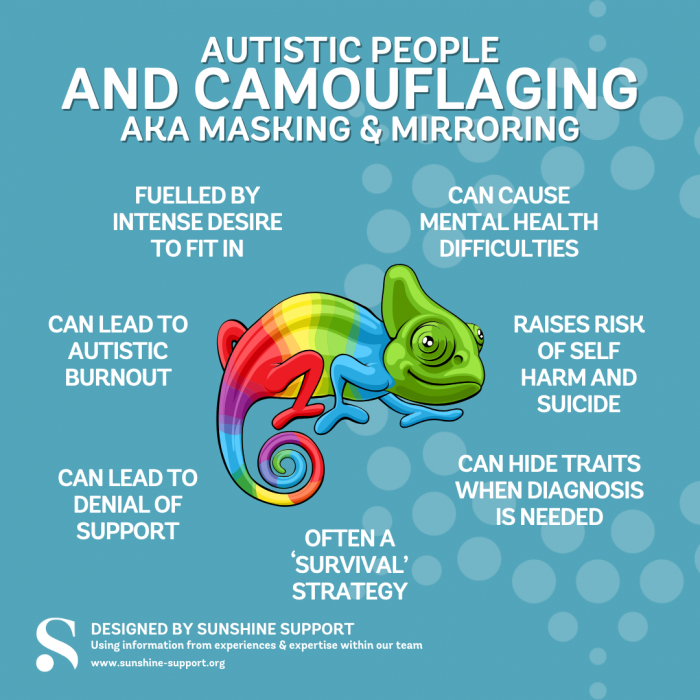
Camouflaging, sometimes referred to as “masking,” involves consciously or unconsciously suppressing or altering behaviors that are commonly associated with autism. These behaviors might include stimming (repetitive movements or sounds), divergent communication styles, or sensory sensitivities. For many, it is an ongoing, meticulous performance—a means to blend seamlessly into neurotypical environments.
Unlike overt deception, camouflaging is less about trickery and more about modulation. It entails reading social cues with heightened vigilance, mimicking nonverbal gestures, or rehearsing conversational scripts. Such exertion often leads to significant cognitive and emotional fatigue. However, the impetus to camouflage is tied to a desire for belonging, acceptance, and the avoidance of stigma.

Origins and Drivers of Camouflaging
The origins of camouflaging lie deeply embedded in social structures that prioritize conformity and often marginalize difference. In environments where autistic traits are misunderstood or devalued, individuals learn that adaptation is sometimes the only pathway to social survival. From early childhood, many receive implicit or explicit messages to “fit in” and suppress behaviors deemed inappropriate or odd.
Gender plays a pivotal role as well. Research suggests that autistic females may be more likely to engage in camouflaging than males, influenced by societal expectations and gender norms. This often leads to underdiagnosis or late diagnosis, as their masking behaviors obscure the traditional markers clinicians seek. The cost of such camouflage can be profound, ranging from identity confusion to mental health complications.
The Psychological Toll: When Camouflaging Becomes Burdensome
Camouflaging is far from a benign act. The continuous effort required to mask authentic traits can burden an individual with anxiety, depression, and exhaustion. It is not uncommon for those who camouflage extensively to experience a disconnect between their outward presentation and inner experience—a phenomenon sometimes described as “identity fragmentation.”
Moreover, the pressure to camouflage can exacerbate feelings of isolation. Even as individuals manage to gain social acceptance temporarily, the emotional labor invested often goes unnoticed and unsupported. This can lead to a paradoxical loneliness—a sense of invisibility despite outward normalcy.

Camouflaging in Different Contexts: Schools, Workplaces, and Relationships
The arenas where camouflaging manifests are varied and deeply significant. In educational settings, autistic children might suppress stimming or avoid asking for accommodations to appear more “typical.” This self-inhibition, while adaptive in the short term, may hinder learning and well-being.
In professional spheres, camouflaging influences not only hiring and retention but also daily interactions and performance evaluations. The persistent effort to navigate social nuances often detracts from cognitive resources otherwise reserved for creativity and productivity.
Personal relationships introduce yet another layer of complexity. Camouflaging can impede authentic connection and foster misunderstandings. When autistic individuals mask their discomfort, needs, or communication style, it may limit intimacy and increase stress within social bonds.
Reimagining Neurodiversity: Toward Acceptance and Understanding
Recent discourse advocates moving from a deficit-based model to one that embraces neurodiversity—a paradigm that values difference rather than conformity. Recognizing camouflaging as a response to external pressures rather than an innate trait shifts responsibility from the individual to the environment.
Creating spaces where autistic people feel safe to express their genuine selves without fear of judgment or exclusion is paramount. Such acceptance mitigates the need to camouflage and fosters psychological flourishing. This requires education, policy reform, and societal commitment to inclusivity.

Looking Forward: Embracing Authenticity and Challenging Stigma
Understanding autism camouflaging illuminates the silent struggles endured by many within the autistic community. It challenges the notion that adaptability must come at the cost of selfhood and mental health. More importantly, it prompts critical reflection on the societal architectures that necessitate such concealment.
The journey toward authentic living for autistic individuals is intertwined with the broader quest for social empathy and systemic change. By unraveling the layers of camouflaging, we open a space for honest dialogue and greater visibility. The hope lies in building a world where masks are no longer required—where difference is not merely tolerated but celebrated.
In embracing this shift, we not only enhance our collective understanding but unlock the full potential of neurodiversity as a vital facet of human experience. Camouflaging might have been a hidden language, but now it’s a catalyst for transformation and a call to genuine acceptance.