In the grand ballet of childhood development, where each child pirouettes through milestones at their own pace, gymnastics emerges as a powerful choreographer—one that doesn’t demand perfection but celebrates progress. For children with autism, the mat becomes more than a stretch of vinyl or foam; it transforms into a sanctuary of sensory exploration, a laboratory of motor mastery, and a stage for self-discovery. The fusion of autism and gymnastics is not merely an intersection of interests; it is a symphony of movement, where each leap, roll, and balance becomes a note in a larger composition of growth. This article delves into how gymnastics can serve as a transformative tool for building motor skills and confidence in children with autism, revealing the hidden mechanics of this dynamic pairing.
The Mat as a Canvas: Sensory Integration Through Movement
Imagine the human body as a finely tuned instrument, its strings vibrating with every sensory input—light, sound, touch, and motion. For a child with autism, this instrument can feel overwhelming, as if bombarded by a cacophony of stimuli that disrupts harmony. Gymnastics, however, offers a structured rhythm to this chaos. The mat, with its tactile feedback and defined boundaries, becomes a canvas where sensory experiences are not just tolerated but harnessed. The act of rolling, tumbling, or balancing engages proprioceptive and vestibular systems, two critical sensory networks often underdeveloped in autism. Proprioception—the body’s ability to sense its position in space—is honed through activities like climbing or hanging, while the vestibular system, responsible for balance and spatial orientation, finds equilibrium in controlled spins and jumps. Together, they compose a sensory overture that quiets the noise of the external world, allowing the child to focus inward, to listen to their own body’s language.
Consider the child who flinches at the brush of a sleeve against their arm or who seeks constant pressure through deep hugs. Gymnastics provides a controlled environment where such sensory needs can be met through deliberate, repetitive movements. The rhythmic pounding of feet on a trampoline or the firm grip of a parallel bar offers a form of sensory input that is predictable and soothing. It’s not about forcing adaptation but about creating a dialogue between the child and their environment, where movement becomes the translator.
From Flailing to Flourishing: The Alchemy of Motor Skill Development
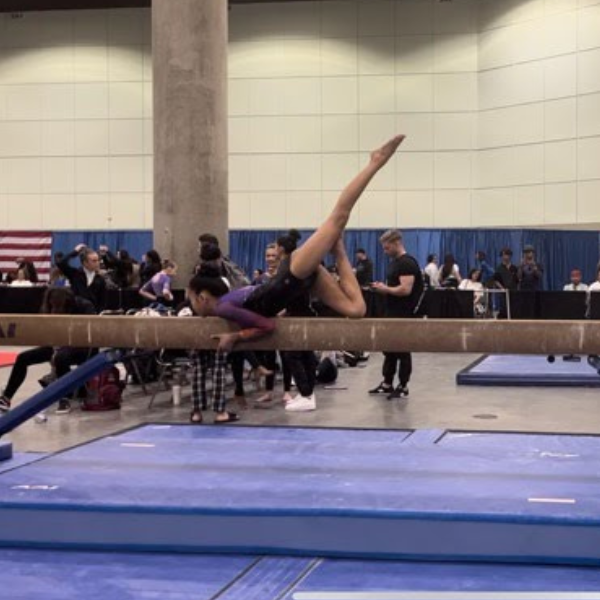
Motor skills are the silent architects of independence, the unseen scaffolding that supports everything from tying shoelaces to scribbling a name. For children with autism, these skills often develop in fits and starts, with uneven progress that can frustrate both child and caregiver. Gymnastics acts as a crucible where these skills are forged, not through rote repetition alone, but through play that feels like adventure. Fine motor precision is cultivated in the delicate art of handstands, where fingers splay wide to distribute weight, or in the precise placement of feet on a balance beam, a task that demands both focus and finesse. Gross motor coordination, meanwhile, is refined through vaulting exercises, where the body learns to synchronize explosive power with graceful landing—a metaphor for life’s own leaps of faith.
Yet, the magic of gymnastics lies in its ability to make the mundane magnificent. A child who struggles to catch a ball might find solace in the rhythmic toss of a beanbag onto a target, or a child with low muscle tone might discover newfound strength in the simple act of pushing against the floor in a forward roll. The key is in the scaffolding: breaking down complex movements into digestible fragments, celebrating small victories, and allowing the child to set the pace. Progress is not linear but cyclical, like the phases of the moon, waxing and waning with each session. The goal is not to achieve Olympic-level precision but to instill a sense of bodily agency—a quiet confidence that says, “I can navigate my world.”

The Mirror of Confidence: Reflection and Reinforcement
Confidence is not a switch that can be flipped; it is a garden that must be tended, watered with patience, and shielded from storms. For children with autism, the journey to self-assurance is often fraught with self-doubt, a voice that whispers, “I can’t” before the body even attempts the task. Gymnastics offers a mirror that reflects not just the physical form but the potential within. When a child successfully completes a cartwheel for the first time, the pride that flickers in their eyes is not just about the movement—it’s about the realization that they are capable. This is the alchemy of confidence: the transformation of effort into empowerment.
In a gymnastics class tailored for neurodiverse learners, progress is not measured in medals or ribbons but in the spark of a child’s eyes when they master a skill they once deemed impossible. The environment is structured yet flexible, with clear routines that provide predictability and visual aids that demystify expectations. Social interactions, often a source of anxiety, are reframed as collaborative endeavors—partnering in a group routine or cheering on a peer’s attempt. The child learns that mistakes are not failures but stepping stones, and that persistence is its own reward. Over time, this newfound confidence spills into other areas of life, from academic challenges to social interactions, creating a ripple effect of growth.
The Unseen Choreography: Emotional and Cognitive Benefits
Beyond the physical, gymnastics choreographs an unseen ballet of emotional and cognitive growth. The discipline of following instructions, the patience of waiting for a turn, and the resilience of trying again after a fall—all these are cognitive exercises disguised as play. For children with autism, whose executive function may lag behind their peers, gymnastics provides a tangible framework for developing these skills. The act of planning a sequence of movements, for instance, strengthens working memory and impulse control. Meanwhile, the emotional regulation required to manage frustration or excitement is honed in real-time, as the child learns to modulate their responses to both success and setback.
The social dimension of gymnastics, often overlooked, is equally transformative. In a group setting, children learn to read body language, take turns, and communicate needs—all while engaged in an activity that feels less like a lesson and more like play. The shared experience of mastering a skill fosters a sense of camaraderie, reducing feelings of isolation. For children who struggle with verbal communication, gymnastics offers a non-verbal language of movement, where actions speak louder than words.
Breaking Barriers: Adaptive Gymnastics as a Gateway to Inclusion
Adaptive gymnastics is the bridge that connects children with autism to a world of movement that is as inclusive as it is inspiring. Unlike traditional gymnastics, which may prioritize competition, adaptive programs focus on individual growth, using specialized equipment like sensory balls, crash mats, or resistance bands to accommodate diverse needs. The environment is sensory-friendly, with controlled lighting and sound levels, and instructors trained in neurodiversity awareness. This approach dismantles the barriers that often exclude children with autism from physical activities, replacing them with a welcoming space where every child can thrive.
The benefits of adaptive gymnastics extend beyond the individual to the broader community. As children with autism gain confidence and skills, they become ambassadors of inclusion, challenging stereotypes and inspiring peers to embrace diversity. The ripple effect is profound: a child who once sat on the sidelines becomes a leader, a mentor, a living testament to the power of movement as a universal language.
The journey of a child with autism is not a straight path but a winding trail, one that demands creativity, patience, and an unwavering belief in potential. Gymnastics, with its blend of structure and spontaneity, sensory engagement and motor challenge, offers a unique pathway to growth. It is more than a sport; it is a metaphor for life itself—a series of leaps, balances, and recoveries, each one a testament to resilience. As children with autism step onto the mat, they are not just learning to tumble or swing; they are learning to navigate the world with confidence, one movement at a time. The mat becomes a stage, the body a brush, and the child the artist of their own destiny.