Autism and Dialectical Behavior Therapy (DBT) share an intricate dance—one that often goes unnoticed in the broader conversation about neurodiversity and therapeutic interventions. For many autistic individuals, emotional regulation isn’t just a challenge; it’s a daily negotiation between overwhelming stimuli and the need for stability. Dialectical Behavior Therapy, originally developed to treat borderline personality disorder, has quietly emerged as a potent tool for autistic adults and adolescents struggling with emotional dysregulation. The intersection of these two worlds reveals not just a clinical overlap but a profound human story of resilience, self-discovery, and the quest for equilibrium.
The fascination with DBT in the autistic community isn’t merely academic. It’s rooted in the therapy’s emphasis on radical acceptance—a concept that resonates deeply with autistic individuals who often grapple with societal expectations to “mask” their true selves. Unlike traditional cognitive behavioral therapy, which might focus solely on changing thought patterns, DBT introduces a dialectical framework: the synthesis of acceptance and change. This duality mirrors the autistic experience itself—balancing the need for accommodation with the desire to thrive in a world that wasn’t designed for neurodivergent minds.
The Neurobiological Underpinnings of Emotional Dysregulation in Autism
Autism is not a monolith, but a constellation of traits that manifest uniquely in each individual. One of the most pervasive yet misunderstood challenges is emotional dysregulation—a term that encompasses everything from meltdowns to shutdowns, from explosive outbursts to silent withdrawal. The neurobiological roots of this dysregulation are complex, involving differences in amygdala reactivity, prefrontal cortex function, and the intricate interplay between sensory processing and emotional response.
For autistic individuals, emotions aren’t just felt—they’re amplified. The amygdala, the brain’s alarm system, often operates in overdrive, interpreting neutral stimuli as threats. Meanwhile, the prefrontal cortex, responsible for impulse control and emotional modulation, may struggle to keep pace. This neurological imbalance creates a perfect storm: emotions surge like tidal waves, and the tools to navigate them feel woefully inadequate. DBT steps into this breach by offering a structured yet flexible approach to emotional management, one that acknowledges the intensity of these experiences without pathologizing them.
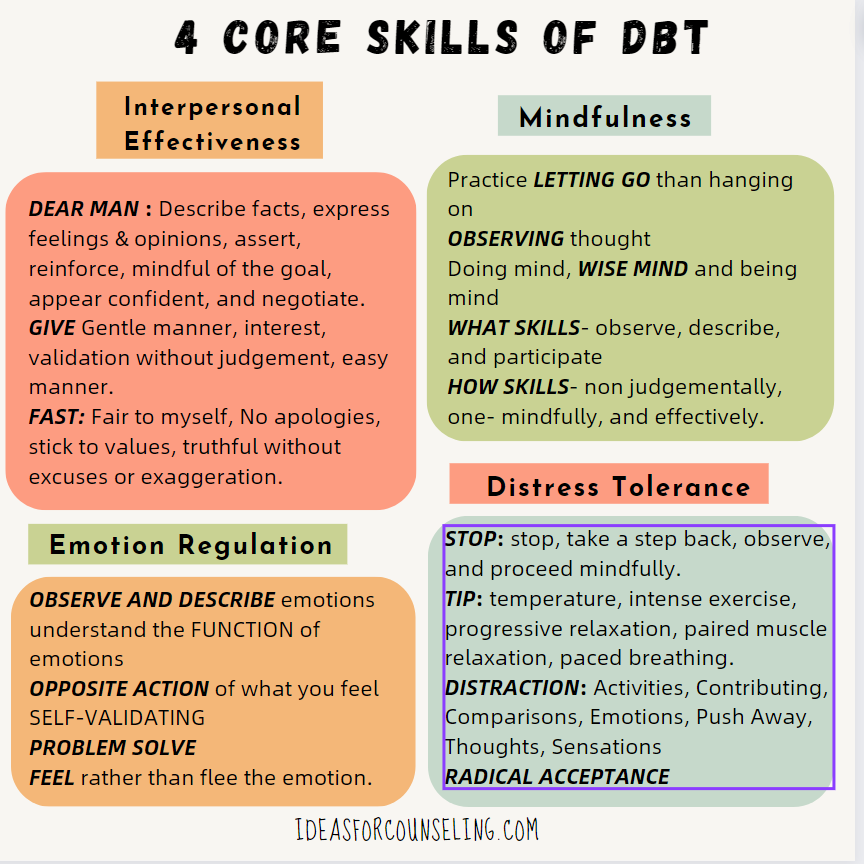
Consider the autistic individual who becomes overwhelmed by the hum of fluorescent lights or the texture of a tag in their shirt. The discomfort isn’t trivial; it’s a physiological stressor that can trigger a cascade of emotional responses. DBT’s distress tolerance skills—such as self-soothing techniques and the “STOP” skill (Stop, Take a step back, Observe, Proceed mindfully)—provide a lifeline in these moments. They don’t eliminate the discomfort, but they offer a way to pause, assess, and respond rather than react impulsively.
DBT’s Core Modules: A Framework for Autistic Emotional Mastery
DBT is traditionally divided into four core modules: mindfulness, distress tolerance, emotion regulation, and interpersonal effectiveness. Each of these modules holds particular significance for autistic individuals, though their application often requires adaptation to suit neurodivergent needs.
Mindfulness is the cornerstone of DBT, and for autistic individuals, it can be both a revelation and a challenge. Mindfulness isn’t about emptying the mind; it’s about observing thoughts and sensations without judgment. For someone accustomed to hyperfocus or sensory overload, this practice can feel like learning to swim in choppy waters. Yet, when approached with patience, mindfulness becomes a sanctuary—a way to ground oneself in the present rather than being swept away by past regrets or future anxieties.
Distress tolerance is perhaps the most immediately applicable module for autistic individuals. The skills taught here—such as self-soothing, radical acceptance, and the use of “TIPP” (Temperature change, Intense exercise, Paced breathing, Paired muscle relaxation)—are designed to help individuals weather emotional storms without resorting to self-harm or avoidance. For autistic people, who may experience sensory overload or social rejection acutely, these tools are invaluable. They provide a way to navigate crises without exacerbating them.
Emotion regulation is where DBT’s dialectical nature shines brightest. Autistic individuals often struggle with emotional labeling—difficulty identifying and articulating what they feel. DBT’s emotion regulation skills, such as the “PLEASE” skill (treat Physical illness, balance Eating, avoid mood-altering drugs, balance Sleep, get Exercise), address the physiological components of emotional regulation. By attending to basic needs, autistic individuals can create a foundation for emotional stability. Additionally, the “ABC PLEASE” model (Accumulating positive emotions, Building mastery, Coping ahead, PLEASE) offers a proactive approach to emotional well-being.
Interpersonal effectiveness is the module that often requires the most nuance for autistic individuals. Social communication differences can lead to misunderstandings, rejection, or exploitation. DBT’s interpersonal effectiveness skills—such as DEAR MAN (Describe, Express, Assert, Reinforce, Mindfully, Appear confident, Negotiate)—provide a script for navigating social interactions with clarity and assertiveness. However, autistic individuals may need to adapt these skills to align with their communication styles, emphasizing honesty and directness over social niceties.

The Role of Radical Acceptance in Autistic Identity
Radical acceptance is one of DBT’s most radical propositions: the idea that true change begins with fully embracing reality as it is. For autistic individuals, this can be a revolutionary concept. Society often frames autism as something to be “fixed” or “overcome,” a deficit to be minimized. Radical acceptance flips this script, inviting autistic individuals to acknowledge their neurodivergence without shame or self-loathing.
This acceptance extends beyond the self to include the world around them. Autistic individuals are often expected to adapt to neurotypical norms, whether in social interactions, sensory environments, or communication styles. Radical acceptance challenges this expectation, encouraging autistic individuals to advocate for accommodations and to seek environments that align with their needs. It’s not about resignation; it’s about empowerment. By accepting their neurodivergence, autistic individuals can focus their energy on building a life that works for them, rather than constantly striving to meet impossible standards.
DBT’s emphasis on radical acceptance also fosters self-compassion—a quality that many autistic individuals struggle to cultivate. The internalized messages of “not enough” or “wrong” can be pervasive, leading to self-criticism and low self-esteem. Through DBT, autistic individuals learn to treat themselves with the same kindness they might offer a friend. This shift in perspective can be transformative, laying the groundwork for emotional resilience and self-advocacy.
Practical Applications: DBT in Real-World Autistic Lives
The theoretical benefits of DBT are compelling, but its true value lies in its practical applications. For autistic adolescents, DBT can be integrated into school settings, where emotional dysregulation often leads to disciplinary actions or social exclusion. Skills like distress tolerance and mindfulness can be taught in classrooms, providing students with tools to navigate the complexities of adolescence. For autistic adults, DBT groups or individual therapy can offer a safe space to explore emotions, practice skills, and connect with others who share similar experiences.
One of the most effective adaptations of DBT for autistic individuals is the use of visual aids and structured routines. Autistic individuals often thrive in predictable environments, and DBT’s emphasis on clear, step-by-step instructions aligns well with this preference. Worksheets, charts, and apps can reinforce skills outside of therapy sessions, making the learning process more accessible. For example, a visual schedule for practicing mindfulness or a checklist for using the STOP skill can provide the structure needed to internalize these tools.
Another practical application is the use of social stories—a technique borrowed from autism-specific interventions. Social stories can be tailored to DBT skills, illustrating scenarios where emotional regulation is needed and providing step-by-step guidance on how to respond. For instance, a social story might depict a situation where an autistic individual feels overwhelmed by noise, followed by a description of how to use deep breathing to calm down. These stories can demystify emotions and provide concrete examples of how to apply DBT skills in real life.
The Challenges and Criticisms of DBT for Autistic Individuals
Despite its benefits, DBT is not a panacea, and its application to autism is not without controversy. Some critics argue that DBT’s focus on emotional regulation places undue responsibility on autistic individuals to “manage” their emotions, rather than addressing the societal barriers that contribute to their struggles. Others point out that DBT’s emphasis on assertiveness and interpersonal effectiveness may not align with autistic communication styles, which often prioritize honesty and directness over social niceties.
Additionally, the language of DBT can feel alienating to some autistic individuals. Terms like “dialectical” or “radical acceptance” may not resonate with those who prefer concrete, literal language. Therapists working with autistic clients must be mindful of these linguistic barriers, adapting the language and delivery of DBT to suit the individual’s needs. This might involve using simpler terms, incorporating visual aids, or focusing on skills that feel most relevant to the client’s daily life.
There’s also the question of accessibility. DBT requires time, commitment, and often financial resources—barriers that can exclude many autistic individuals, particularly those from marginalized communities. Group therapy settings, while beneficial for some, may not be suitable for those who struggle with social anxiety or sensory overload. Individual therapy or self-guided adaptations of DBT may be more appropriate for these individuals, though they come with their own challenges, such as the need for self-motivation and discipline.
The Future of DBT and Autism: A Path Toward Inclusive Therapy
The integration of DBT and autism is still in its early stages, but the potential is vast. As research continues to explore the efficacy of DBT for autistic individuals, there’s an opportunity to develop more tailored interventions that address the unique needs of this population. This might include the creation of DBT workbooks specifically designed for autistic readers, or the adaptation of DBT skills to align with autistic strengths, such as pattern recognition or deep focus.
There’s also a growing recognition of the importance of neurodiversity-affirming therapy. This approach emphasizes the value of autistic ways of being, rather than framing them as deficits to be corrected. In this context, DBT can be reframed as a tool for self-advocacy and empowerment, rather than a means of “fixing” autistic traits. By centering the autistic individual’s experience and validating their emotions, DBT can become a bridge between acceptance and growth.
The future of DBT and autism lies in collaboration—between therapists, autistic individuals, and the broader community. It’s about creating spaces where autistic voices are heard, where skills are taught in ways that resonate, and where emotional regulation is not just a goal but a journey of self-discovery. For autistic individuals, DBT offers more than just tools; it offers a way to reclaim agency over their emotions, to find balance in a world that often feels chaotic, and to embrace their neurodivergence with pride.
In the end, the intersection of autism and DBT is a testament to the power of adaptation. It’s a reminder that healing isn’t about conforming to a single mold but about finding what works for you. For autistic individuals, DBT is not just a therapy—it’s a lifeline, a compass, and a mirror, reflecting back the strength and resilience that have always been there.