In the labyrinth of professional development, few challenges loom as daunting—or as misunderstood—as the job interview. For neurodivergent individuals, particularly those on the autism spectrum, this rite of passage can feel like navigating a minefield of unspoken rules and unpredictable social dynamics. Yet, what if the conventional wisdom surrounding interviews is not just outdated but fundamentally flawed? What if the very traits often perceived as liabilities—precision, honesty, deep focus—could be recast as the cornerstones of a new, more authentic approach to professional success? The narrative around autism and employment is ripe for transformation, and the interview room might just be the perfect place to begin rewriting the rules.
Imagine stepping into an interview not as someone trying to conform to an elusive ideal, but as someone who brings a unique cognitive framework to the table. This isn’t about masking or mimicking neurotypical behaviors. It’s about leveraging the strengths that come with autism—systematic thinking, unwavering dedication, and a penchant for clarity—to redefine what it means to impress in a professional setting. The journey to interview success for autistic individuals isn’t paved with compromise; it’s carved through strategy, preparation, and a willingness to challenge the status quo. Let’s explore how.
The Myth of the “Perfect” Candidate: Why Neurodiversity is the New Competitive Edge
For decades, the job interview has been a theater of performative perfection, where candidates are expected to exude charisma, spontaneity, and an almost supernatural ability to read between the lines. The unspoken assumption? That the ideal candidate is someone who can effortlessly charm, adapt, and improvise—qualities often conflated with neurotypical social intuition. But what if this narrow definition of competence is not just limiting but actively harmful to innovation and productivity in the workplace?
Autistic individuals frequently exhibit traits that, when reframed, become invaluable assets in professional environments. Their tendency toward hyper-focus can lead to extraordinary productivity. Their honesty and direct communication style eliminate the ambiguity that plagues many workplace interactions. Their pattern recognition skills can unearth inefficiencies others overlook. The problem isn’t the traits themselves; it’s the interview process’s failure to recognize their worth. The first step toward interview success is dismantling the myth that there’s only one way to be a “good” candidate. The real competitive edge lies in diversity of thought—and interviews should reflect that.

Decoding the Unwritten Rules: A Framework for Structured Preparation
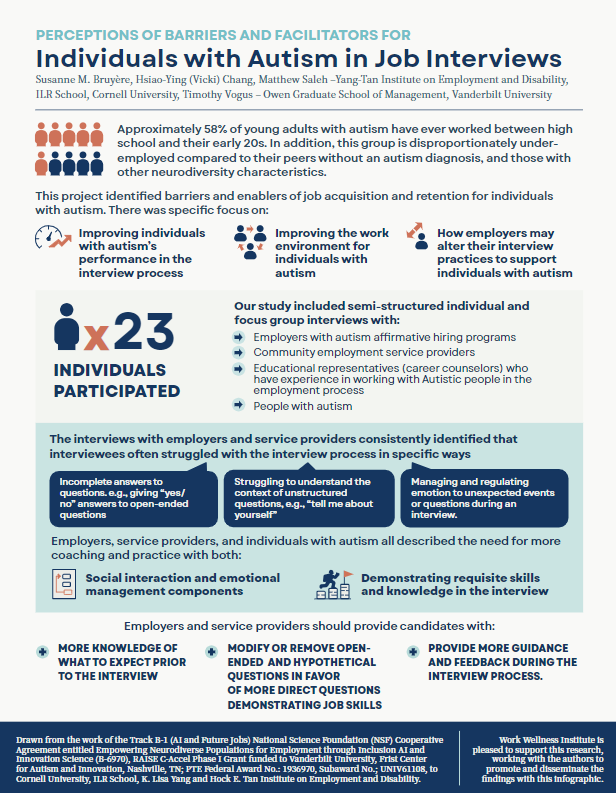
Interviews are, at their core, a test of adaptability—a demand to perform under pressure while adhering to a set of rules that are rarely articulated. For autistic individuals, this opacity can be paralyzing. The solution? Treat the interview as a puzzle to be solved through systematic analysis rather than a social gauntlet to endure. This begins with deconstructing the process into its constituent parts and addressing each with intentionality.
Start by researching the company’s culture, not just its mission statement. Look for patterns in how they communicate—do they use formal language in job postings? Do they highlight teamwork or individual achievement? Next, anticipate the types of questions you’ll face. Autistic individuals often excel at structured problem-solving, so prepare responses using the STAR method (Situation, Task, Action, Result) to ensure clarity and conciseness. Practice with a trusted friend or mentor, but don’t rely solely on verbal feedback. Record yourself and analyze your tone, pacing, and body language for any unintentional cues that might distract from your message.
Another critical element is scripting your own questions. Interviews are a two-way street, and your inquiries can demonstrate depth of thought. Ask about the team dynamics, the biggest challenges facing the department, or how success is measured. These questions not only showcase your strategic mindset but also help you determine if the role is the right fit for you. Preparation isn’t about memorizing scripts; it’s about arming yourself with the tools to navigate uncertainty with confidence.
The Art of Self-Advocacy: Owning Your Narrative Without Apology
Self-advocacy in an interview is less about selling yourself and more about inviting the interviewer to see the world through your lens. This requires a delicate balance between authenticity and strategic framing. The key is to reframe your autism not as a barrier but as a unique perspective that adds value. Instead of downplaying your differences, highlight how they contribute to your work style. For example, if you thrive in structured environments, emphasize your ability to create systems that enhance team efficiency. If you have sensory sensitivities, discuss how you’ve adapted your workspace to minimize distractions.
It’s also important to address potential concerns proactively. If eye contact is challenging, explain that you’re focusing on active listening. If you struggle with small talk, redirect the conversation to substantive topics. The goal isn’t to eliminate your natural way of being but to present it in a way that aligns with the employer’s needs. Remember, interviews are not just about proving you can do the job; they’re about proving you can do it in a way that’s sustainable and authentic to you.
Leveraging Technology and Accommodations: Tools for a Level Playing Field
The modern interview landscape offers tools that can level the playing field for neurodivergent candidates. Video interviews, for instance, allow you to control your environment—adjusting lighting, minimizing background noise, and even using notes discreetly. If the interview is in person, request accommodations in advance, such as a quiet room or extra time to process questions. Many employers are increasingly open to these requests, especially when framed as a way to ensure you can perform at your best.
Technology can also aid in preparation. Use apps to practice interview responses, simulate real-time feedback, or even generate potential questions based on the job description. Some platforms offer AI-driven analysis of your tone and word choice, helping you refine your delivery. The digital age has democratized access to resources that were once out of reach, making it easier than ever to enter an interview with a sense of preparedness and control.
Post-Interview: The Unseen Work of Turning Rejection into Redirection
Rejection is an inevitable part of the job search process, but it doesn’t have to be a dead end. For autistic individuals, feedback can feel like a personal indictment rather than a data point for improvement. The trick is to treat each interview as a learning opportunity, regardless of the outcome. If you don’t get the job, request feedback—politely and professionally. Ask if there were concerns about your qualifications, communication style, or cultural fit. Use this information to refine your approach, whether that means adjusting your responses, practicing a different tone, or targeting roles that align more closely with your strengths.
It’s also worth considering that rejection might not reflect your abilities but rather the employer’s limitations. A company that doesn’t value neurodiversity may not be the right fit for you in the long run. Use this as an opportunity to seek out organizations that prioritize inclusion and innovation. The right employer will recognize the value you bring—not in spite of your differences, but because of them.
Redefining Success: Beyond the Interview to Lasting Impact
The ultimate goal of any interview isn’t just to land the job; it’s to lay the groundwork for a fulfilling career. For autistic professionals, this means finding environments where their strengths are celebrated and their challenges are accommodated. It means advocating for policies that support neurodiversity, such as flexible work arrangements, clear communication channels, and sensory-friendly workspaces. It also means redefining what success looks like—not as a linear climb up the corporate ladder, but as a journey of continuous growth and contribution.
The interview is merely the first step in a much larger narrative. It’s a chance to showcase not just what you can do, but how you do it—and why that matters. The world of work is slowly waking up to the fact that diversity isn’t just a moral imperative; it’s a competitive advantage. By embracing your neurodivergence and approaching interviews with strategy and self-assurance, you’re not just changing the game. You’re redefining it.
So the next time you step into an interview room, remember: you’re not there to perform a role. You’re there to transform it. And that’s a promise worth keeping.