In the vast constellation of human identity, few intersections shimmer as brightly—or as misunderstood—as the convergence of autism and nonbinary experiences. These two identities, often relegated to the periphery of societal discourse, share a profound kinship in their defiance of rigid categorization. Like rivers carving their own paths through unyielding rock, they resist the mold of conventional expectations, forging new landscapes of selfhood. To understand this overlap is to witness a dance of dual liberation, where the mind’s wiring and the soul’s expression intertwine in a symphony of authenticity.
Autism, with its mosaic of sensory sensitivities, social nuances, and cognitive rhythms, is not a monolith but a spectrum as fluid as the northern lights. Similarly, nonbinary identity—existing beyond the binary confines of male and female—is not a single story but a vast anthology of lived experiences. When these two worlds collide, they create a tapestry rich with texture, where the threads of neurodivergence and gender nonconformity weave together to form something entirely new. This is not a mere coincidence but a testament to the inherent complexity of human diversity.
The Neurodivergent Compass: How Autism Shapes Gender Perception
For many autistic individuals, the experience of gender is not a linear journey but a labyrinth of introspection and sensory awareness. The autistic mind often operates outside the social scripts that dictate gender norms, leading to a heightened sensitivity to internal cues rather than external expectations. Imagine a painter who sees colors invisible to others; similarly, an autistic person may perceive gender not as a binary choice but as a spectrum of hues, textures, and emotions.
Research suggests that autistic individuals are more likely to identify outside the traditional gender binary. This phenomenon may stem from a combination of factors: a reduced inclination to conform to societal pressures, a deeper focus on self-reflection, and a unique relationship with identity itself. The autistic brain, unburdened by the weight of social conditioning, often seeks authenticity with unrelenting precision. For some, this means rejecting labels entirely, while for others, it means embracing a nonbinary identity that aligns more closely with their internal reality.
Consider the story of a young person who, from childhood, felt a disconnect between their assigned gender and their sense of self. In a world that insists on clear-cut definitions, this disconnect can feel like trying to fit a square peg into a round hole. For autistic individuals, this struggle is often compounded by the challenges of communication and social navigation. Yet, within this struggle lies a profound opportunity: the chance to redefine identity on their own terms.
 Autism and nonbinary identity share a common thread: the courage to exist outside the expected. This courage is not born of defiance alone but of an innate understanding that identity is not a fixed destination but a fluid journey.
The Gender Spectrum as a Neurodivergent Canvas
If autism is a prism refracting the light of human experience, then gender is one of the colors it reveals. The nonbinary experience, in particular, resonates with the autistic way of perceiving the world—fluid, dynamic, and resistant to static definitions. For many nonbinary individuals, gender is not a label but a lived experience, a daily negotiation between self and society. This experience mirrors the autistic relationship with social norms, where the rules of engagement are often unclear, leaving room for personal interpretation.
In this context, the nonbinary identity becomes a sanctuary for those who find solace in ambiguity. It is a declaration that identity is not a checkbox but a spectrum, much like the way autistic individuals experience the world through varied sensory and cognitive lenses. The overlap between these two identities is not a coincidence but a reflection of a shared ethos: the belief that complexity is not a flaw but a feature of human existence.
Imagine a world where gender is as varied as the patterns in a kaleidoscope. For autistic and nonbinary individuals alike, this world is not a fantasy but a reality. It is a world where the rigid structures of the past crumble, replaced by a landscape of infinite possibility. In this world, the act of self-identification is not a rebellion but a celebration—a celebration of the unique ways in which we experience and express ourselves.
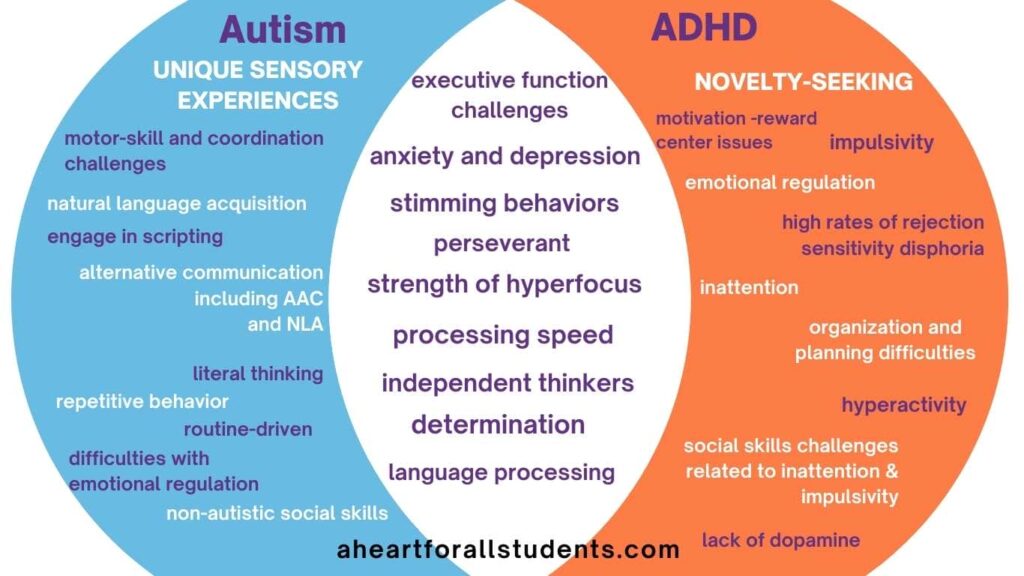 The intersection of autism and nonbinary identity is a reminder that diversity is not a deviation but a fundamental aspect of human nature. It challenges us to expand our understanding of what it means to be human.
Challenges and Triumphs: Navigating a Binary World
Despite the beauty of this overlap, the journey is not without its obstacles. Society’s insistence on binary frameworks—whether in gender or neurotype—creates a landscape fraught with misunderstanding. For autistic nonbinary individuals, this can manifest in a variety of ways: from the misgendering that stems from a lack of awareness to the dismissal of their experiences as mere “phases” or “quirks.” The double burden of being both neurodivergent and gender nonconforming can feel like navigating a minefield, where every step risks misunderstanding or outright rejection.
Yet, within these challenges lies a quiet resilience. Autistic nonbinary individuals often develop a remarkable capacity for self-advocacy, learning to articulate their needs and boundaries with clarity and conviction. They become architects of their own narratives, constructing identities that are as unique as their fingerprints. This resilience is not born of privilege but of necessity—a necessity to carve out space in a world that often seeks to erase them.
Consider the story of a nonbinary autistic person who, after years of struggling to fit into a world that demanded conformity, finally found a community that celebrated their differences. This community, whether online or in person, becomes a lifeline—a place where their experiences are validated and their identities affirmed. It is in these spaces that the true power of the overlap between autism and nonbinary identity shines: in the solidarity of shared struggles and triumphs.
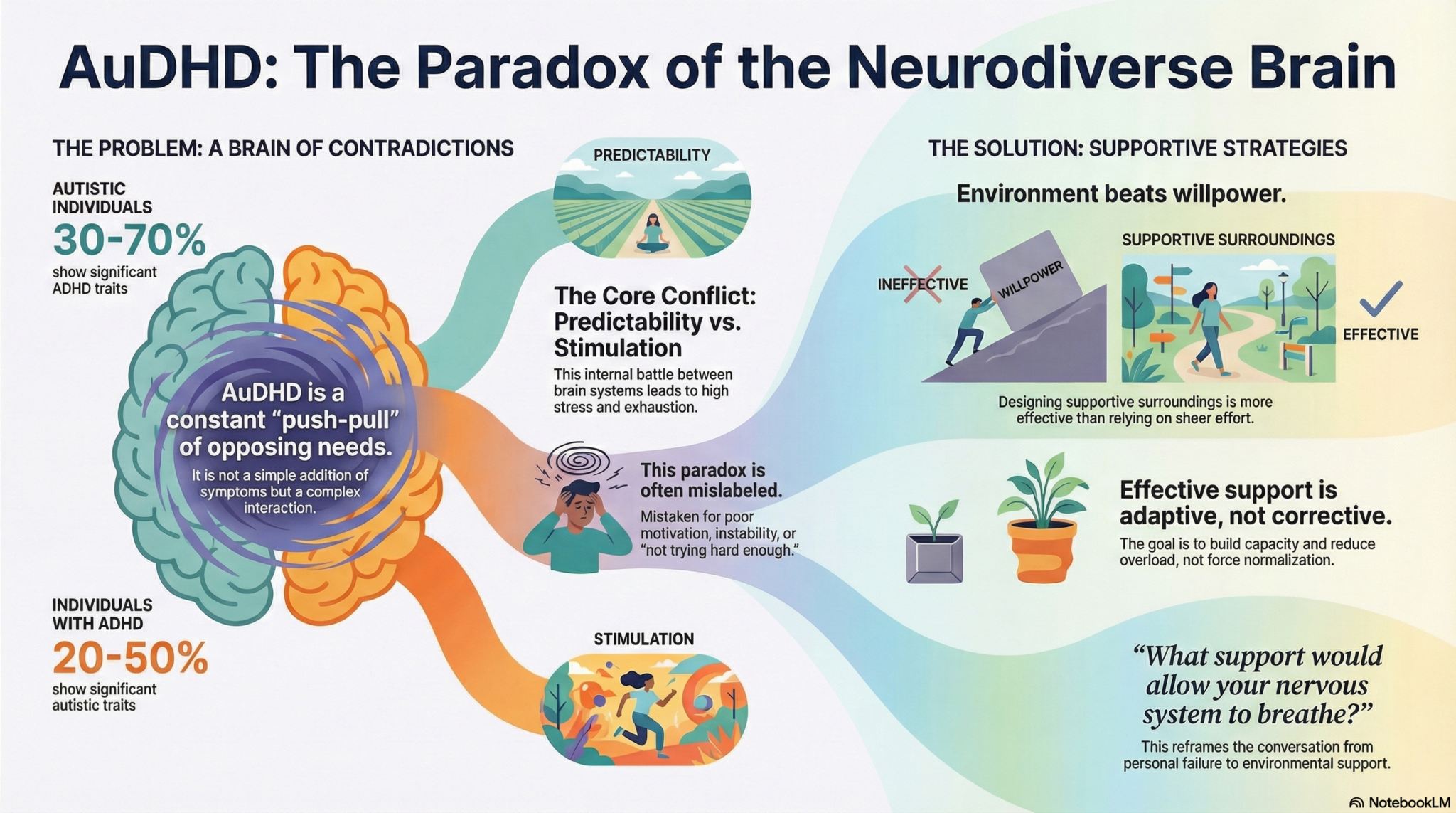 The challenges faced by autistic nonbinary individuals are not insurmountable. They are, instead, the crucible in which their strength is forged.
Embracing the Fluidity: A New Paradigm of Identity
The convergence of autism and nonbinary identity is more than a mere overlap; it is a paradigm shift—a challenge to the very foundations of how we understand identity. It invites us to question the binaries that have long defined human experience and to embrace a world where fluidity is not a deviation but a norm. In this new paradigm, identity is not a fixed point but a dynamic process, a river that carves its own path through the landscape of existence.
For those who exist at this intersection, the journey is one of constant discovery. It is a process of unlearning the scripts that society has written for them and rewriting their own. It is a celebration of the ways in which their neurodivergence and gender nonconformity enrich their lives, rather than limit them. And it is a testament to the power of authenticity—a power that lies not in conformity but in the courage to be unapologetically oneself.
This new paradigm is not without its critics. Some may argue that the overlap between autism and nonbinary identity is overstated or that it dilutes the distinct experiences of each. Yet, to dismiss this intersection is to ignore the lived realities of those who live it. It is to deny the richness of a perspective that challenges us to see the world in new and unexpected ways. In embracing this overlap, we do not diminish the individuality of each identity; we amplify the beauty of their convergence.
The future of identity is fluid, dynamic, and unbounded by the constraints of the past. It is a future where the autistic nonbinary individual is not an anomaly but a pioneer—a trailblazer who paves the way for a more inclusive and understanding world. In this future, the rigid categories of gender and neurotype give way to a landscape where everyone is free to define themselves on their own terms.
As we stand on the precipice of this new era, it is essential to listen to the voices of those who live at the intersection of autism and nonbinary identity. Their stories are not just narratives of struggle but of triumph, resilience, and unbridled authenticity. They remind us that identity is not a prison but a garden—a garden where each person is free to grow in their own unique way.
In the end, the overlap between autism and nonbinary identity is a celebration of the human capacity for complexity and change. It is a reminder that the most profound truths about ourselves are often found not in the rigid structures of the past but in the fluid, ever-evolving landscapes of the present. And it is an invitation to all of us to embrace the beauty of our differences—to see them not as obstacles but as the very threads that weave the tapestry of human diversity.