What if a machine could unlock emotions, bridge social divides, and guide a child through the labyrinth of autism with unwavering patience? Robotics, once confined to factory floors and sci-fi narratives, now stands at the threshold of a profound therapeutic revolution. For children navigating the complexities of autism spectrum disorder (ASD), robots are emerging not as cold automatons, but as empathetic companions—tools that transform therapy from a chore into a playful exploration. Yet, as with any innovation, the path is fraught with nuance. Can these mechanical allies truly bridge the human divide, or do they risk reducing therapy to a scripted performance? Let’s delve into the transformative role of robotics in autism therapy, where science meets empathy, and where every interaction is a step toward connection.
The Dawn of Robotic Companions in Therapy
Autism therapy has long relied on human intuition, patience, and adaptive strategies. But what happens when a therapist’s presence, though invaluable, is supplemented—or even enhanced—by a machine’s consistency? Enter social robots: programmable entities designed to engage, respond, and adapt to the unique needs of autistic children. Unlike traditional therapy tools, these robots offer a controlled environment where social cues can be broken down into digestible fragments. A child might struggle to interpret a therapist’s facial expressions, but a robot’s exaggerated, predictable movements and tones can serve as a Rosetta Stone for emotional literacy.
Consider the case of a nonverbal child who avoids eye contact. A robot, programmed to maintain a gentle gaze and respond to proximity with a cheerful beep, might coax them into sustained interaction. The robot doesn’t judge silence; it doesn’t rush. It waits. This predictability reduces anxiety, a cornerstone of autism therapy. Studies suggest that children with ASD often find robots less intimidating than humans, as their interactions lack the unpredictability of social norms. In this way, robots act as a bridge—not a replacement—for human connection, offering a low-pressure space to practice skills before transferring them to real-world scenarios.
Designing Empathy: The Anatomy of a Therapeutic Robot
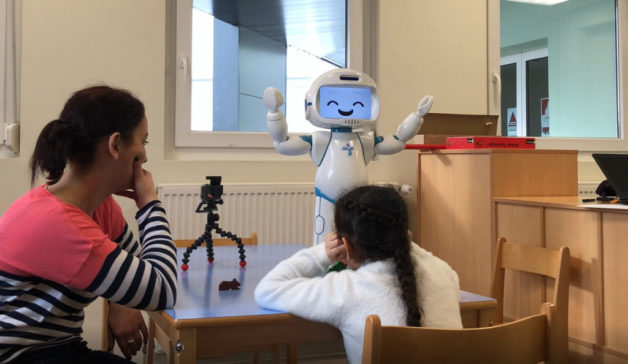
The magic of robotic therapy lies not in its circuits, but in its design. A well-crafted therapeutic robot is a study in anthropomorphism—carefully calibrated to appear approachable without veering into the uncanny valley. Take, for instance, the QTrobot, a humanoid figure with a child-friendly face, modular limbs, and a voice that modulates in pitch to convey warmth. Its design prioritizes clarity: every gesture is intentional, every response predictable. This intentionality is crucial, as autistic children often thrive in environments where ambiguity is minimized.
Beyond aesthetics, the robot’s programming must account for sensory sensitivities. Many autistic children experience hypersensitivity to sound or touch, so robots are often equipped with adjustable volume controls, soft materials, and the ability to pause interactions if overstimulation occurs. Some models even incorporate biofeedback sensors to monitor a child’s stress levels, adjusting their behavior in real time. The result? A therapy session that feels less like a clinical exercise and more like an interactive story, where the child is the protagonist and the robot is a co-pilot navigating the plot.
The Playful Paradox: Can Robots Make Therapy Fun?
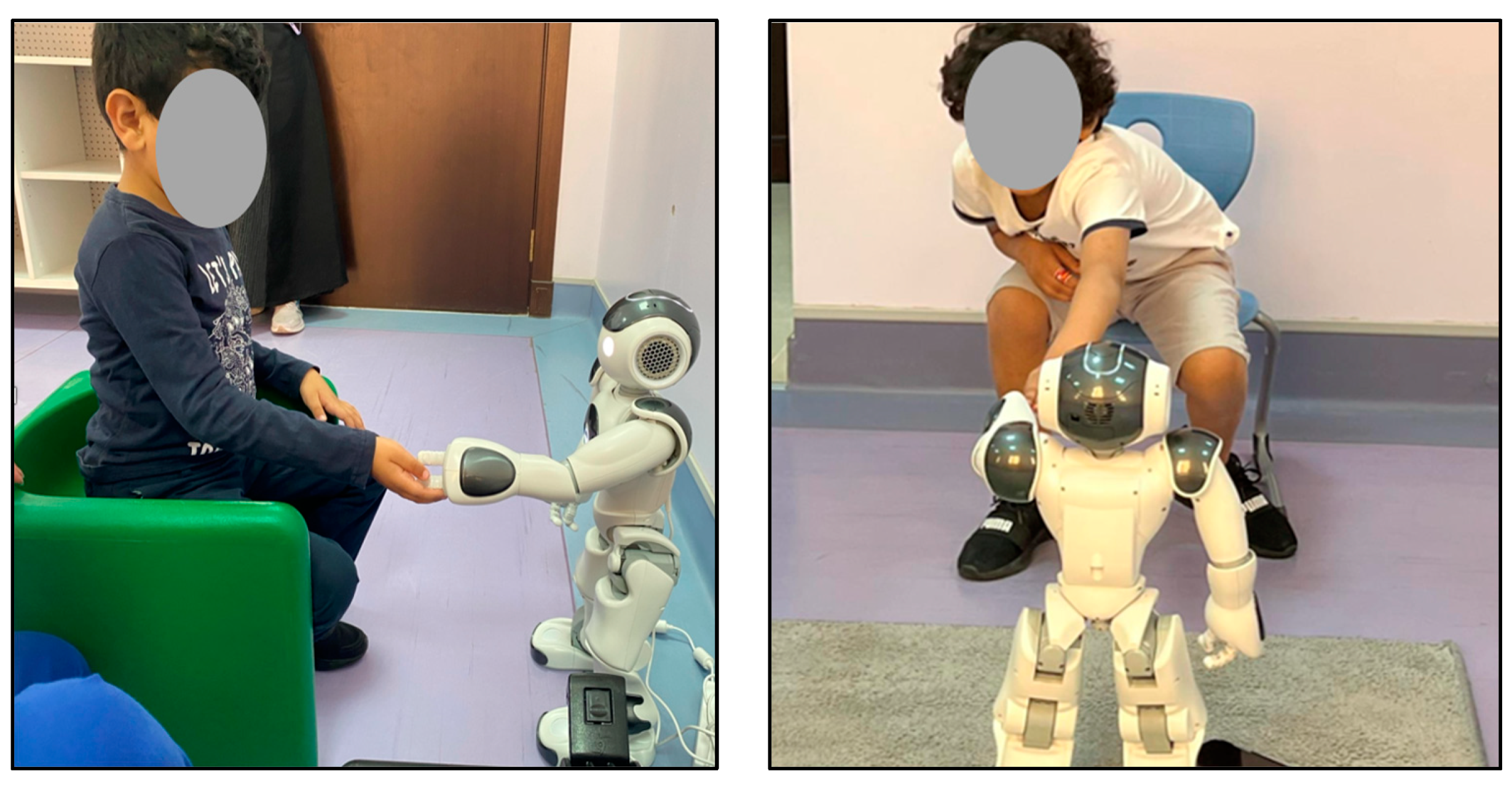
Therapy, by its nature, can feel like work—structured, repetitive, and sometimes draining. But what if it could feel like play? Robots excel in gamifying social learning. Imagine a scenario where a child must “teach” a robot to mimic a facial expression, or where a game of peekaboo with a robotic companion reinforces turn-taking skills. These interactions, disguised as play, mask the therapeutic intent, reducing resistance and increasing engagement. The robot becomes a partner in curiosity, its responses designed to elicit laughter, frustration, or even a spontaneous “hello.”
Yet, this playful approach raises a critical question: Does the fun dilute the therapeutic value? Autism therapy isn’t about entertainment; it’s about growth. The challenge lies in ensuring that the robot’s interactions are not just engaging, but purposeful. A robot that laughs at every joke might reinforce echolalia, while one that ignores repetitive questions could frustrate a child seeking consistency. The key is balance—designing experiences that are enjoyable yet aligned with developmental goals. When done right, the robot’s playful nature becomes a Trojan horse, smuggling in lessons of empathy, communication, and emotional regulation.
Beyond the Lab: Real-World Applications and Limitations
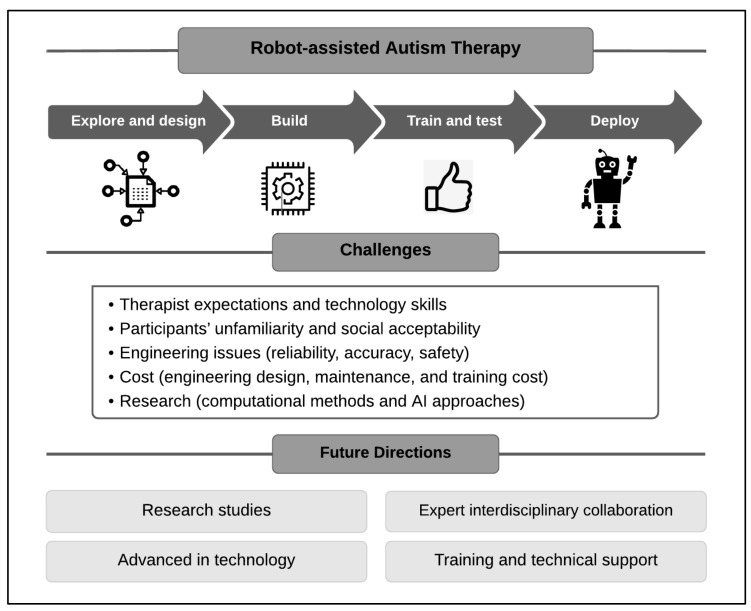
While robots show promise in controlled settings, their transition to real-world therapy is not without hurdles. Schools, clinics, and homes must grapple with practical concerns: cost, accessibility, and the need for trained facilitators to oversee sessions. Not every family can afford a $5,000 robot, nor does every therapist have the bandwidth to integrate one into their practice. Moreover, the long-term efficacy of robotic therapy remains an open question. Can a child’s progress with a robot translate to improved interactions with peers or family members? Early research suggests yes, but the evidence is still evolving.
There’s also the ethical dimension. Could a child become overly attached to a robot, mistaking its programmed responses for genuine friendship? Might some parents or therapists view robots as a shortcut, reducing the need for human-led interventions? These concerns underscore the importance of viewing robots as tools—not replacements—for human therapists. The goal isn’t to automate empathy, but to augment it, freeing human professionals to focus on the nuanced, unpredictable aspects of therapy that machines cannot replicate.
The Future: A Symbiosis of Human and Machine
The future of autism therapy may lie not in choosing between robots and humans, but in harnessing their complementary strengths. Imagine a hybrid model where a robot handles repetitive drills—practicing greetings, identifying emotions—while a therapist steps in for the deeper, more complex work: navigating a meltdown, interpreting a child’s idiosyncratic language, or fostering sibling bonds. This symbiosis could democratize therapy, making high-quality interventions accessible to more families, regardless of geographic or economic barriers.
Advancements in artificial intelligence (AI) could further refine robotic therapy. Future models might leverage machine learning to adapt to a child’s evolving needs, recognizing patterns in behavior and suggesting personalized interventions. Imagine a robot that “remembers” a child’s favorite games or detects subtle shifts in mood, tailoring its responses accordingly. The possibilities are as vast as they are exciting, but they must be tempered by rigorous research and ethical safeguards.
As we stand on the precipice of this robotic renaissance, one truth becomes clear: the goal is not to replace the human touch, but to amplify it. Autism therapy is, at its core, about connection—between a child and their emotions, their family, their community. Robots, with their precision and patience, can serve as catalysts for these connections, but they cannot—and should not—be the sole architects. The most effective therapy will always be a dance between the predictable and the profound, the mechanical and the human. And in that dance, every child, regardless of where they fall on the spectrum, deserves a partner who listens, adapts, and, above all, cares.