Rigid thinking is a hallmark characteristic frequently observed in individuals on the autism spectrum. It manifests as an unwavering adherence to specific rules, routines, or perspectives, often limiting adaptability and spontaneous problem-solving. This cognitive inflexibility can present significant challenges in everyday life, hindering social interactions, learning, and emotional regulation. Understanding rigid thinking within the context of autism is essential for developing effective strategies to nurture flexibility and promote holistic development.
The Nature of Rigid Thinking in Autism
Rigid thinking, sometimes described as cognitive inflexibility, constitutes a difficulty in modifying thoughts or behaviors in response to changing circumstances. For autistic individuals, this may appear as a preference for sameness or resistance to new experiences. The underlying neurobiological factors contribute to this rigidity, linking to altered neural connectivity patterns and executive functioning differences. It is important to recognize that for many, such steadfastness provides a sense of predictability and security amid a complex sensory world.

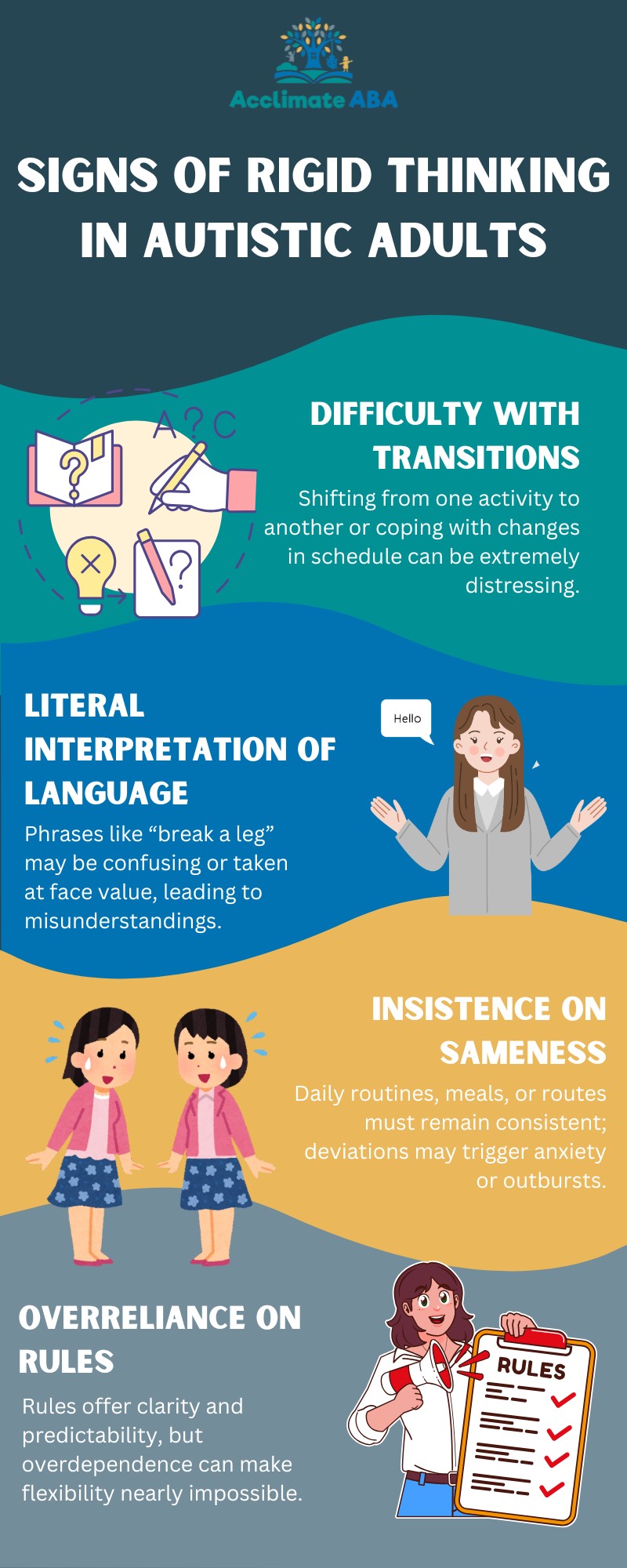
Rigid thinking can permeate various domains: inflexible adherence to routines, difficulty in shifting attention, literal interpretations of language, and challenges in perspective-taking. This cognitive pattern is not merely obstinacy; rather, it reflects distinct neurological processing and often magnifies sensory sensitivities and anxiety when confronted with the unfamiliar.
Types and Manifestations of Rigid Thinking
Delineating the diverse forms rigid thinking assumes is vital to tailoring support approaches. Common manifestations include:
- Behavioral Rigidity: Insistence on specific routines or sequences of events, with distress triggered by deviations.
- Conceptual Rigidity: Difficulty grasping abstract concepts or understanding metaphorical language, resulting in literal interpretations.
- Perseverative Interests: Intense focus on particular topics or activities, often to the exclusion of other stimuli.
- Black-and-White Thinking: Viewing situations in absolutes, such as seeing things as either completely right or wrong, without appreciation for nuance.
Each variant can impact social, educational, and occupational functioning uniquely. Recognizing these manifestations enriches the toolkit for caregivers, educators, and therapists supporting autistic individuals.
Implications of Rigid Thinking on Daily Life
The repercussions of rigid thinking reverberate across multiple facets of daily living. Social interactions may be fraught with misunderstandings due to inflexible conversational styles or difficulty adapting to dynamic social cues. Learning environments can become battlegrounds when changes in schedules or teaching methods unsettle the individual. Emotional regulation is often compromised, as unexpected events provoke anxiety or frustration.
In adults, rigid cognitive patterns may influence decision-making, problem-solving, and workplace adaptability. Without intervention, these challenges can contribute to isolation, reduced self-efficacy, and mental health difficulties.

A comprehensive appreciation of these implications underlines the necessity of proactive strategies to foster flexibility without undermining the comfort that predictability affords.
Strategies to Support Flexibility
Enhancing cognitive flexibility in autistic individuals demands a nuanced, individualized approach, balancing respect for their intrinsic preferences with gentle encouragement toward adaptability.
1. Gradual Exposure and Desensitization: Introducing small, controlled changes to routines can help reduce resistance over time. For example, visual schedules that incorporate slight variations may prepare individuals for transition and lessen anxiety.
2. Cognitive Behavioral Techniques: Interventions designed to challenge rigid thought patterns and promote flexible thinking have shown efficacy. Techniques such as cognitive restructuring encourage re-evaluation of fixed beliefs.
3. Use of Visual Supports: Visual aids such as social stories, flowcharts, and task analyses empower understanding of alternative behaviors or solutions, rendering abstract flexibility more concrete and accessible.
4. Encouraging Problem-Solving Skills: Facilitating opportunities to explore multiple solutions to a challenge nurtures adaptability. This may involve modeling flexible responses or guided discovery learning.
5. Mindfulness and Emotional Regulation: Practices that cultivate awareness of internal states support individuals in managing the distress associated with change, thereby improving receptivity to flexibility efforts.
6. Collaboration with Caregivers and Educators: Consistency across environments reinforces flexible behaviors and ensures that support is coherent and sustained.
The Role of Support Networks
A robust support system is instrumental in fostering flexibility. Family members, educators, therapists, and peers play complementary roles in creating environments where experimentation and deviation from routine are not only tolerated but encouraged.
Training and education enable supporters to understand the nuances of rigid thinking and respond with empathy and appropriate interventions. Social skills groups and peer-mediated interventions provide platforms for practicing flexibility in social contexts, enriching interpersonal competencies.
Moreover, advocacy for accommodations within educational and occupational settings can mitigate the stressors that exacerbate rigidity. This dual approach—providing individual skill-building alongside environmental adaptations—enhances overall outcomes.
Embracing Neurodiversity and Flexibility
It is pivotal to approach rigid thinking not solely as a deficit but within the broader framework of neurodiversity. Autistic individuals often possess remarkable strengths, including attention to detail, persistence, and deep knowledge areas, closely tied to their cognitive styles.
Supporting flexibility should not aim to erase these traits but rather to expand the individual’s repertoire of responses, affording greater choice and autonomy. This perspective champions respect, dignity, and empowerment, promoting a world more accommodating of diverse cognitive experiences.

Conclusion
The journey toward supporting flexibility in autistic individuals grappling with rigid thinking is multifaceted and ongoing. It requires a sophisticated understanding of the neurocognitive substrates of rigidity, compassion for the lived experience, and dedication to tailored interventions. Through thoughtful strategies, robust support networks, and an embrace of neurodiversity, it is possible to enrich adaptability, enhance quality of life, and empower autistic individuals to navigate an ever-changing world with confidence and resilience.