
Imagine life as a vast symphony, an orchestration of countless notes and rhythms. For most, this melody flows with an intuitive cadence, each beat naturally slipping into the next. Yet, for individuals with autism, the music often demands a meticulously crafted score—a structured routine that orchestrates the unfolding of their day. This blueprint, far from mere habit, serves as a vital anchor in a sea of sensory complexity and unpredictability. Understanding why daily routines carry such profound significance reveals more than just behavioral patterns; it uncovers a pathway to empowerment, stability, and personal growth.
The Architecture of Predictability: Stability in an Uncertain World
Daily routines function like the architectural framework of a building—often unnoticed, but critical to the structure’s integrity. For individuals with autism, the world is frequently an unpredictable canvas, splattered with overwhelming stimuli and unexpected changes. Routines carve out predictability, rendering the abstract concrete and the chaotic calm.
This predictability reduces anxiety, a common companion in the experience of autism. Anxiety can arise from sudden transitions or unforeseen events that disrupt the internal sense of order. A consistent routine acts as a psychological bulwark, providing a reliable map that guides navigation through each day, thereby fostering a sense of security and control.
Neurodivergent Navigation: The Cognitive Benefits of Structured Routines
Beyond emotional regulation, structured routines align with the cognitive processing strengths and challenges intrinsic to autism. Tasks segmented into familiar sequences reduce the cognitive load, making complex activities more manageable. This segmentation operates like a relay race, where breaking down a journey into stages allows the runner to focus on one leg at a time, delivering steadier progress.
Moreover, this compartmentalization enhances skill acquisition. Repetition within a structured framework promotes muscle memory and procedural fluency, turning daunting tasks into familiar rituals. Over time, this facilitates independence—transforming once-dependent actions into autonomous behaviors.
Harnessing Visual Schedules: The Power of Tangible Cues
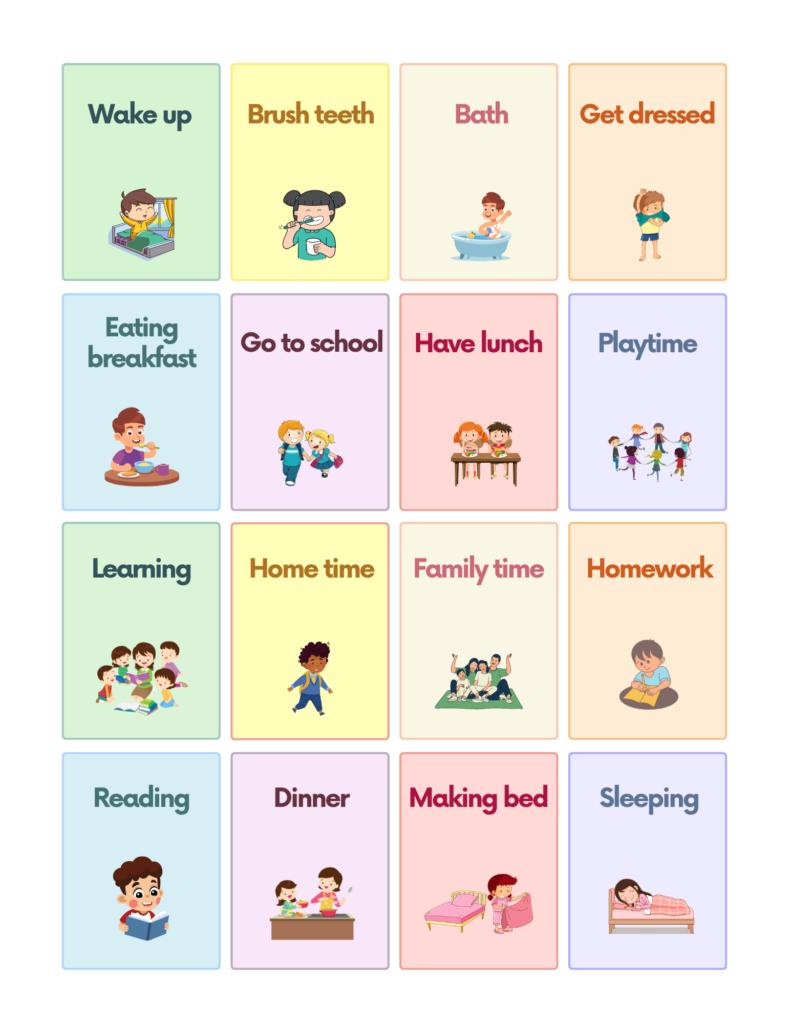
Visual schedules serve as tangible signposts along the path, translating abstract concepts of time and order into concrete symbols. They bridge linguistic and cognitive gaps by utilizing imagery and spatial organization, which can resonate more profoundly with autistic individuals than verbal instructions alone.

These visual frameworks do more than illustrate a timetable; they empower users with foresight and autonomy. Knowing what to expect cultivates confidence, diminishing the stress of uncertainty. Furthermore, visual schedules encourage active engagement, inviting individuals to participate in the orchestration of their own daily symphony.
The Sensory Symphony: Managing Overwhelm Through Structured Time
Sensory sensitivities often amplify the challenges faced daily by those with autism. The barrage of sounds, lights, and textures can render ordinary environments overwhelming. Structure, in this context, is a form of sensory armor, allowing individuals to anticipate and prepare for stimuli.
By weaving calming activities and sensory breaks seamlessly into the day’s routine, sensory regulation becomes less a burden and more a deliberate practice. This intentional design balances stimulation and rest, echoing the nuanced movements of a well-conducted orchestra where crescendos are followed by soothing decrescendos.
Social Scaffolding: Facilitating Interaction and Communication
Social interactions can often feel like complex dances with unpredictable steps. Incorporating structured routines introduces a familiar rhythm to these social exchanges, often making them more accessible and less intimidating. Knowing when and how interactions will occur allows for preparatory cognitive and emotional adjustments.
The predictability not only eases anxiety but also carves out opportunities to develop communication skills incrementally. Routines that include social scripts or role-playing within familiar contexts can scaffold social understanding, creating a foundation upon which more spontaneous interactions can be built.
Customizing the Blueprint: Individualizing Routines for Maximum Impact
One of the unique appeals of structured routines lies in their adaptability. While the notion of routine might evoke rigidity, effective daily structures tailor themselves to individual preferences, strengths, and needs. This customization transforms routines from confining rules into liberating frameworks, encouraging exploration within set boundaries.
Elements such as preferred activities, varying sensory needs, and fluctuating energy levels are woven into the routine’s fabric. This dynamic flexibility ensures that the routine does not become an impediment but rather a tool for flourishing.

Bridging Transitions: From Childhood to Independence
The significance of structured routines extends beyond day-to-day management; it is foundational in transitioning through life stages. For many autistic individuals, moving from childhood to adulthood involves navigating new environments, responsibilities, and expectations that can be daunting without a reliable scaffold.
By establishing solid daily routines early on, caregivers and educators equip individuals with a lifelong toolkit that promotes adaptability and resilience. These routines act as bridges, making each transition less a leap into the unknown and more a measured step along a well-paved path.
Conclusion: The Quiet Power of Structure
Daily routines in the context of autism are far more than ritualized habits—they are the steady metronome in a complex composition, ensuring harmony amidst potential dissonance. They grant predictability, empower autonomy, support sensory regulation, and scaffold social interaction. The unique appeal of structure lies in its dual nature: providing solid foundations that simultaneously allow for personal growth and flexibility.
Embracing the vital role of structured routines fosters environments where individuals with autism can thrive, transforming the unpredictable cacophony of the world into a thoughtfully composed symphony of achievement, confidence, and well-being.












