Imagine the humble LEGO brick not merely as a child’s toy but as an architect of connections, a silent sculptor shaping the intricate edifice of social and motor development. For individuals on the autism spectrum, these colorful interlocking pieces transcend their plastic form, becoming vehicles of transformation—a bridge between isolation and interaction, a toolkit for mastering the choreography of human engagement.
The Intrinsic Appeal of LEGO for Autism
LEGO’s allure for many with autism lies in its inherent structure and predictability. Each brick fits perfectly with another, offering a universe governed by clear rules and infinite creativity. This tangible order provides a sanctuary from the often overwhelming unpredictability of social environments. The tactile nature of LEGO complements sensory preferences, giving users direct control over a miniaturized world they can shape and reshape at will.
The metaphor of LEGO as a “language” cannot be overstated. Much like syntax governs communication, the bricks govern construction, allowing users to tell stories without words, to express complex ideas through spatial design. This unique appeal fosters engagement in ways that traditional social contexts may not.
LEGO Therapy: A Framework for Social Skill Development
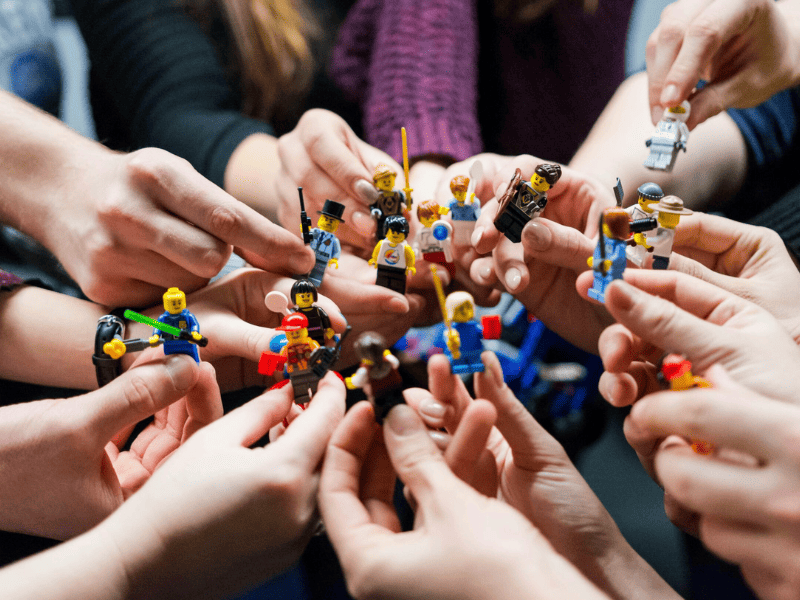
LEGO therapy has emerged as a robust intervention method, harnessing these plastic blocks as a medium for nurturing social interaction. The therapy typically involves small groups where individuals collaborate to complete LEGO projects, necessitating cooperative communication, turn-taking, and joint problem-solving.
Within this context, the LEGO bricks become catalysts for dialogue and shared focus. Participants learn to articulate needs, negotiate roles, and hone nonverbal cues—a dance of social reciprocity played out in the language of bricks and patterns. Gradually, these practiced skills transfer to broader social scenarios, emboldening confidence and adaptability.

Mastering Fine Motor Skills Through Play
The act of assembling LEGO pieces demands precision, dexterity, and bilateral coordination. For individuals grappling with fine motor challenges—a commonplace within the autism community—manipulating these miniature parts offers meaningful practice in a joyful setting.
Repeated engagement refines muscle control and hand-eye coordination. The variety of shapes, sizes, and textures invite experimentation. Importantly, the gratification derived from constructing something tangible elevates motivation, turning therapeutic repetition into enthusiastic exploration.

Encouraging Cognitive Flexibility and Imaginative Play
The ordered yet infinitely adaptable nature of LEGO sets provides fertile ground for cultivating cognitive flexibility. On one hand, the bricks demand adherence to instructions and logical sequencing—disciplining the mind. On the other, they invite invention, allowing users to break from convention and innovate.
This balance nurtures executive function skills—planning, problem-solving, adaptability—that often pose hurdles for individuals with autism. Imaginative play with LEGO enables hypothesis testing in a risk-free environment, bolstering creative thinking and encouraging the embrace of novel perspectives.
LEGO as a Social Equalizer
In the social arena, LEGO strips away hierarchy and societal expectations. Whether a novice or an expert builder, each participant’s contribution holds visible, tangible value. This creates an inclusive microcosm where communication extends beyond spoken language to the universal dialect of shared creativity.
By concentrating on a shared goal, individuals find common ground that fosters empathy and mutual respect. For many, this experiential learning ignites a sense of belonging and mutual accomplishment—a precious counterpoint to isolation.
Challenges and Considerations in LEGO-Based Interventions
Despite its manifold benefits, LEGO therapy is not without complexities. Facilitators must be attuned to individual differences in sensory sensitivities and interests to tailor engagement appropriately. The structured environment of LEGO play should remain flexible enough to accommodate spontaneous expression while maintaining therapeutic objectives.
Moreover, the transition from LEGO-mediated social skills to real-world interaction requires thoughtful planning and reinforcement. Support systems extending beyond therapy sessions are essential to scaffold generalization and sustain gains over time.
In essence, the intersection of autism and LEGO represents a profound exemplar of how play can be harnessed as a multifaceted tool for growth. These simple bricks belie their potential to unlock dialogue, refine motor precision, and awaken imagination within a structured yet boundless landscape.
As the layers of plastic interlock, so too do the connections in the mind and heart—building not just models, but pathways to greater communication, understanding, and inclusion. LEGO, thus, stands not merely as a toy but as a testament to the transformative power of play.