In a world that often moves at the speed of a metronome set to “allegro,” autistic individuals navigate a landscape where the rhythm of social cues, workplace expectations, and institutional norms can feel as unpredictable as a jazz improvisation—beautiful to some, jarring to others. Discrimination, in this context, isn’t merely an inconvenience; it’s a systemic misattunement, a failure to recognize that the melody of human diversity includes notes that don’t conform to the sheet music of conventionality. To understand autism and discrimination is to peer into a mirror that reflects not just the biases of society, but the resilience of those who refuse to be silenced by them. This is a story of rights, recognition, and the quiet courage of those who demand to be heard on their own terms.
The Spectrum of Bias: How Discrimination Manifests in Everyday Life
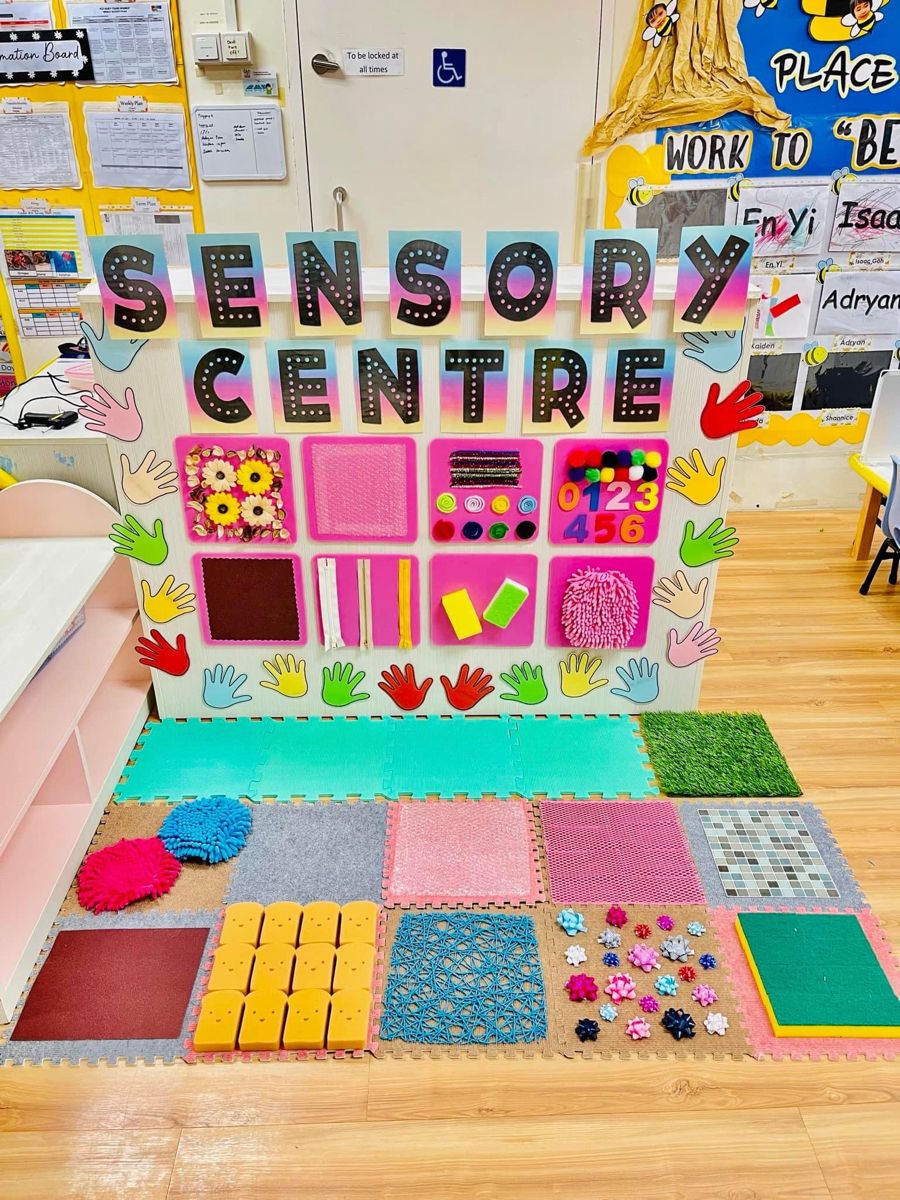
Discrimination against autistic individuals is not a monolith; it is a kaleidoscope of microaggressions, overt exclusion, and institutional neglect. In the workplace, it might appear as the unspoken assumption that an autistic employee lacks competence, despite evidence to the contrary. In education, it could be the refusal to accommodate sensory sensitivities, turning a classroom into a sensory minefield. Socially, it often disguises itself as pity or infantilization—treating autistic adults as perpetual children incapable of autonomy. These biases are not always malicious; sometimes, they are the result of ignorance masquerading as concern. Yet, the impact is the same: a world that insists on fitting square pegs into round holes, even when the pegs are perfectly capable of reshaping the wood.
Consider the concept of “neurotypical privilege,” a term that describes the unearned advantages bestowed upon those whose cognitive wiring aligns with societal norms. For autistic individuals, this privilege is conspicuously absent. Instead, they face the burden of “masking”—the exhausting practice of suppressing natural behaviors to avoid judgment. Masking is not just a social strategy; it is a survival tactic, a way to navigate a world that often punishes difference with exclusion. The cost, however, is steep: burnout, anxiety, and a profound sense of alienation. Discrimination, in this light, is not just about overt acts of exclusion; it is about the daily erosion of identity, the slow chipping away of self until one is left with a shadow of who they truly are.
The Legal Tapestry: Rights and Recourse in a Complex System
The law, in theory, is a shield against discrimination—a bulwark designed to protect the vulnerable from the arbitrary whims of power. For autistic individuals, however, the legal landscape is as fragmented as a shattered mosaic. In the United States, the Americans with Disabilities Act (ADA) prohibits discrimination based on disability, including autism, in employment, education, and public accommodations. Yet, the reality is far more nuanced. The ADA’s protections are only as strong as the willingness of institutions to enforce them. A workplace may claim to accommodate sensory needs but provide only a dimly lit, windowless room as a “quiet space.” A school may offer an Individualized Education Program (IEP) but fail to implement it with fidelity, leaving autistic students adrift in a sea of unmet needs.
Beyond the ADA, other legal frameworks offer fragmented protections. The Individuals with Disabilities Education Act (IDEA) ensures access to education, but its implementation varies wildly from district to district. Section 504 of the Rehabilitation Act prohibits discrimination in federally funded programs, yet its enforcement is often reactive rather than proactive. And then there are the international conventions, like the United Nations Convention on the Rights of Persons with Disabilities (CRPD), which affirm the right to equality and inclusion. Yet, ratification does not guarantee compliance. The law, in this context, is not a sword but a toolkit—one that requires constant vigilance, advocacy, and, often, the willingness to challenge systems that were never designed with autistic individuals in mind.

The Workplace Labyrinth: Navigating Employment with Autism
Employment is where the rubber of legal rights meets the road of lived experience. For autistic individuals, the journey to meaningful work is often a labyrinth of unspoken rules, sensory triggers, and institutional biases. Job interviews, for instance, are a minefield of social expectations—maintaining eye contact, offering a firm handshake, and engaging in small talk that feels as hollow as it is mandatory. Many autistic candidates excel in structured, detail-oriented roles, yet they are passed over for positions that demand social fluency over technical skill. The result? A workforce that underutilizes talent, leaving autistic individuals in roles that are either beneath their capabilities or so isolating that they become unsustainable.
Accommodations in the workplace are not just about ramps and elevators; they are about reimagining the very structure of work. Flexible schedules can accommodate the need for routine. Remote work can eliminate sensory overload. Clear, written instructions can replace the ambiguity of verbal cues. Yet, these accommodations are often treated as favors rather than rights, granted at the discretion of employers who may not fully grasp the concept of neurodiversity. The burden of requesting accommodations falls disproportionately on autistic employees, who must navigate the delicate balance of advocating for their needs without being perceived as “difficult.” The workplace, in this sense, is not a meritocracy but a hierarchy of conformity, where those who think differently are expected to conform or be left behind.
The Classroom Crucible: Education as a Battleground or a Bridge?
School is where the seeds of self-worth are planted, and for autistic students, the soil is often rocky. The traditional classroom is a social experiment designed for neurotypical children, where success is measured by participation, eye contact, and the ability to sit still for hours on end. Autistic students, who may process information differently or struggle with executive function, are often labeled as “disruptive” or “unmotivated” when they are simply trying to survive in an environment that was not built for them. The result is a cycle of exclusion: special education placements that segregate rather than integrate, IEPs that are ignored, and teachers who lack the training to meet diverse learning needs.
Yet, education can also be a bridge—a place where accommodations are not just tolerated but celebrated. Inclusive classrooms that embrace Universal Design for Learning (UDL) principles can level the playing field, offering multiple means of engagement, representation, and expression. Teachers who adopt a growth mindset, who see autism not as a deficit but as a difference, can transform the classroom into a space of belonging. The key lies in collaboration: between educators, parents, and autistic students themselves. When schools treat neurodiversity as an asset rather than a liability, the results are transformative—not just for autistic students, but for their neurotypical peers, who learn that the world is far richer when it includes a spectrum of minds.

The Social Script: Redefining Acceptance Beyond Tolerance
Society’s relationship with autism is often framed in terms of tolerance—a grudging acceptance that autistic individuals are “allowed” to exist, so long as they conform to certain expectations. But tolerance is not acceptance; it is a conditional hospitality, one that can be revoked at the slightest provocation. True acceptance requires a shift in perspective: from seeing autism as a problem to be fixed to recognizing it as a natural variation of human experience. This is not to romanticize the challenges that autistic individuals face, but to acknowledge that their differences are not flaws to be corrected but facets of identity to be honored.
The social script of autism acceptance is still being written, and it is a work in progress. It involves unlearning the myths that autistic people lack empathy or are incapable of love. It means challenging the narrative that autism is a tragedy to be overcome, rather than a part of the human tapestry. It requires listening to autistic voices—not as objects of pity or inspiration, but as experts in their own lives. When society moves beyond tolerance, it creates space for autistic individuals to thrive—not in spite of their differences, but because of them. The result is a world that is not just more inclusive, but richer, more innovative, and more deeply human.
The Power of Advocacy: From Silence to Solidarity
Advocacy is the engine that drives change, but it is not a solitary endeavor. It is a chorus of voices—autistic individuals, families, allies, and institutions—working in unison to dismantle the barriers that stand in the way of equality. The most effective advocacy is not top-down but bottom-up, rooted in the lived experiences of those who are directly affected. Autistic-led organizations, such as the Autistic Self Advocacy Network (ASAN), have been instrumental in shifting the conversation from “curing” autism to ensuring the rights of autistic people. Their work highlights the importance of self-determination, the dangers of ableist language, and the need for policies that center autistic voices.
Yet, advocacy is not without its challenges. The disability rights movement has long been plagued by the tension between inclusion and segregation, between the desire for independence and the need for support. For autistic individuals, this tension is particularly acute. Some advocate for greater integration into mainstream society, while others argue for the right to create their own communities, free from the pressures of conformity. The key is to recognize that there is no one-size-fits-all solution. Advocacy must be flexible, adaptive, and responsive to the diverse needs of the autistic community. It must also be intersectional, acknowledging that autistic individuals are not a monolith but a mosaic of identities shaped by race, gender, sexuality, and socioeconomic status.
A Call to Action: Building a World That Listens
The fight against discrimination is not a sprint but a marathon—a long, arduous journey toward a future where autistic individuals are not just tolerated but celebrated. It begins with education: teaching children from an early age that differences are not weaknesses but strengths. It continues with policy: ensuring that laws are not just written but enforced, that accommodations are not just offered but demanded. And it culminates in culture: a society that values neurodiversity as much as it values any other form of human diversity.
This is not a utopian vision; it is a practical one. It is a world where autistic employees are judged by their contributions, not their social skills. Where autistic students are given the tools to succeed, not the labels to fail. Where autistic voices are not just heard but amplified. It is a world where discrimination is not just illegal but unthinkable—a world where everyone, regardless of their neurology, can live with dignity, autonomy, and pride.
The path forward is not easy, but it is necessary. It requires courage, from those who dare to challenge the status quo, and compassion, from those who are willing to listen. It demands that we rethink our assumptions, that we rewrite our social scripts, and that we build a future where no one is left behind. For autistic individuals, this is not just about rights; it is about recognition. It is about being seen—not as a diagnosis, not as a stereotype, but as a person, with dreams, fears, and the unshakable right to exist exactly as they are.