
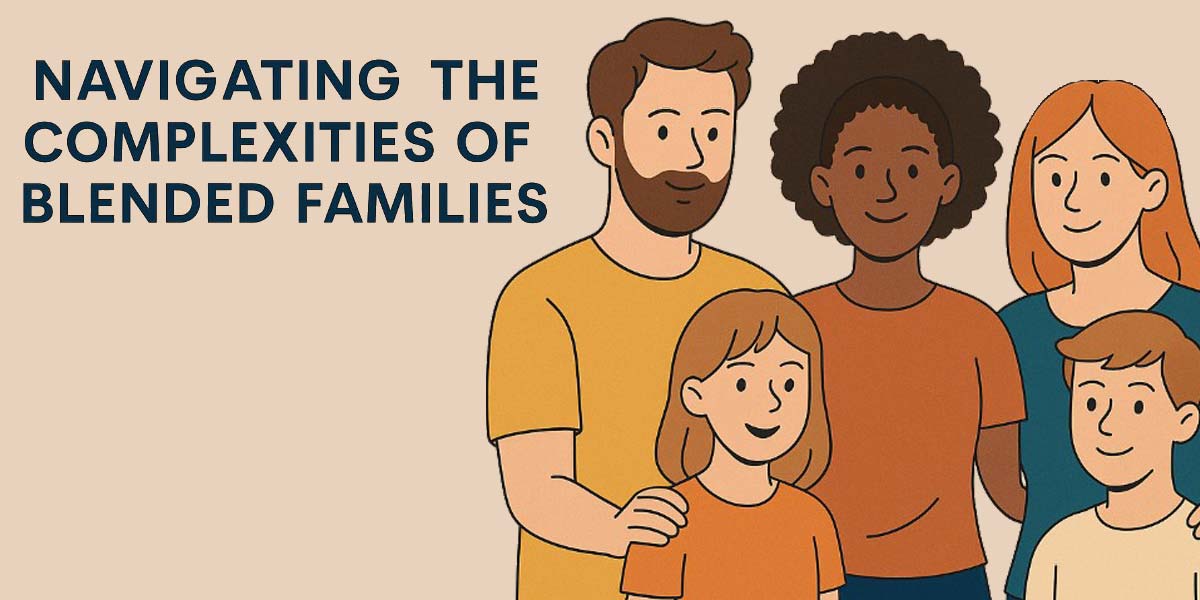
Autism and blended families often intersect in ways that challenge conventional parenting dynamics, creating a tapestry of resilience, adaptation, and unexpected growth. When a child on the autism spectrum enters a stepfamily, the complexities multiply—not just for the child, but for every member navigating this delicate ecosystem. The journey is rarely linear; it’s a series of small victories, missteps, and moments of profound connection that redefine what family means.
The initial adjustment can feel like learning a new language—one where emotions are nuanced, routines are sacred, and sensory triggers lurk in the most mundane corners of daily life. A step-parent stepping into this role may find themselves oscillating between the roles of educator, advocate, and sometimes, the unintentional disruptor of carefully established patterns. The child, meanwhile, may grapple with the duality of longing for stability while resisting the unfamiliarity of a new authority figure. This dance of acceptance and resistance is not just about blending two households; it’s about weaving together two sets of expectations, two emotional landscapes, and two visions of what love and belonging should look like.
The deeper fascination lies in how these families, often by necessity rather than choice, become microcosms of societal evolution. They force us to confront the rigid structures we’ve built around family, parenting, and neurodiversity. In doing so, they reveal the fragility of our assumptions and the resilience of the human spirit when faced with the unknown.
The Unique Challenges of Step-Parenting a Child with Autism
Step-parenting is, by nature, a role that demands patience, humility, and a willingness to occupy the uncomfortable space between outsider and integral family member. When autism enters the equation, these demands intensify. The child’s needs may not align with the step-parent’s instincts, and the biological parent’s protective instincts can clash with the step-parent’s desire to bond. Sensory sensitivities—whether to sound, texture, or light—can turn a simple family dinner into a minefield of potential triggers. A raised voice, a sudden movement, or even the scent of a new laundry detergent can derail an entire evening.
Moreover, the child’s attachment style may be deeply rooted in pre-existing routines, making the introduction of a new caregiver feel like an intrusion. They might cling to familiar rituals, such as bedtime stories or mealtime seating arrangements, as a way to assert control in an otherwise unpredictable world. The step-parent, eager to build trust, may inadvertently disrupt these rituals, leading to withdrawal or meltdowns. The biological parent, caught in the middle, must balance their role as mediator with their own emotional responses to the step-parent’s struggles.
Communication becomes the linchpin of this dynamic. Without clear, consistent dialogue, misunderstandings fester. A step-parent might misinterpret a child’s resistance as rejection, while the child may perceive the step-parent’s efforts as insincere. The key lies in recognizing that the child’s behavior is not a personal affront but a manifestation of their need for predictability and safety. This realization, though humbling, is the first step toward fostering a meaningful connection.

Building Trust: The Delicate Art of Pacing
Trust is not built in a day, nor is it constructed through grand gestures. In blended families with autistic children, trust is cultivated through the slow, deliberate accumulation of positive experiences. The step-parent must adopt the mindset of a gardener—nurturing the soil, planting seeds, and allowing time for roots to take hold before expecting blossoms. This means respecting the child’s boundaries, even when they seem arbitrary. If the child insists on wearing the same socks every day or requires a specific order of activities before bedtime, these are not quirks to be corrected but rituals to be honored.
One effective strategy is to start with parallel play—engaging in activities alongside the child without demanding direct interaction. This could be as simple as coloring side by side or assembling a puzzle while the child observes. Over time, the child may begin to associate the step-parent’s presence with safety and enjoyment. Another approach is to leverage the child’s special interests. If they are fascinated by trains, dinosaurs, or a particular TV show, the step-parent can use these as bridges to connection. The goal is not to force interaction but to create opportunities for the child to initiate engagement on their own terms.
It’s also crucial to acknowledge the child’s emotions without judgment. If they express frustration or anxiety about the new family structure, the step-parent can validate these feelings by saying, “It’s okay to feel that way. This is a big change for all of us.” This validation does not mean agreeing with the child’s perspective but affirming their right to feel it. Over time, this approach can help the child feel seen and understood, which is the foundation of trust.
The Role of the Biological Parent: A Balancing Act
The biological parent occupies a uniquely precarious position in this dynamic. They are the bridge between two worlds—their child’s familiar past and the step-parent’s uncertain future. Their role is not just to facilitate interactions but to model acceptance and patience. This means refraining from speaking for the child or assuming their needs, instead encouraging the step-parent to engage directly, even if it’s imperfect. It also means setting boundaries when necessary, such as stepping in if the step-parent’s approach inadvertently causes distress.
At the same time, the biological parent must guard against the temptation to overcompensate. It’s natural to want to shield the child from any discomfort, but this can inadvertently reinforce the child’s resistance to the step-parent. Instead, the biological parent should strive to create a united front, where both caregivers are seen as sources of support, even if their methods differ. This unity does not require perfection; it requires consistency and a shared commitment to the child’s well-being.
Another critical aspect is managing the child’s expectations. If the step-parent is introduced as a temporary figure, the child may struggle to invest emotionally. Conversely, if the step-parent is presented as a permanent fixture, the child may feel pressured to accept them too quickly. The solution lies in transparency. The biological parent can explain that the step-parent is someone who wants to be part of their life, without making promises that may not come to fruition. This honesty fosters trust and reduces the child’s anxiety about the unknown.
Navigating Sensory and Emotional Triggers
Autistic children often experience the world in a way that is overwhelmingly intense. Sensory triggers—whether auditory, visual, or tactile—can turn a seemingly ordinary day into a battleground. For a blended family, this means that even the most well-intentioned step-parent must become attuned to these triggers. A loud voice, a crowded room, or even the texture of a new blanket can send the child into a state of distress. The step-parent’s challenge is to anticipate these triggers and create environments where the child feels safe.
This might involve designating a quiet space in the home where the child can retreat when overwhelmed. It could also mean adjusting routines to accommodate the child’s sensory needs, such as dimming lights during dinner or allowing them to wear noise-canceling headphones during family gatherings. The biological parent can play a crucial role in educating the step-parent about these triggers, but ultimately, it is the step-parent’s responsibility to observe, learn, and adapt.
Emotional triggers are equally complex. The child may associate the step-parent with the dissolution of their parents’ relationship or the upheaval of their living situation. These associations are not logical but deeply ingrained. The step-parent must recognize that their presence alone may evoke these emotions, and they must respond with empathy rather than defensiveness. This means avoiding personalizing the child’s reactions and instead focusing on creating positive experiences that gradually overwrite negative associations.
Celebrating Small Wins and Embracing Imperfection
In the journey of blending a family with an autistic child, progress is measured in increments. A smile in response to a joke, a shared glance during a movie, or a spontaneous hug are not trivial—they are milestones. The step-parent must learn to celebrate these small wins, even when the overall progress feels glacial. It’s easy to become discouraged when setbacks occur, but resilience lies in recognizing that each step forward, no matter how small, is a testament to the child’s growing comfort and trust.
It’s also important to embrace imperfection. There will be days when the step-parent feels like an outsider, when the child retreats into their shell, or when the biological parent’s patience wears thin. These moments are not failures; they are part of the process. The goal is not to achieve a flawless family dynamic but to create a space where everyone feels valued and understood. This means letting go of rigid expectations and allowing the family to evolve organically.
For the child, this journey can be transformative. They learn that love is not confined to bloodlines, that change can bring unexpected joy, and that their needs matter. For the step-parent, it’s an opportunity to redefine what family means and to discover strengths they never knew they had. And for the biological parent, it’s a chance to witness the resilience of their child and the depth of their own capacity to love.
The intersection of autism and blended families is not a smooth path, but it is one that offers profound rewards. It challenges us to confront our biases, to adapt our expectations, and to embrace the messy, beautiful reality of human connection. In doing so, these families become more than just a sum of their parts; they become a testament to the power of love to transcend boundaries and rewrite the rules of what it means to belong.












