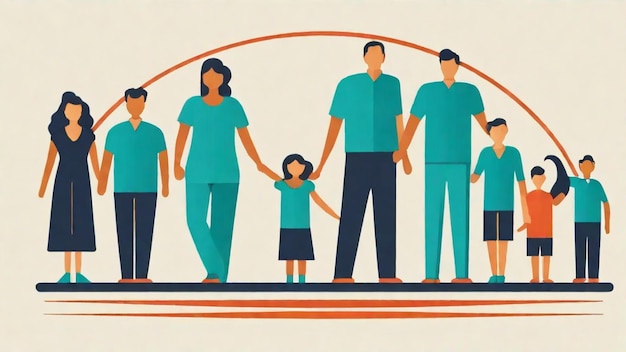
Autism reshapes the contours of family life, not as a fracture, but as a catalyst—one that demands recalibration, empathy, and a redefinition of what it means to belong. It arrives unannounced, its presence neither invited nor refused, and yet, within its quiet persistence lies the potential to forge bonds deeper than silence, stronger than routine, and more enduring than expectation. Families navigating the terrain of autism often find themselves on a journey that begins in uncertainty and evolves into understanding, not by erasing differences, but by embracing them as threads in a richer, more textured tapestry of connection.
This is not a story of limitation, but of transformation. It is a narrative where the unspoken becomes dialogue, where patience is not merely a virtue but a lifeline, and where love is measured not in grand gestures, but in the quiet moments of shared presence. Autism does not isolate; it invites. It does not divide; it unites. And in the heart of every family that chooses to meet it with openness, it reveals a truth as old as time: that strength is not found in uniformity, but in the courage to honor each voice, each pace, each way of being.

The Unseen Architecture of Autism in Family Life
Autism does not announce itself with fanfare. It arrives in the pauses between words, in the intensity of a gaze that lingers too long, in the resistance to a world that moves too fast. It alters the rhythm of daily life, not by force, but by presence—its influence felt in the way conversations are structured, in the way emotions are expressed, in the way time is perceived. Families often describe this shift as a subtle erosion of predictability, a quiet dismantling of the scripts they once followed without thought.
Yet, within this disruption lies an opportunity: the chance to build a new kind of architecture—one where walls are not barriers, but bridges. Where routines are not constraints, but anchors. Where expectations are not demands, but invitations. The key lies in recognizing that autism is not a deviation from the norm, but a different kind of norm altogether. It is a lens through which the world is seen, felt, and navigated in ways that are as valid as they are varied.
Consider the child who finds solace in the hum of a fan, whose comfort lies not in social scripts, but in sensory rhythms. Or the teenager who communicates not through words, but through art, whose emotions spill onto canvas in hues that words cannot capture. These are not signs of absence, but of presence—of a mind engaging with the world in its own profound way. The challenge for families is not to force conformity, but to cultivate curiosity: to ask not “Why won’t they speak?” but “How do they speak?” Not “Why can’t they sit still?” but “What does stillness mean to them?”
Communication: Beyond Words, Into Presence
Language, in its traditional sense, is but one channel of connection—and often, not the most reliable one when autism is part of the equation. Families quickly learn that communication is not confined to speech. It thrives in the language of gestures, in the cadence of silence, in the exchange of glances that carry volumes. A raised eyebrow, a clenched fist, a sudden withdrawal—these are not interruptions in dialogue, but its very fabric.
Yet, the transition from verbal to visceral communication requires a shift in perspective. Parents may find themselves decoding not just words, but the absence of them. Siblings may learn to read the tension in a sibling’s posture before a meltdown. Partners may discover that love is expressed not in shared laughter, but in shared stillness. This is not a regression; it is an evolution—a deepening of the senses, a honing of intuition, a transformation of the way connection is perceived and practiced.
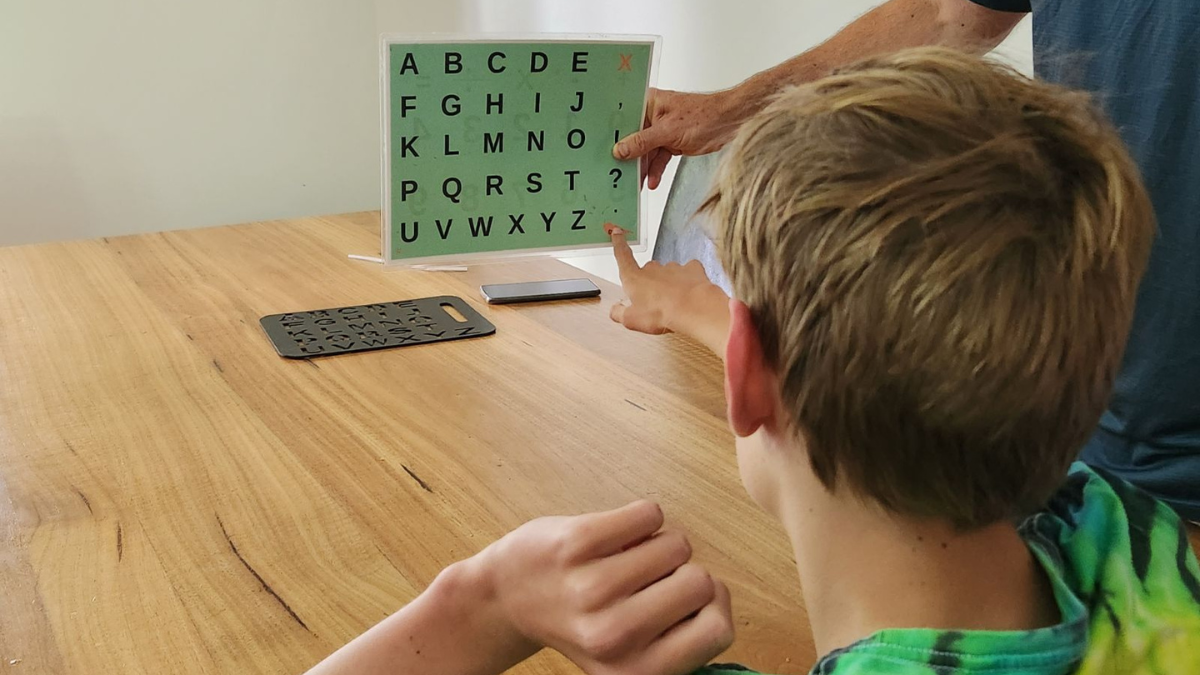
Technology, too, becomes a bridge. Augmentative and alternative communication (AAC) devices, visual schedules, and social stories offer structured pathways for expression, allowing individuals with autism to articulate needs, fears, and joys in ways that feel safe and empowering. These tools are not crutches; they are conduits—bridges between inner worlds and shared reality. They remind us that communication is not about the method, but the message: the desire to be seen, heard, and understood.
Routine as Ritual: Finding Sacred in the Structured
Autism often thrives in predictability. The world, with its noise and chaos, can feel overwhelming—a relentless assault on the senses. Routines, therefore, are not mere habits; they are rituals of safety, anchors in a sea of uncertainty. A morning routine that begins with the same song, a bedtime sequence that ends with the same story, a weekly outing to the same park—these are not rigid constraints, but sacred contracts between the individual and their environment.
Yet, routines can also become prisons if they are not approached with flexibility. Families must learn the delicate balance between structure and spontaneity. A deviation from the norm is not a betrayal; it is an invitation to adapt, to grow, to discover new ways of being together. The goal is not to eliminate change, but to make it navigable. To introduce novelty gradually, to prepare for transitions with care, and to celebrate the small victories of flexibility—like the first time a child tolerates a new food, or the first time a sibling initiates play without prompting.
Routine, when infused with intention, becomes a form of love. It says: “I see you. I respect your needs. I am here, steady and present.” It is not about control; it is about care. And in a world that often feels unpredictable, it offers a rare and precious gift: the promise of constancy.
The Sibling Spectrum: Love in Uncharted Territories
Siblings of individuals with autism often find themselves navigating a landscape that is as complex as it is uncharted. They may grapple with feelings of neglect, confusion, or even resentment—not because they are unloving, but because they are human. They watch as their brother or sister receives extra attention, as family resources are redirected, as social outings are tailored to accommodate different needs. These are not acts of favoritism; they are acts of necessity. Yet, they can leave siblings feeling sidelined, questioning their place in the family constellation.
But siblings are not passive observers. They are active participants in the family’s evolution. They learn to advocate, to mediate, to translate between worlds. They become bridges between their autistic sibling and the outside world, interpreting behaviors, explaining differences, and often, defending their sibling with a fierceness that belies their years. They may also experience a profound sense of pride—witnessing their sibling’s unique talents, their resilience, their capacity to love in ways that defy convention.
The key lies in inclusion. Siblings need space to express their feelings, to ask questions without judgment, and to participate in the family’s journey on their own terms. Family rituals can be adapted to include them. Conversations about autism can be framed not as explanations, but as explorations—opportunities for siblings to share their experiences, their fears, and their hopes. Support groups for siblings offer a rare sanctuary where they can connect with others who understand their journey. And most importantly, they need to know that their feelings are valid, their needs are important, and their love is irreplaceable.
Partnership Reimagined: Love as a Living Practice
For couples raising a child with autism, the relationship often becomes a crucible of transformation. The demands of care, the weight of responsibility, and the relentless pace of daily life can strain even the strongest bonds. Intimacy may feel elusive—not because love has faded, but because the scripts of partnership have been rewritten. Date nights may be replaced by therapy sessions. Conversations may pivot from dreams to diagnoses. The partnership that once thrived on shared spontaneity may now require deliberate planning, patience, and a redefinition of what “quality time” looks like.
Yet, within this redefinition lies an opportunity to deepen the connection. Couples who navigate autism together often discover a love that is not performative, but authentic. A love that is not measured in grand romantic gestures, but in the quiet acts of showing up—day after day, challenge after challenge. It is a love that learns to communicate in new languages, to celebrate small victories, and to find joy in the ordinary moments that once went unnoticed.
Partnership, in this context, becomes a living practice—one that requires adaptability, empathy, and a willingness to embrace imperfection. It is not about fixing each other, but about growing together. It is not about erasing differences, but about honoring them. And it is not about avoiding conflict, but about navigating it with compassion and a shared commitment to the family’s well-being.
Community as Compass: The Power of Shared Understanding
No family should have to navigate autism alone. Yet, isolation is a common experience—one that stems from misunderstanding, stigma, or simply the lack of accessible resources. The journey becomes lighter, however, when families find their tribe: other parents who understand the exhaustion and the hope, siblings who share the same struggles, professionals who offer guidance without judgment, and communities that celebrate neurodiversity without conditions.
Support groups, whether in person or online, offer a lifeline. They provide a space to vent, to learn, to laugh, and to cry without fear of judgment. They remind families that they are not anomalies, but part of a larger tapestry of human experience. Advocacy organizations offer workshops, resources, and connections to specialists who can help navigate the complexities of diagnosis, therapy, and education. And local communities—schools, libraries, parks—can become allies when they are educated about autism and committed to inclusion.
But community is not just about receiving; it is about giving. Families who have walked the path before can offer mentorship, sharing the wisdom they have gained through trial and error. Siblings can become advocates, raising awareness in schools and social circles. And individuals with autism can lead the way, their voices and perspectives reshaping the narrative around neurodiversity. Community, in its truest form, is a reciprocal exchange—a reminder that no one thrives in isolation, and that strength is found in solidarity.

The Unfolding Promise: A Family Transformed
Autism does not merely change a family; it transforms it. It strips away the illusions of control, the expectations of perfection, and the rigid definitions of success. In their place, it offers something far more valuable: the chance to build a family that is not defined by what it lacks, but by what it has learned to embrace. A family that communicates in silences as much as in words. A family that finds strength in routines as much as in spontaneity. A family that loves not in spite of differences, but because of them.
This transformation is not instantaneous. It is a journey of small steps, of setbacks and triumphs, of moments of doubt and flashes of clarity. It is a process of unlearning old narratives and writing new ones—ones that center on acceptance, resilience, and the profound beauty of being seen for who you truly are.
And in the end, that is the greatest promise of autism: not the challenge it presents, but the love it invites. Not the disruption it causes, but the depth it reveals. Not the silence it sometimes brings, but the connection it ultimately fosters. Families that choose to meet autism with openness do not just survive; they thrive. They do not just endure; they flourish. And in doing so, they redefine what it means to belong—not to a mold, but to each other.
For in the heart of every family touched by autism, there lies a truth as simple as it is profound: love is not a destination, but a journey—and every step taken together is a testament to its enduring power.