In the labyrinthine tapestry of South America, where the Andes’ jagged spine pierces the heavens and the Amazon’s emerald veins pulse with life, a silent revolution is unfolding. Autism, once shrouded in the fog of misunderstanding, is now stepping into the light, its contours gradually sharpening against the backdrop of cultural diversity and societal evolution. This is not merely a story of diagnosis and intervention; it is a narrative of resilience, of communities awakening to the beauty of neurodiversity, and of barriers crumbling like ancient ruins beneath the relentless march of progress. To understand autism in South America is to traverse a continent where tradition and innovation collide, where the echoes of colonial legacies reverberate alongside the whispers of modern advocacy, and where every child, regardless of their cognitive landscape, is beginning to find their place in the sun.
The journey begins with the realization that autism does not exist in a vacuum. It is not a monolithic entity but a spectrum as vast and varied as the continent itself. From the high-altitude clarity of the Andes to the steamy embrace of the Amazon, each region presents its own unique challenges and opportunities. In countries like Brazil, where the vibrant chaos of urban centers contrasts with the quietude of rural landscapes, the struggle for inclusive education is a daily battleground. Meanwhile, in Argentina, where tango’s melancholic rhythm still lingers in the air, families grapple with the dual burdens of economic disparity and systemic neglect. Yet, within these struggles lies an unyielding spirit—a testament to the human capacity for adaptation and hope.
The Mosaic of Misdiagnosis: When Culture Colors Perception
Imagine, if you will, a kaleidoscope where each fragment represents a different cultural lens through which autism is viewed. In some indigenous communities, behaviors deemed atypical in Western contexts are interpreted as spiritual gifts or ancestral connections. This divergence in perception often leads to misdiagnosis or, worse, outright dismissal of autism as a legitimate condition. The result? A generation of children slipping through the cracks, their potential obscured by the prism of cultural relativism.
Consider the case of a Quechua-speaking child in Peru, whose repetitive movements are seen not as signs of autism but as a reflection of their deep connection to ancestral traditions. Or the Brazilian child whose intense focus on a singular interest is mistaken for mere stubbornness rather than a hallmark of autistic cognition. These misinterpretations are not born of malice but of ignorance—a ignorance that thrives in the absence of culturally sensitive diagnostic tools and training. The challenge, then, is not just to educate but to reframe the narrative, to weave autism into the cultural fabric without erasing its distinct threads.
This reframing requires a delicate balance. It demands respect for indigenous knowledge systems while simultaneously advocating for evidence-based interventions. Organizations like Autismo Brasil and Fundación Autismo en Acción in Argentina are pioneering this approach, blending traditional healing practices with modern therapies. Their work is a reminder that progress need not be a zero-sum game; it can be a symphony where old and new harmonize.
The Labyrinth of Access: Navigating Healthcare’s Labyrinthine Pathways
South America’s healthcare systems are as diverse as its landscapes, yet they share a common thread: complexity. In countries with universal healthcare, such as Uruguay, the promise of accessibility is often undermined by bureaucratic labyrinths and resource constraints. Parents of autistic children find themselves navigating a maze of referrals, waiting lists, and fragmented services, where a single misstep can mean months—or even years—of delay in critical interventions.
In Venezuela, where economic collapse has gutted public healthcare, the situation is even more dire. Families turn to grassroots initiatives, trading goods or services for therapy sessions, or relying on the kindness of strangers to fund diagnostic evaluations. The irony is stark: in a region rich with natural resources, the most valuable currency is often not gold or oil, but time and compassion.
Yet, within these challenges lies an opportunity for innovation. Telehealth, for instance, has emerged as a lifeline in remote areas, connecting families with specialists across continents. In Colombia, projects like Autismo Bogotá leverage digital platforms to provide real-time support, breaking down geographical barriers one pixel at a time. These initiatives are not just technological marvels; they are acts of defiance against the tyranny of distance and scarcity.
The path to equitable healthcare is not a straight line but a series of winding trails, each requiring its own map. For South America, the destination is clear: a system where no child is left behind, where diagnosis is not a privilege but a right, and where therapy is not a luxury but a staple of childhood.
The Classroom Conundrum: Where Inclusion Meets Resistance
Schools in South America are microcosms of societal attitudes, where the ideal of inclusion often collides with the reality of limited resources and entrenched biases. In Chile, where education is a cornerstone of national identity, the gap between policy and practice is glaring. While the law mandates inclusive classrooms, the reality is one of overcrowded schools, undertrained teachers, and a lack of specialized support staff. The result? Autistic children either languish in segregated settings or are left to fend for themselves in environments ill-equipped to meet their needs.
Brazil’s Lei Berenice Piana, a landmark legislation recognizing autism as a disability, has done little to change the day-to-day experiences of students. Teachers, already stretched thin by underfunded systems, struggle to adapt curricula for neurodiverse learners. The consequence is a cycle of exclusion, where children who could thrive with the right support are instead labeled as “problem students” or “disruptive.”
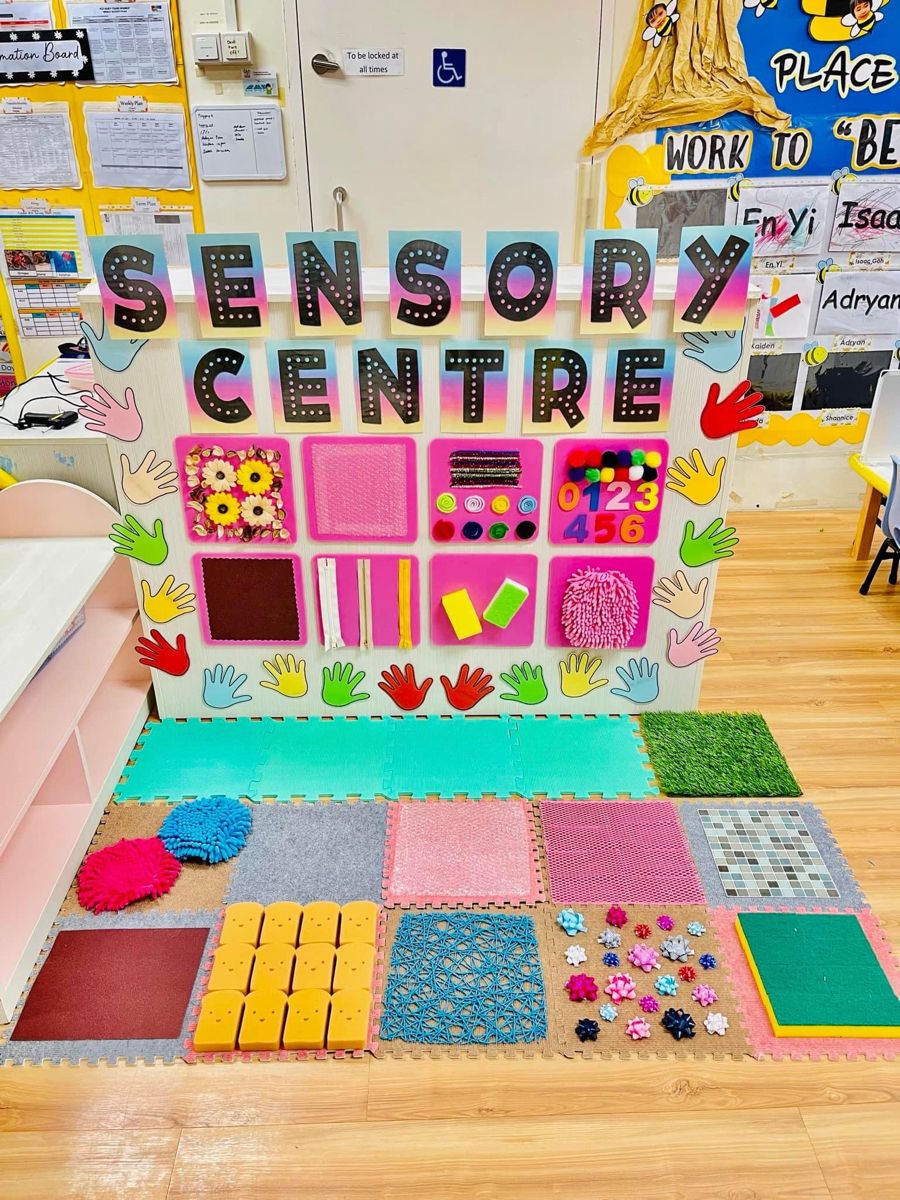
Yet, pockets of hope exist. In Peru, the Escuela de Autismo in Lima has become a beacon of inclusive education, proving that with the right training and resources, classrooms can be transformed into sanctuaries of learning for all. Their model—a blend of Montessori principles, sensory-friendly design, and community engagement—challenges the notion that inclusion is a utopian fantasy. It is, instead, a tangible reality waiting to be embraced.
The classroom conundrum is not just an educational issue; it is a societal one. It forces us to confront uncomfortable questions: What does it mean to be “normal”? Who gets to decide what a child should learn, and how? The answers, when stripped of dogma, point to a future where diversity is not just tolerated but celebrated—a future where the classroom is not a factory for conformity but a garden where every seed, regardless of its shape, is given the chance to grow.

The Power of Community: When Families Become Advocates
In the absence of robust institutional support, South American families have become the unsung architects of change. Mothers, fathers, siblings, and extended kin are not merely caregivers; they are warriors, lobbyists, and educators, wielding the weapons of resilience and resourcefulness. In Argentina, the Red por los Derechos de las Personas con Autismo (Network for the Rights of People with Autism) has transformed grassroots frustration into a formidable advocacy force, pushing for legislative reforms and public awareness campaigns.
These families are also storytellers, their narratives cutting through the noise of stigma like a machete through dense undergrowth. In Brazil, the Movimento Orgulho Autista do Brasil (Autistic Pride Movement of Brazil) has harnessed the power of social media to amplify voices that were once silenced. Their campaigns—raw, unfiltered, and deeply personal—challenge the stereotypes that reduce autistic individuals to caricatures of either tragedy or inspiration. Instead, they present a nuanced portrait of lives lived with complexity, humor, and unapologetic authenticity.
Their work is a reminder that change does not always come from the top down. Sometimes, it rises from the ground up, fueled by the quiet determination of those who refuse to accept the status quo. It is a testament to the fact that communities, when united by a shared purpose, can move mountains—or at the very least, shift tectonic plates.
The Future Unfolds: A Continent on the Cusp of Transformation
To gaze into the future of autism in South America is to peer into a kaleidoscope of possibilities. On one side, the shadows of systemic inertia and cultural inertia loom large, threatening to stifle progress. On the other, the light of innovation, advocacy, and collective action shimmers, promising a brighter tomorrow. The question is not whether change will come, but how swiftly and how equitably it will arrive.
One thing is certain: the continent’s relationship with autism is evolving. The old narratives—of shame, of exclusion, of silence—are being rewritten in real time. In their place, new stories are emerging: stories of children discovering their voices, of families finding solidarity, of communities redefining what it means to belong. These stories are not just about autism; they are about the essence of humanity itself—the capacity to adapt, to learn, and to love without boundaries.
As the sun sets over the Andes and rises over the Amazon, casting its golden glow across the land, one can almost hear the faint but growing hum of a continent awakening. It is the sound of doors creaking open, of bridges being built, of stigmas crumbling like old walls under the weight of progress. This is the sound of South America rediscovering itself—not as a monolith, but as a mosaic of voices, each one essential, each one irreplaceable.
The journey is far from over. The path is still strewn with obstacles, and the destination remains elusive. But for the first time in a long while, the horizon looks different. It looks like a place where every child, regardless of their neurology, can dream without limits, learn without barriers, and live without fear. And that, perhaps, is the most revolutionary promise of all.