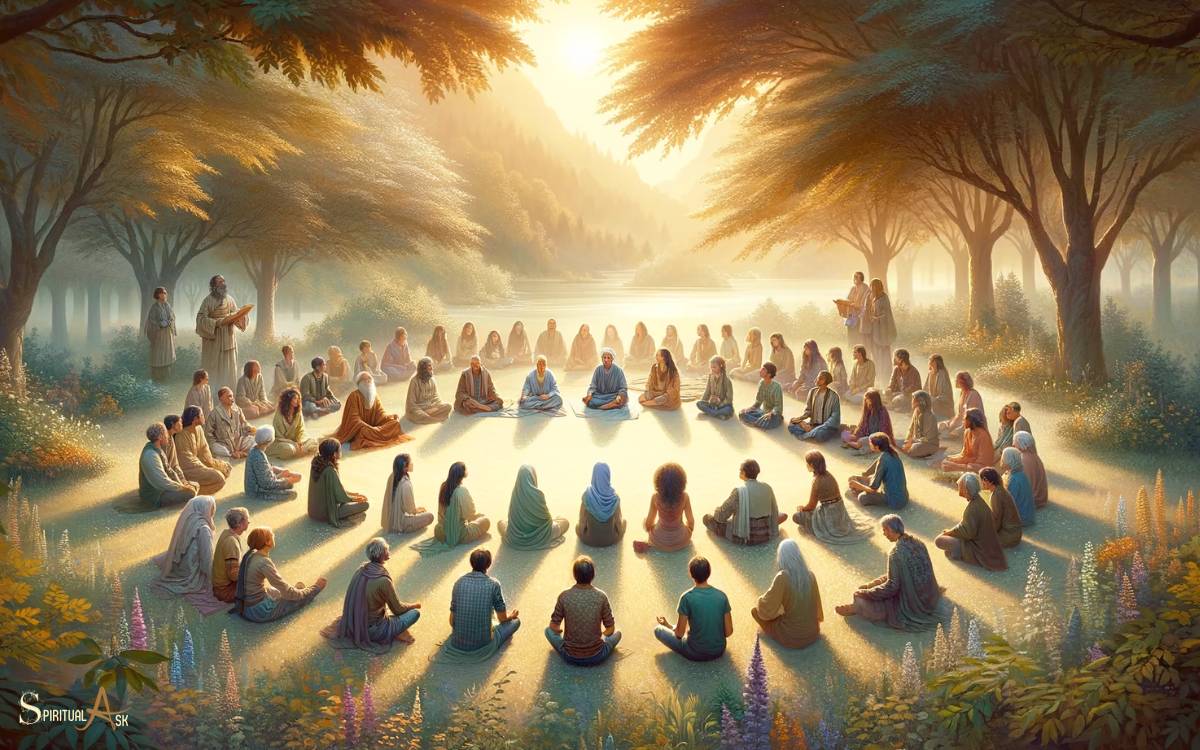
In the quiet hum of a candlelit meditation circle, a young adult with autism finds solace in the rhythmic breathing of their peers. Their mind, often a whirlwind of sensory overload, settles into the steady cadence of shared intention. This is not just a moment of peace—it is a testament to the power of community in nurturing spiritual growth for neurodivergent individuals. Autism and spirituality, once seen as disparate paths, now intersect in profound ways, revealing how intentional support networks can transform lives. These networks do more than offer companionship; they provide a sanctuary where unique perspectives are not just accepted but celebrated. As we explore the interplay between autism and spiritual communities, we uncover the transformative potential of empathy, structure, and shared purpose in fostering belonging.
The Intersection of Autism and Spirituality: A Unique Path to Meaning
Autism spectrum disorder (ASD) often brings with it a distinct cognitive and sensory experience of the world. For many neurodivergent individuals, spirituality is not a peripheral interest but a core aspect of identity—a lens through which they interpret existence, purpose, and connection. Unlike neurotypical frameworks that may prioritize social conformity, autistic spirituality frequently thrives in solitude, ritual, and deep introspection. The spiritual journey for someone with autism might manifest as an unwavering devotion to a particular belief system, an obsession with cosmic questions, or a profound connection to nature’s rhythms. These expressions are not deviations but variations of the human quest for meaning.
Consider the individual who finds transcendence in the repetition of mantras or the meticulous arrangement of prayer beads. For them, the tactile and auditory elements of spiritual practice provide grounding, a counterbalance to the chaos of an unpredictable world. Similarly, those who experience hyperfocus on philosophical or theological texts may derive immense comfort from the predictability of sacred scriptures. Spirituality, in this context, becomes a scaffolding—a structured framework that offers both comfort and challenge. It is not uncommon for autistic individuals to report that their spiritual practices are the primary means through which they navigate emotional turbulence, societal rejection, or existential doubt.
Why Community Matters: The Role of Support Networks in Spiritual Growth
While spirituality can be a deeply personal endeavor, its fullest expression often flourishes within the context of community. For autistic individuals, however, traditional community structures—whether religious institutions or social groups—can present barriers. Sensory sensitivities, social communication differences, and a need for routine may make participation daunting. Yet, when these barriers are addressed, the rewards are immeasurable. A supportive spiritual community can become a refuge where neurodivergent individuals are not merely tolerated but honored for their unique contributions.
Imagine a synagogue where a nonverbal autistic child is given a role in lighting the Sabbath candles, their presence a reminder of the diversity of worship. Or a meditation group that adapts its sessions to include dim lighting and noise-canceling headphones for those overwhelmed by sensory input. These adaptations are not concessions but affirmations of the community’s commitment to inclusivity. In such environments, autistic individuals often report feeling a profound sense of belonging—a rarity in spaces that demand conformity. The community, in turn, benefits from the fresh perspectives and unwavering authenticity that neurodivergent members bring, enriching the collective spiritual experience.
 The synergy between autism and spiritual communities lies in their shared emphasis on authenticity. While society often pressures individuals to mask their differences, spiritual communities that prioritize acceptance create a space where autistic individuals can express their true selves without fear. This authenticity fosters deeper connections, as neurodivergent members contribute their unique insights—whether through art, music, or spoken word—without the need to conform to neurotypical norms.
Types of Spiritual Support Networks for Autistic Individuals
Not all support networks are created equal, and the most effective ones are those tailored to the specific needs of autistic individuals. Below are several types of spiritual communities and practices that have proven beneficial:
1. Sensory-Friendly Worship Spaces
Traditional places of worship can be overwhelming due to bright lights, loud music, or crowded spaces. Sensory-friendly services address these challenges by offering dimmed lighting, quiet rooms, and alternative seating arrangements. Some congregations even provide visual schedules or social stories to help autistic individuals prepare for the service. These adaptations ensure that the spiritual experience remains accessible and meaningful.
2. Online Spiritual Communities
The digital realm offers a lifeline for those who struggle with in-person interactions. Online forums, virtual prayer groups, and social media communities provide a low-pressure environment where autistic individuals can engage at their own pace. These platforms also allow for asynchronous communication, giving members time to process and respond without the pressure of immediate interaction. For many, the anonymity of online spaces fosters a sense of safety and confidence in expressing their spiritual beliefs.
3. Nature-Based Spirituality
For those who find solace in the natural world, eco-spirituality or pagan practices can be particularly resonant. Rituals centered around the cycles of the moon, seasonal changes, or plant-based ceremonies offer a tangible connection to the divine. The sensory richness of nature—rustling leaves, the scent of earth after rain, the warmth of sunlight—can be deeply soothing for autistic individuals, providing a counterbalance to the artificiality of urban environments.
4. Structured Meditation and Mindfulness Groups
Meditation groups that emphasize structure and predictability can be ideal for autistic individuals. Guided meditations with clear instructions, timed sessions, and the option to use sensory tools (such as fidget objects or weighted blankets) create a supportive environment. Some groups even incorporate movement-based practices like yoga or tai chi, which allow for physical expression without the need for verbal interaction.
5. Peer-Led Spiritual Circles
Peer-led groups, where autistic individuals gather to discuss spiritual topics, can be incredibly validating. These circles often focus on shared experiences, such as navigating faith as a neurodivergent person or exploring spirituality in a way that aligns with autistic values. The absence of hierarchical structures reduces anxiety, and the shared understanding fosters a sense of camaraderie.
Challenges and Solutions: Navigating Barriers in Spiritual Communities
Despite the best intentions, spiritual communities may inadvertently exclude autistic individuals. Common barriers include rigid social expectations, lack of sensory accommodations, and a failure to recognize nonverbal forms of communication. However, these challenges are not insurmountable. The key lies in proactive adaptation and education.
One solution is the implementation of “autism-friendly” guidelines within spiritual organizations. These might include training for leaders on neurodiversity, the creation of sensory maps for buildings, and the establishment of clear communication channels. For example, a church might designate a “quiet zone” where individuals can retreat if overwhelmed, or a meditation center might offer sessions in smaller groups to reduce sensory overload.
Another critical step is the cultivation of empathy among neurotypical members. Spiritual communities often emphasize compassion, but this must extend to understanding the diverse ways in which people experience the world. Workshops on neurodiversity, guest speakers with lived experience, and open dialogues can help bridge gaps in understanding. When neurotypical individuals recognize that autistic behaviors are not signs of disrespect or disinterest but expressions of a different cognitive framework, the community becomes stronger.
Success Stories: How Spiritual Support Networks Transform Lives
The impact of inclusive spiritual communities is best illustrated through real-life examples. Take the case of a nonverbal autistic teenager who found her voice through signing during a religious service. Initially, her family feared she would feel isolated, but the community’s willingness to adapt—providing sign language interpreters and encouraging her to participate in her own way—allowed her to flourish. Today, she is a vocal advocate for neurodiversity in her faith community, inspiring others to embrace their differences.
In another instance, an autistic adult struggling with depression found solace in a pagan circle that celebrated the natural world. The group’s emphasis on ritual and connection to the earth gave him a sense of purpose and belonging. His participation in seasonal ceremonies, where he could contribute through his deep knowledge of plant lore, restored his faith in himself and the divine.
 These stories underscore a fundamental truth: when spiritual communities prioritize inclusivity, they do more than accommodate differences—they unlock potential. Autistic individuals, freed from the burden of masking, can contribute their unique gifts, whether through art, leadership, or quiet acts of service. The community, in turn, is enriched by their presence, learning that spirituality is not a monolith but a tapestry of diverse experiences.
Practical Steps for Building Inclusive Spiritual Communities
For those looking to create or improve spiritual support networks for autistic individuals, the following steps can serve as a roadmap:
1. Assess and Adapt Physical Spaces
Conduct a sensory audit of your community’s gathering places. Are there areas with harsh lighting or loud noises? Can you provide quiet rooms or outdoor spaces for retreat? Small changes, such as offering noise-canceling headphones or weighted lap pads, can make a significant difference.
2. Educate Leaders and Members
Host workshops or training sessions on neurodiversity, focusing on how autism may manifest in spiritual contexts. Encourage open dialogue about accommodations and the importance of flexibility in worship styles.
3. Offer Multiple Participation Options
Recognize that not everyone communicates or engages in the same way. Provide alternatives to verbal participation, such as written reflections, art, or movement-based practices. Consider offering hybrid or asynchronous options for those who struggle with real-time interaction.
4. Foster Peer Mentorship
Pair autistic individuals with mentors who share similar spiritual interests. Peer support can reduce feelings of isolation and provide a safe space for sharing challenges and triumphs.
5. Celebrate Diversity in Spiritual Expression
Encourage the sharing of diverse spiritual practices within the community. Whether through storytelling, music, or ritual, highlight the unique ways in which members connect with the divine. This not only validates autistic experiences but also enriches the collective spiritual life of the group.
The Ripple Effect: How Inclusive Communities Benefit Everyone
The beauty of inclusive spiritual communities lies in their transformative power—not just for autistic individuals, but for all members. When a community learns to embrace neurodiversity, it cultivates a culture of patience, creativity, and deep empathy. These qualities ripple outward, influencing how members interact with the broader world. A congregation that practices inclusivity becomes a beacon of hope, demonstrating that spirituality is not about conformity but about connection.
Moreover, the adaptations made for autistic individuals often benefit others as well. Sensory-friendly lighting, for instance, may also assist elderly members or those with migraines. Quiet spaces provide respite for anyone overwhelmed by the intensity of communal worship. In this way, inclusivity is not a zero-sum game but an expansion of possibilities, where everyone’s needs are met without sacrificing the essence of the community.
The journey of building spiritual support networks for autistic individuals is one of mutual growth. It challenges us to rethink our definitions of community, spirituality, and belonging. In doing so, we discover that the most profound spiritual experiences often arise not from uniformity, but from the courage to embrace diversity in all its forms. As we move forward, let us remember that the path to enlightenment is not a straight line but a labyrinth—one that winds through the hearts and minds of every individual, autistic or not, who seeks connection with the divine and with one another.