The intersection of autism and bipolar disorder represents one of the most compelling yet underdiscussed phenomena in contemporary mental health discourse. While these conditions are often studied in isolation, their co-occurrence reveals a labyrinth of overlapping traits, shared genetic predispositions, and nuanced behavioral patterns that challenge conventional diagnostic frameworks. For clinicians, researchers, and individuals navigating these dual diagnoses, the convergence of these conditions demands a deeper exploration—one that transcends the superficial and delves into the intricate interplay of neurobiology, environment, and lived experience.
At first glance, autism spectrum disorder (ASD) and bipolar disorder (BD) appear diametrically opposed: one rooted in persistent social communication challenges and restricted interests, the other in episodic mood disturbances ranging from manic euphoria to depressive despair. Yet, a closer examination reveals a paradoxical synergy. Many individuals with ASD report mood fluctuations that mirror bipolar symptomatology, while those with BD often exhibit social and sensory sensitivities akin to autistic traits. This overlap is not merely coincidental; it suggests a shared etiological tapestry, woven from genetic vulnerabilities, neurochemical imbalances, and environmental stressors that shape both conditions.
The Neurobiological Underpinnings: A Shared Genetic and Structural Landscape
The genetic architecture of autism and bipolar disorder is a testament to their interconnectedness. Twin and family studies indicate a significant heritability for both conditions, with overlapping susceptibility genes such as CACNA1C, ANK3, and NRXN1 playing pivotal roles in neural development and synaptic plasticity. These genes influence calcium signaling, synaptic pruning, and neurotransmitter regulation—processes critical to both mood stability and social cognition. When disrupted, they may contribute to the dual presentation of autistic traits and mood dysregulation.
Neuroimaging studies further illuminate this connection. Individuals with ASD often exhibit atypical connectivity in the prefrontal cortex and amygdala, regions also implicated in bipolar disorder. The amygdala, a hub for emotional processing, frequently shows hyperactivity in both conditions, albeit for different reasons. In ASD, this hyperactivity may stem from difficulties in interpreting social cues, while in BD, it reflects the heightened emotional reactivity characteristic of manic and depressive episodes. The shared structural anomalies suggest that these disorders may represent different manifestations of a broader neurodevelopmental spectrum.
Moreover, the role of dopamine—a neurotransmitter central to reward processing and mood regulation—cannot be overstated. In bipolar disorder, dopamine dysregulation is a hallmark of manic episodes, while in autism, altered dopamine pathways may contribute to repetitive behaviors and social withdrawal. The interplay between dopamine and serotonin, another key player in both conditions, further complicates the picture, creating a biochemical milieu where the boundaries between ASD and BD blur.
Phenomenological Overlaps: When Mood and Cognition Converge
The diagnostic criteria for ASD and BD, as outlined in the DSM-5, often fail to capture the lived experience of individuals who embody traits of both. Consider the case of an autistic adult who experiences cyclical mood swings—moments of hyperfocus and social withdrawal followed by periods of irritability and emotional exhaustion. Clinically, these symptoms might be dismissed as secondary to ASD, yet they align closely with bipolar II disorder’s hypomanic episodes. Conversely, a person with BD may exhibit sensory sensitivities and rigid thinking patterns that resemble autistic traits, particularly during depressive phases.
This phenomenological overlap extends to executive dysfunction, a common thread in both conditions. Difficulties with cognitive flexibility, impulse control, and working memory plague many with ASD and BD alike. For instance, an autistic individual may struggle to shift attention between tasks, while someone with BD may experience similar challenges during mood episodes. The shared cognitive load suggests that executive dysfunction may be a transdiagnostic feature, bridging the gap between these seemingly disparate disorders.
Emotional dysregulation, too, serves as a unifying force. Autistic individuals often report intense emotional reactions to sensory stimuli, while those with BD grapple with mood lability that can feel equally overwhelming. The convergence of these experiences highlights the need for a more nuanced understanding of emotional processing in both conditions—one that acknowledges the fluidity of affective states rather than rigidly categorizing them.
The Diagnostic Dilemma: Navigating the Gray Areas
Diagnosing co-occurring ASD and BD is fraught with challenges, primarily due to the overlap in symptomatology and the lack of standardized assessment tools. Traditional screening instruments, such as the Autism Diagnostic Observation Schedule (ADOS) and the Mood Disorder Questionnaire (MDQ), are designed to identify distinct conditions, leaving clinicians to rely on clinical judgment—a process rife with subjectivity. For example, a person with ASD may exhibit social withdrawal not due to depression but as a coping mechanism for sensory overload, complicating the differentiation between autistic traits and depressive episodes.

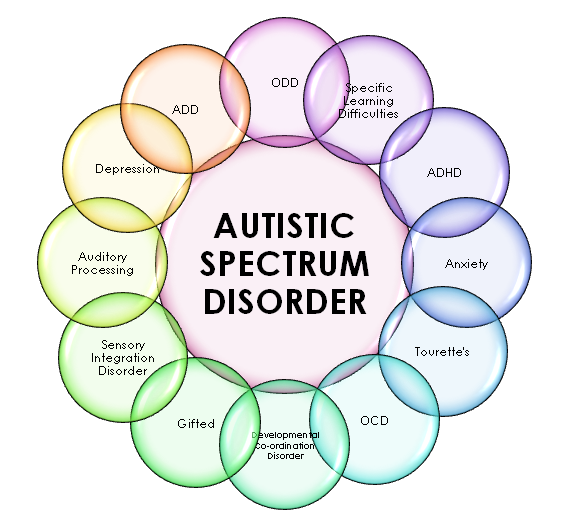
The diagnostic dilemma is further exacerbated by the heterogeneity of both conditions. Autism, for instance, spans a wide spectrum of presentations, from individuals with high support needs to those who are highly verbal and intellectually gifted. Similarly, bipolar disorder ranges from rapid cycling to chronic mood instability. When these spectra intersect, the resulting clinical picture becomes a mosaic of overlapping traits, making it difficult to parse out which symptoms belong to which condition.
To address these challenges, some researchers advocate for a dimensional approach to diagnosis, one that considers the severity and frequency of symptoms rather than adhering strictly to categorical labels. This perspective aligns with the Research Domain Criteria (RDoC) framework, which emphasizes transdiagnostic processes over discrete diagnoses. By focusing on shared mechanisms—such as emotional reactivity or cognitive flexibility—clinicians can develop more tailored interventions that address the root of the individual’s struggles.
Therapeutic Interventions: Tailoring Approaches for Dual Diagnoses
Treating co-occurring ASD and BD requires a multifaceted approach that integrates pharmacological, psychological, and lifestyle interventions. Pharmacotherapy, while essential, must be approached with caution due to the risk of exacerbating autistic traits or inducing mood destabilization. For instance, selective serotonin reuptake inhibitors (SSRIs), commonly prescribed for mood disorders, may worsen irritability or sensory sensitivities in autistic individuals. Conversely, mood stabilizers like lithium, a first-line treatment for BD, can sometimes improve emotional regulation in autistic patients, though their efficacy varies widely.
Psychotherapy offers another layer of support, with cognitive-behavioral therapy (CBT) and dialectical behavior therapy (DBT) emerging as promising modalities. CBT can help individuals with dual diagnoses reframe maladaptive thought patterns, while DBT provides tools for emotional regulation and distress tolerance. However, traditional talk therapy may need to be adapted to accommodate autistic communication styles, such as incorporating visual aids or structured routines to enhance engagement.
Lifestyle modifications also play a critical role in managing co-occurring conditions. Regular exercise, a balanced diet, and consistent sleep hygiene can mitigate mood fluctuations and sensory sensitivities. For autistic individuals, creating a sensory-friendly environment—whether through noise-canceling headphones or weighted blankets—can reduce stress and improve emotional stability. Meanwhile, those with BD may benefit from mood-tracking apps and structured daily routines to monitor and manage their symptoms.
The Lived Experience: Voices from the Intersection
Beyond the clinical and scientific perspectives, the true essence of co-occurring ASD and BD is best understood through the narratives of those who live it. Many individuals describe a sense of being caught between two worlds—one where their social differences are pathologized, and another where their moods are dismissed as mere “moodiness.” For some, the diagnosis of both conditions comes as a revelation, validating their lifelong struggles with emotional dysregulation and social navigation.

One autistic adult with bipolar disorder recounted how their manic episodes were often misinterpreted as autistic “meltdowns,” while their depressive phases were attributed to “laziness” or “lack of motivation.” It wasn’t until they received a dual diagnosis that they began to piece together the puzzle of their experiences. Their story is not unique; countless others have found solace in understanding that their struggles are not a failure of character but a reflection of a complex neurobiological landscape.
The intersection of ASD and BD also raises profound questions about identity and self-perception. For some, the co-occurrence of these conditions fosters a sense of resilience and adaptability, while for others, it leads to feelings of isolation and confusion. Support groups and online communities have become vital spaces for individuals to share their experiences, exchange coping strategies, and challenge the stigma surrounding dual diagnoses. These communities highlight the importance of peer support in navigating the complexities of co-occurring conditions.
Future Directions: Toward a Unified Understanding
The field of mental health is at a crossroads, with growing recognition that diagnostic categories alone are insufficient to capture the full spectrum of human experience. The co-occurrence of autism and bipolar disorder exemplifies this shift, urging researchers and clinicians to adopt a more integrative approach. Advances in neuroimaging, genetic sequencing, and computational psychiatry hold promise for unraveling the shared mechanisms underlying these conditions, paving the way for precision medicine tailored to individual needs.
Public awareness and education are equally critical. Misconceptions about ASD and BD persist, often leading to delayed diagnoses or inappropriate treatments. By fostering open dialogue and challenging stereotypes, we can create a more inclusive understanding of neurodiversity and mood disorders. This includes recognizing that co-occurring conditions are not anomalies but a natural part of the human condition, deserving of empathy, respect, and evidence-based care.
The journey to unravel the complexities of autism and bipolar disorder is far from over. Yet, as we delve deeper into the intersections of these conditions, we uncover not only the challenges they present but also the resilience and adaptability they inspire. For those navigating this dual landscape, the path forward is one of discovery—of self, of science, and of the profound interconnectedness that defines the human mind.