The human experience is a vast, uncharted archipelago, where each island represents a unique way of perceiving the world. Some shores are bathed in the golden hues of neurotypical cognition, while others lie shrouded in the mist of neurodivergence—autism, in particular. Yet, even within this labyrinth of minds, there exists a lesser-charted territory: the intersection of autism and gender identity. This is not merely a crossroads of labels but a dynamic landscape where self-perception, societal expectations, and neurological wiring converge in ways both confounding and profound.
Imagine, if you will, a prism refracting light into a spectrum of colors. Each color represents a facet of human identity—some vivid, some muted, some barely perceptible. For many autistic individuals, the prism is not just a metaphor but a lived reality. The way they perceive their gender may not align with the rigid binaries society often imposes. Instead, it might flicker like a candle in the wind, shifting between hues or settling into a shade entirely their own. This fluidity is not a flaw but a testament to the richness of their inner world.

The Neurological Tapestry: How Autism Shapes Self-Perception
Autism is not a monolith but a constellation of traits, each influencing how an individual navigates their identity. For many autistic people, the concept of gender is not a simple checkbox but a complex, evolving narrative. The autistic brain often processes information with a level of detail and intensity that can make societal norms feel like a foreign language. When it comes to gender, this hyper-focus can lead to a deeper introspection—questioning, dissecting, and redefining what it means to be themselves.
Consider the way an autistic person might fixate on a single question: “Who am I?” For neurotypical individuals, this question might be answered with relative ease, guided by societal scripts and expectations. But for someone on the spectrum, the answer is often a labyrinth. The absence of a clear, predefined path can be both liberating and daunting. It allows for a level of authenticity that many neurotypical people might envy, but it also demands a resilience to navigate a world that often resists ambiguity.
Moreover, autistic individuals frequently experience alexithymia—a condition that makes it difficult to identify and describe emotions. This can complicate the process of understanding one’s gender identity, as the internal compass that guides others may feel muted or distorted. Yet, it is precisely this challenge that fosters a unique form of self-awareness. When the usual emotional signposts are absent, autistic individuals often develop alternative ways to interpret their feelings, leading to a more nuanced and personalized understanding of their identity.
The Gender Spectrum Through an Autistic Lens
Society has long clung to the idea of gender as a binary, a rigid framework that leaves little room for deviation. But for autistic individuals, this binary can feel as confining as a straightjacket. The gender spectrum, with its infinite shades and possibilities, is a far more accommodating space. Here, identity is not a destination but a journey—a continuous exploration of self that defies conventional timelines.
For some autistic people, gender identity is fluid, shifting like the tides in response to internal and external stimuli. For others, it is nonbinary, existing outside the traditional categories of male and female. And for a few, it is a rejection of labels altogether, a silent assertion that their identity transcends language. This fluidity is not a sign of indecision but a reflection of the autistic brain’s capacity for complexity and adaptability.
Yet, this fluidity is often met with skepticism or outright dismissal. Society’s discomfort with ambiguity can lead to invalidation, where autistic individuals are told their feelings are “just a phase” or “a result of their autism.” Such responses not only undermine their lived experience but also reinforce the idea that their identity is less valid because it does not conform to neurotypical norms. The truth, however, is that autistic individuals are not “confused” about their gender—they are simply navigating a world that refuses to see them clearly.
The Intersection of Autism and Gender Dysphoria
For some autistic individuals, the disconnect between their assigned gender and their true identity can lead to gender dysphoria—a profound sense of discomfort or distress. This dysphoria is not a fleeting emotion but a deep-seated feeling that permeates every aspect of their life. The autistic brain, with its tendency to hyper-focus on discomfort, can amplify this distress, making it feel all-consuming.
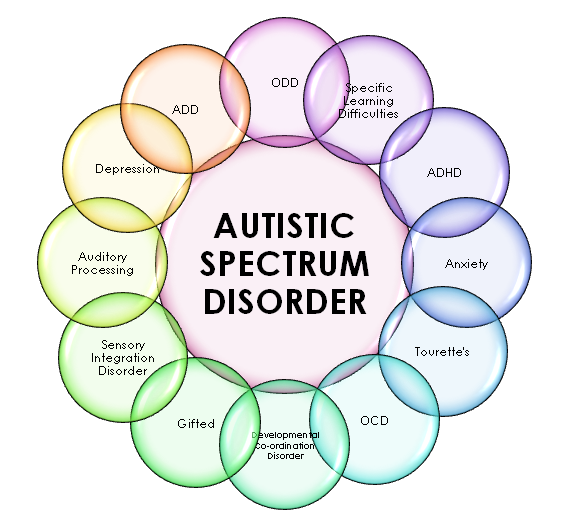
Yet, the relationship between autism and gender dysphoria is not one-dimensional. While some autistic individuals experience dysphoria, others do not, and still others find that their dysphoria is intertwined with other aspects of their neurodivergence. For example, the sensory sensitivities common in autism can make certain gendered experiences—such as clothing textures or social expectations—feel unbearable. In this way, dysphoria is not just about identity but also about the physical and social environment in which that identity exists.
It is also worth noting that the path to self-acceptance for autistic individuals with gender dysphoria can be uniquely challenging. The double stigma of being autistic and transgender can lead to isolation, as they may struggle to find communities that understand both aspects of their identity. However, this isolation can also foster resilience, as autistic individuals learn to advocate for themselves in a world that often overlooks their needs.
Challenging Societal Narratives: The Power of Autistic Voices
The narrative surrounding autism and gender identity is still dominated by neurotypical voices, which often frame autistic experiences through a lens of deficit or confusion. But the truth is far more nuanced. Autistic individuals are not “broken” versions of neurotypical people—they are individuals with their own ways of understanding and expressing their identity.
One of the most powerful ways to challenge these narratives is through the amplification of autistic voices. Autistic transgender individuals, in particular, have begun to share their stories, offering a glimpse into a world where identity is not a fixed point but a dynamic, ever-evolving process. These stories are not just personal accounts; they are acts of defiance against a society that seeks to categorize and control.
Moreover, the intersection of autism and gender identity highlights the importance of intersectional advocacy. Autistic individuals who are also transgender or nonbinary often face compounded discrimination, making it essential for allies to listen, learn, and advocate alongside them. This means challenging not only transphobia but also ableism, recognizing that the two are deeply intertwined.
The Future: A More Inclusive Understanding
The conversation around autism and gender identity is still in its infancy, but it is a conversation that holds immense promise. As society becomes more aware of neurodiversity, there is an opportunity to redefine what it means to be human—to embrace the idea that identity is not a monochrome painting but a vibrant, ever-changing masterpiece.
For autistic individuals, this means greater access to gender-affirming care, spaces where their identities are validated, and communities that celebrate their uniqueness. For society at large, it means recognizing that the rigid categories we cling to are not universal truths but social constructs that limit our understanding of human diversity.
Ultimately, the connection between autism and gender identity is a reminder that the human experience is not a straight line but a winding path, full of twists, turns, and unexpected revelations. It is a call to embrace the complexity of identity, to celebrate the ways in which neurodivergent minds enrich our understanding of what it means to be human.
The prism, after all, is not just a tool for splitting light—it is a symbol of the infinite possibilities that lie within each of us. And for those who navigate the intersection of autism and gender identity, the light they refract is nothing short of revolutionary.