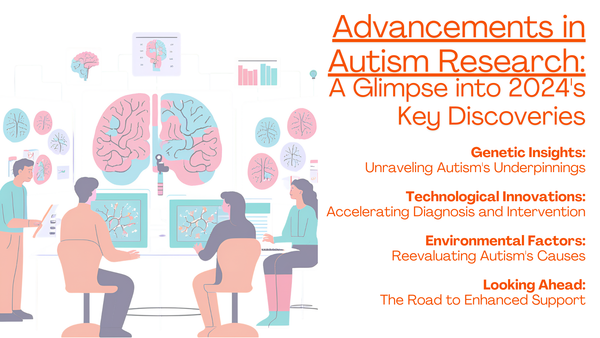
What if the key to unlocking the enigma of autism lies not just in where science looks, but in how boldly it dares to ask questions we’ve never considered before? As 2026 unfolds, the landscape of autism research is rapidly evolving, presenting a fascinating tapestry of breakthroughs that challenge old paradigms and open new avenues for understanding and support. Yet, amidst these strides, a provocative challenge emerges: How can we balance the accelerating pace of scientific discovery with the nuanced, lived experiences of autistic individuals to truly transform care and inclusion?
Expanding the Genetic Mosaic: Precision and Complexity
At the forefront of autism research are groundbreaking studies peeling back the intricate layers of genetic contributions. The once simplistic notion of single-gene causality has given way to a recognition of a multifactorial genetic mosaic. Advanced genomic sequencing techniques in 2026 allow researchers to identify not only rare mutations but also subtle polygenic influences that collectively shape the autism spectrum.
This nuanced genetic mapping offers a gateway to personalized medicine, where interventions can be tailored to the specific genetic profiles of individuals. Such precision promises to transition autism research from a one-size-fits-all mindset to a bespoke model, catering to diverse neurodevelopmental trajectories.
Neuroimaging Revelations: Charting New Neural Territories
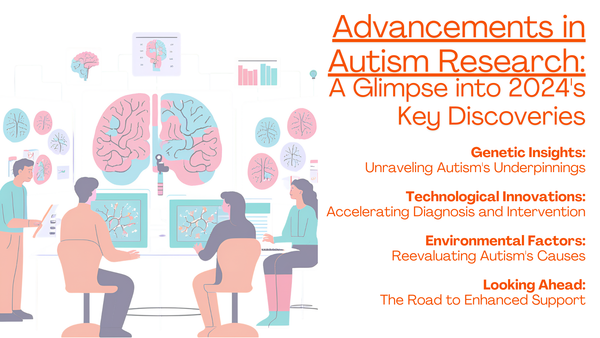
Decoding the brain’s architecture remains a formidable quest, yet advances in neuroimaging technologies have propelled us into unprecedented realms of clarity. Functional MRI and diffusion tensor imaging now capture neural connectivity with breathtaking detail. These tools summarize the delicate choreography of synaptic pruning, neural plasticity, and circuit dysregulation implicated in autism.
By juxtaposing brain activity patterns against behavioral phenotypes, researchers paint a more vivid, multidimensional portrait of autism. This leads to innovative diagnostic criteria that are both biologically grounded and clinically actionable, raising a potent question: can we redefine autism diagnosis in real-time through neural biomarkers?

Environmental Interactions and Epigenetic Insights
Beyond the DNA code, the environment’s subtle interplay with genetic disposition is garnering increasing attention. Emerging studies delve into epigenetics, revealing how external factors—ranging from prenatal exposures to early childhood experiences—can switch genes on or off, influencing neurodevelopmental outcomes.
Understanding these epigenomic modifications not only elucidates autism’s heterogeneous manifestations but also emphasizes prevention and early intervention. It challenges researchers to reconsider causality as a dynamic dialogue between genes and environment rather than a linear path.
Technological Innovations in Therapeutic Modalities
Technology-driven therapies have transcended traditional approaches, infusing hope with creative vigor. 2026 witnesses the maturation of virtual reality (VR) and artificial intelligence (AI) in autism support. VR platforms tailor social skills training by immersing users in customizable, safe digital environments that simulate complex social scenarios, fostering real-world generalization of learned behaviors.
Simultaneously, AI-driven adaptive learning systems provide continuous assessment and personalization, facilitating intervention strategies that evolve with the individual’s progress. These innovations address the perennial challenge of engagement and consistency, essential for therapeutic success.
Community Integration and Ethical Imperatives
Scientific advances alone do not suffice; the societal fabric must weave inclusion and acceptance at its core. The 2026 research ethos increasingly emphasizes participatory paradigms, involving autistic individuals and their families in co-creating research agendas. Such collaboration ensures that outcomes resonate with real needs and aspirations, sidestepping the pitfalls of detached scientific inquiry.
Ethical considerations also surface prominently, especially concerning data privacy in genomic and neuroimaging research, the potential stigmatization from early diagnoses, and equitable access to emerging therapies. Addressing these issues requires vigilant, ongoing dialogue among scientists, clinicians, families, and policymakers.

Future Challenges: Measuring Impact Beyond Metrics
As data multiplies, a pressing quandary emerges: How do we quantify success in autism interventions beyond clinical scales and biomarkers? Quality of life, subjective wellbeing, and societal participation are elusive yet crucial metrics that defy easy quantification.
Future research must incorporate holistic evaluation frameworks that honor individual narratives and diverse definitions of thriving. This paradigm shift demands interdisciplinary collaboration, blending neuroscience, psychology, sociology, and anthropology to capture the full spectrum of autistic experience.
In essence, autism research in 2026 stands at a fascinating crossroads—where sophisticated technologies and deepened biological insights invite a reimagining of both scientific understanding and societal attitudes. This moment offers a clarion call: to harness breakthroughs not only for knowledge’s sake but to foster environments where autistic individuals can flourish authentically and inclusively. The challenge now is to cultivate that delicate balance between innovation and empathy, science and humanity, discovery and dignity.