Autism Spectrum Disorder (ASD) has captivated medical and scientific communities for decades, primarily due to its intricate nature and the multifaceted interplay of genetic and environmental elements contributing to its manifestation. The apparent rise in prevalence has only deepened our curiosity, driving researchers to decipher the enigmatic role environmental factors might play in shaping the neurodevelopmental trajectory of affected individuals. What fundamentally distinguishes environmental contributors is their modifiable nature, offering potential avenues for prevention and intervention amid an otherwise complex genetic landscape.
The Complex Landscape of Autism and the Environment
At the core of many discussions about autism lies the compelling observation: while genetic predisposition undeniably accounts for a significant portion of ASD risk, it does not singularly explain the variability and array of clinical presentations encountered. This gap highlights the plausibility that external influences—exposures and conditions during prenatal and early postnatal periods—may modulate gene expression or disrupt critical developmental pathways. These influences, classified under the umbrella of environmental factors, encompass a wide range of variables, including chemical exposures, maternal health conditions, infections, and even socioeconomic determinants.
The fascination with environmental factors also stems from their profound implications for public health: identifying these elements can illuminate preventable causes, enhancing strategies that safeguard fetal and infant development. However, isolating clear causal relationships remains a significant challenge due to confounding variables and the latent, cumulative effects these exposures might impart.
Chemical and Toxicant Exposures
One of the most intensively scrutinized arenas involves exposure to environmental toxicants—substances such as heavy metals, pesticides, and industrial chemicals. Prenatal contact with these agents has been linked, through epidemiological and mechanistic studies, to perturbations in neurodevelopment that could increase autism risk.
Heavy metals like mercury and lead possess neurotoxic properties that can interfere with synaptogenesis and neurotransmitter systems during critical brain maturation windows. Pesticides such as organophosphates may disrupt cholinergic signaling and provoke oxidative stress. Notably, exposure does not need to be overtly high; even low-level, chronic exposure during sensitive developmental phases can have deleterious effects, underscoring the insidious nature of these environmental contributors.

This chart delineates various environmental agents and their potential mechanisms in autism pathogenesis, exemplifying the biochemical and cellular vulnerabilities engendered by toxicant exposure.
Maternal Health and Immune Activation
Pregnancy represents a critical period where maternal physiological states profoundly impact fetal neurodevelopment. Increasing evidence posits that maternal immune activation (MIA), often precipitated by infections or chronic inflammatory conditions, can contribute to altered neurodevelopmental outcomes in offspring, including ASD.
Maternal infections—viral, bacterial, or parasitic—trigger a cascade of inflammatory cytokines and chemokines that can cross the placental barrier or affect the maternal-fetal interface. This immune milieu may disrupt neuronal proliferation, migration, and synapse formation, essential processes that shape functional brain architecture. Furthermore, autoimmune phenomena and atopic disorders during pregnancy have been associated with an elevated autism risk, suggesting that immune dysregulation has a pivotal role beyond just infectious triggers.
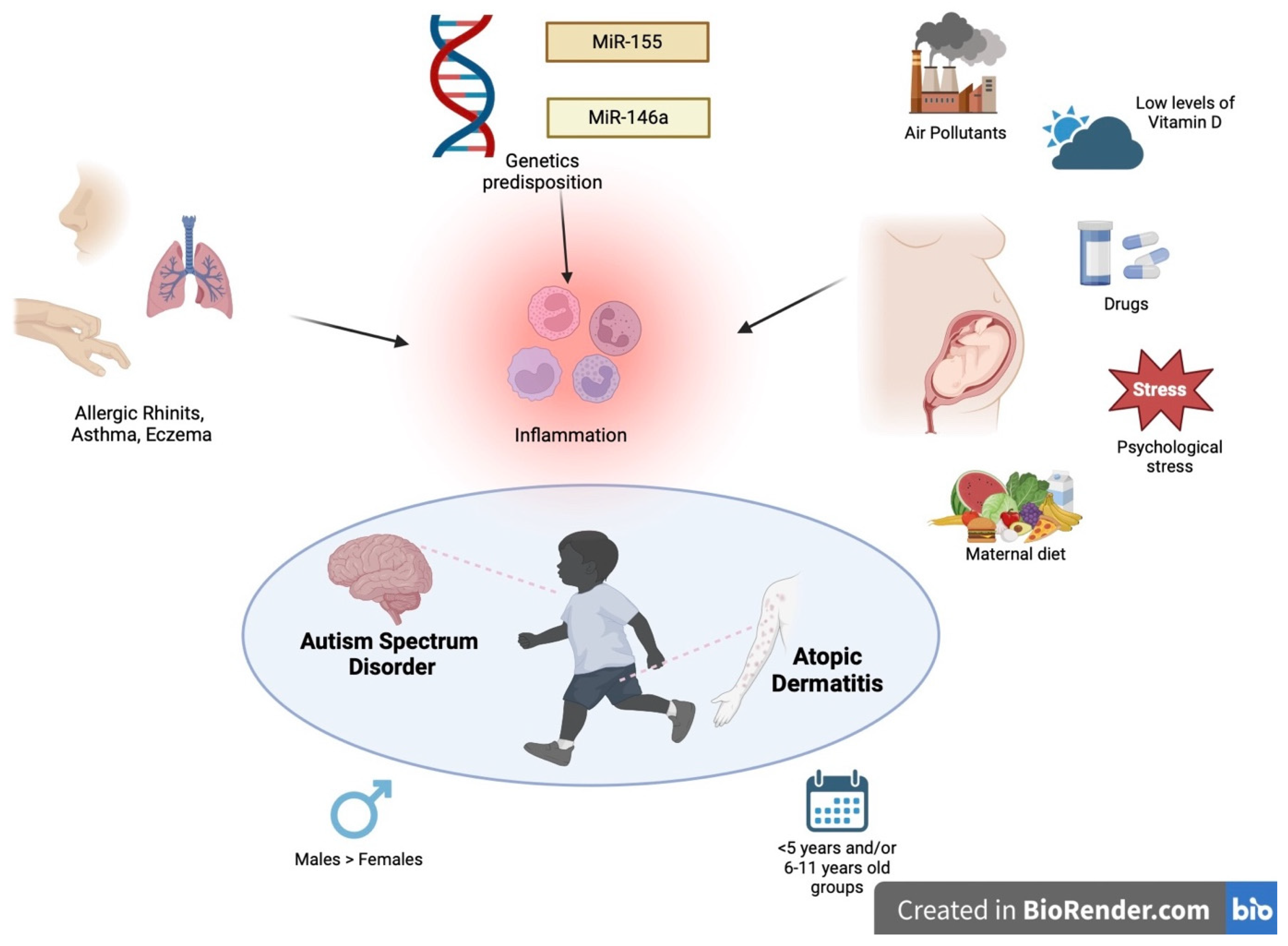
Illustrated here is the common immunological pathway that may link atopic dermatitis and autism spectrum disorders, elucidating shared inflammatory mechanisms.
Infectious Agents and Neurodevelopmental Disruption
Infectious agents have long been implicated in adverse neurodevelopmental outcomes, with particular attention to their ability to induce oxidative stress and aberrant immune responses. Emerging research examines how prenatal or perinatal exposure to viruses and bacteria might contribute to autism’s etiology.
Some pathogens may exert direct neurotropic effects, invading the central nervous system, while others elicit systemic maternal inflammation with secondary consequences on fetal brain development. The timing, nature, and intensity of such infections determine the magnitude of risk. Studies investigating specific viral infections have unveiled probable pathogenic mechanisms, such as molecular mimicry and persistent neuroinflammation, furnishing insights into disease progression and potential therapeutic targets.

The diagram depicts hypothesized pathways through which environmental influences like viral infections may trigger neurodevelopmental abnormalities characteristic of autism spectrum disorders.
Socioeconomic and Psychosocial Influences
Beyond physical exposures, environmental factors also encompass non-chemical elements such as socioeconomic conditions and psychosocial stressors. Maternal stress, deprivation, and limited access to healthcare resources can influence neurodevelopment indirectly by affecting maternal nutrition, prenatal care quality, and stress hormone levels.
Chronic stress elevates glucocorticoid production, which may interfere with fetal brain differentiation and synapse formation. Additionally, such environments often correlate with higher exposure to pollutants and toxicants, creating a compounded effect that challenges disentangling individual risk factors. Despite the complexity, addressing these broader environmental determinants is crucial for a holistic understanding of autism risk and its disparities across populations.
Challenges and Future Directions in Environmental Research
The quest to delineate the environmental contributions to autism is beset with methodological complexities. Variability in exposure assessment, timing, dose-response relationships, and gene-environment interactions complicates definitive conclusions. Prospective, longitudinal studies and advanced biomarker discovery are essential to overcome these barriers.
Innovative approaches integrating genomics, epigenomics, and exposomics promise to elucidate how environmental stimuli interact with genetic susceptibilities to precipitate ASD. Such integrative strategies will not only refine risk assessment but also inform prevention strategies tailored to vulnerable populations. Furthermore, delineating reversible mechanisms offers hope for therapeutic interventions that could mitigate the severity or onset of symptoms.
In conclusion, the intricate weaving of genetic predisposition and diverse environmental factors composes the rich tapestry behind autism spectrum disorder. While much remains to be uncovered, the cumulative evidence underscores the critical influence of prenatal and early-life exposures on neurodevelopmental outcomes. Understanding these mechanisms not only satisfies scientific curiosity but also propels the development of informed public health policies and personalized medicine approaches, ultimately improving lives touched by autism.