
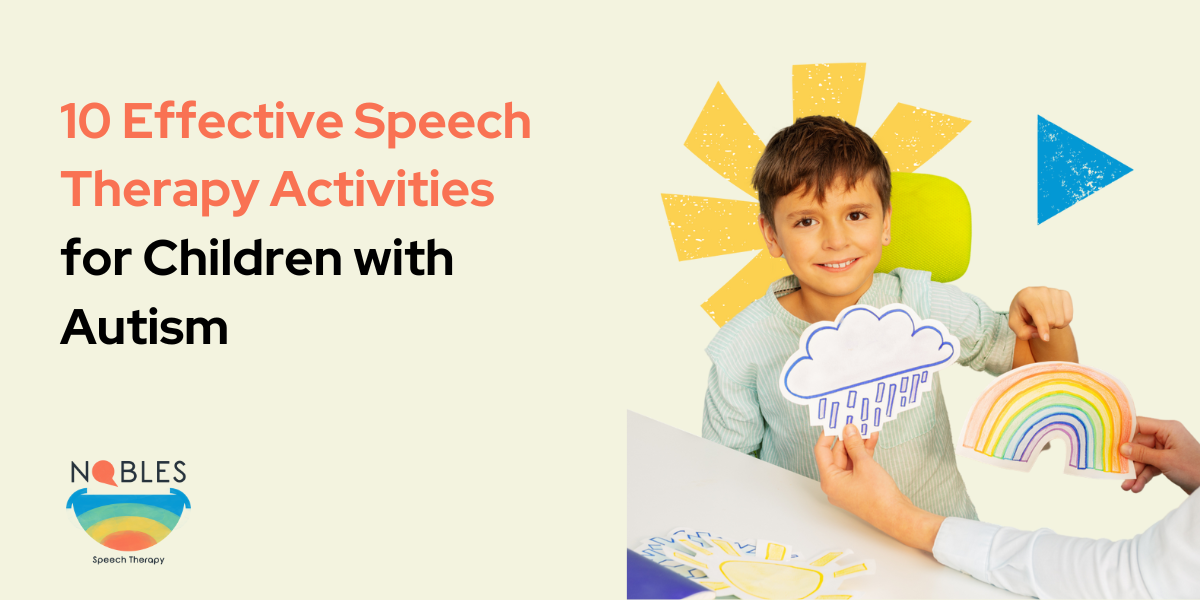
Speech therapy for autism is a domain rich with both complexity and profound human interest. Many have observed the nuanced ways in which children with autism engage with language and communication, often sparking curiosity and a deeper fascination that transcends mere observation. This intrigue stems not only from what is visibly apparent but also from the intricate interplay of neurological, social, and cognitive factors that shape communication challenges and breakthroughs alike. Understanding how speech therapy intervenes provides insight not just into remedial techniques, but also into the underlying mechanisms of human connection and expression.
The Multifaceted Nature of Communication Challenges in Autism
Autism Spectrum Disorder (ASD) encompasses a broad range of symptoms, but communication difficulties remain a hallmark characteristic. These challenges may manifest as delayed speech, nonverbal communication, echolalia (repetition of words or phrases), or atypical language usage. What often baffles observers is the paradoxical coexistence of clear cognitive understanding with significant communicative barriers. This discrepancy underpins much of the fascination with autism, as it prompts questions about the intrinsic nature of language acquisition and social interaction.
Speech therapy for individuals with autism does not merely target the overt deficits but navigates these layered dimensions with precision. It acknowledges that communication is not a monolith but rather a spectrum—ranging from basic verbal skills to complex pragmatic language skills, such as understanding sarcasm, metaphors, and social cues. Therapists thus embark on a journey that is as much about decoding internal language frameworks as it is about external expression.
Customized Interventions: Tailoring Therapy to Individual Needs
One of the defining hallmarks of effective speech therapy for autism is its bespoke nature. No two individuals on the spectrum are identical, and therapy must adapt accordingly. This personalized approach is essential because it respects the heterogeneous presentation of speech and language delays among autistic children.
Therapists often employ a variety of scientifically validated techniques—ranging from Applied Behavior Analysis (ABA) strategies to augmentative and alternative communication (AAC) methods. AAC might include picture exchange communication systems (PECS) or electronic communication devices. These interventions empower nonverbal children by providing alternative modalities through which they can engage meaningfully with their environment.
This adaptive methodology reflects an understanding that communication is fundamentally about connection, not merely speech production. It necessitates continuous assessment and adjustment, as every small milestone achieved can unravel new pathways to more sophisticated communication abilities.

Enhancement of Social Reciprocity Through Speech Therapy
Speech therapy transcends the mechanics of language; it plays a crucial role in enhancing social reciprocity. Communication in autism often falters not from an inability to produce words, but from difficulties in the give-and-take of social interaction. This facet—that of pragmatic language skills—is central in daily living, academic success, and emotional development.
Effective speech therapy incorporates strategies that teach children to interpret and respond to social cues appropriately. This involves fostering skills such as turn-taking in conversation, recognizing facial expressions, and understanding the intentions behind others’ speech. Often, these are achieved through play-based interventions and role-playing activities that simulate real-life social scenarios.
Through this focusing lens on social pragmatics, speech therapy illuminates the subtle rhythms of human interaction, revealing how language functions as a bridge rather than a mere tool.
.png)
Neurological Underpinnings and Therapy’s Role in Brain Plasticity
The fascination with speech therapy in autism also has a neurological dimension. Scientific advances have elucidated how the autistic brain processes language differently. Structural and functional differences in regions such as Broca’s and Wernicke’s areas, along with atypical connectivity between hemispheres, often underpin language delays.
Speech therapy harnesses the remarkable concept of neuroplasticity—the brain’s ability to reorganize and form new connections throughout life. Early and consistent intervention can stimulate neural pathways that may not have initially developed robustly. This neurodevelopmental perspective imparts a hopeful narrative, suggesting that therapeutic efforts can catalyze enduring changes in brain function, thereby enhancing communication potential.
Family-Centric Approaches and Holistic Support Systems
Speech therapy for autism is not confined to clinical sessions. Its efficacy is magnified when integrated into the broader context of family and community support. Families are often trained to reinforce therapeutic techniques at home, ensuring consistency and contextual learning.
This holistic approach recognizes that communication does not happen in isolation but within dynamic interpersonal environments. Collaborations between therapists, educators, and families create a cohesive scaffolding that nurtures continual progress. Moreover, empowering caregivers with skills and knowledge reduces frustration and builds a supportive ecosystem critical for sustained development.
Transformative Benefits Beyond Speech
The transformative benefits of speech therapy extend well beyond improved verbal skills. Communication fosters autonomy, self-esteem, and social integration—all essential facets of an individual’s quality of life. For many children on the spectrum, finding a voice—whether verbal or augmentative—can metamorphose their interaction with the world, shifting the narrative from isolation to inclusion.
This transformation fuels not only the child’s growth but also enriches families and communities. It challenges preconceived notions about disability and reiterates the universal human need for connection, expression, and understanding.
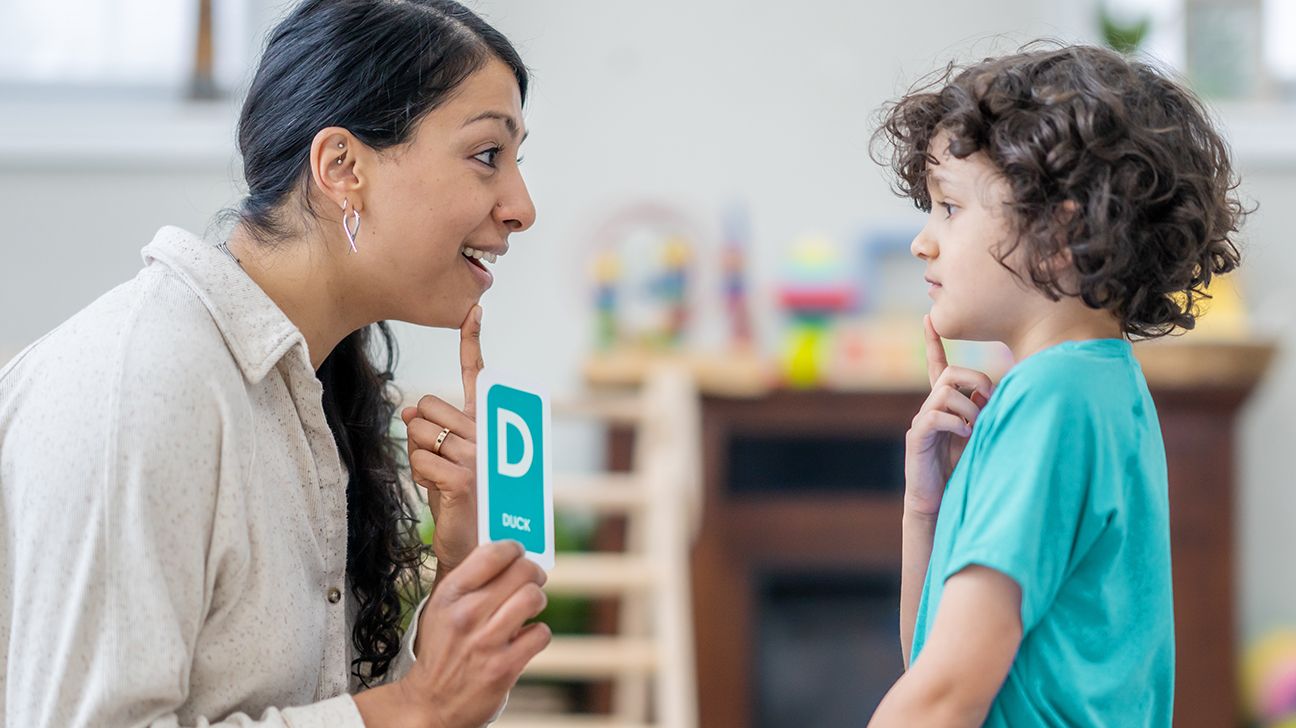
In essence, speech therapy for autism is a profound amalgamation of science, empathy, and individualized care. It addresses not only the surface-level symptoms but probes deeper into the multifaceted essence of communication itself. The fascination it inspires is grounded in witnessing real transformation—the blossom of voice where there was silence, the spark of understanding where there was confusion, and the emergence of connection where there was distance. Such outcomes reaffirm that language is not merely spoken words, but the bridge that binds us in shared humanity.












