Observing a child’s unique mannerisms and persistent interests can often evoke a mix of curiosity and admiration, especially when these behaviors diverge from conventional developmental patterns. Among children with autism, this divergence can manifest as an intense fascination with specific objects or routines—a common observation that invites deeper contemplation about the nature of engagement, communication, and comfort. Crafting a robust autism support plan for your child not only acknowledges this distinctive profile but also provides a strategic framework to nurture growth, bolster independence, and enhance quality of life.
Understanding the Child’s Unique Profile
Every child with autism presents a singular constellation of strengths, challenges, and preferences. Initial steps in creating a support plan hinge upon a comprehensive understanding of these characteristics. This involves meticulous observation and, when possible, collaboration with multidisciplinary professionals such as developmental pediatricians, occupational therapists, speech-language pathologists, and behavioral specialists. These experts conduct detailed assessments that elucidate cognitive abilities, sensory sensitivities, communication styles, and social interaction patterns.
Recognizing the child’s preferred modes of learning and engagement is pivotal. For instance, a child fascinated by repetitive patterns or specific objects may be seeking predictability and sensory regulation. Rather than viewing these fixations as mere quirks, a support plan should integrate these interests constructively, transforming them into gateways for education and socialization.
Establishing Clear, Measurable Goals
A quintessential element of an effective autism support plan is the formulation of explicit, measurable objectives that resonate with both the child’s developmental trajectory and familial aspirations. Goals should be segmented into short-term and long-term outcomes, addressing domains such as communication, social skills, sensory integration, and adaptive behaviors.
For example, a short-term goal might focus on increasing functional communication through the use of augmentative devices or picture exchange systems. Long-term aspirations could include fostering independent self-care skills or participation in inclusive community settings. This structured approach ensures the plan remains dynamic and responsive to progress, while also maintaining clarity for all stakeholders involved.
Incorporating Therapeutic Interventions and Educational Strategies
Therapeutic interventions form the cornerstone of autism support plans, tailored meticulously to meet individualized needs. Applied Behavior Analysis (ABA), occupational therapy, speech therapy, and social skills training exemplify commonly utilized methodologies. Each intervention addresses distinct facets of developmental growth while often intersecting synergistically.
Educational strategies deserve special mention, particularly in inclusive or specialized settings where curricular adaptations promote optimal learning. Techniques such as visual schedules, structured teaching, and task analysis enhance predictability and reduce anxiety. Environments enriched with sensory-friendly spaces and calming modalities accommodate sensory processing differences, cultivating a safe and enabling atmosphere.

Promoting Collaborative Involvement
An effective support plan thrives on a collaborative foundation. This extends beyond professional guidance, encompassing active parental engagement, educators, caregivers, and when appropriate, the child themselves. Open channels of communication among all parties ensure consistency in approach and reinforce learning across contexts.
Families often serve as the most intimate observers and advocates, capable of providing valuable insights and feedback. Empowering caregivers with training and resources enhances their ability to implement strategies at home, thereby fostering continuity and generalization of skills. Additionally, nurturing peer interactions expands social opportunities and curtails isolation.
Anticipating and Addressing Sensory and Behavioral Needs
Children with autism frequently experience sensory processing irregularities that impact behavior and emotional regulation. A meticulous autism support plan anticipates these sensitivities by incorporating sensory diets—planned activities that provide sensory input to improve attention and calmness. This therapeutic principle aids in mitigating distress caused by overwhelming stimuli or seeks to channel high-energy states constructively.
Behavioral challenges, often a manifestation of unmet needs or communication barriers, warrant thoughtful intervention strategies. Functional Behavior Assessments (FBA) identify antecedents and consequences of behaviors, enabling the design of proactive plans that emphasize positive reinforcement and coping mechanisms.
Fostering Independence and Self-Advocacy
One of the profound objectives of any support plan is facilitating the child’s journey toward autonomy. Initiatives targeting self-help skills such as dressing, feeding, and personal hygiene should be systematically embedded within the plan. Incremental steps, scaffolded by adult support, empower children and bolster self-esteem.
As children mature, fostering self-advocacy skills becomes indispensable. Encouraging self-expression, decision-making, and understanding personal needs equips children to navigate complex social landscapes and advocate for their accommodations.
Integrating Community and Social Interaction
The broader social milieu profoundly influences developmental outcomes. Autism support plans should incorporate strategies that facilitate participation in community activities, recreational programs, and peer groups. Building connections beyond the family unit promotes social competence and creates a sense of belonging.
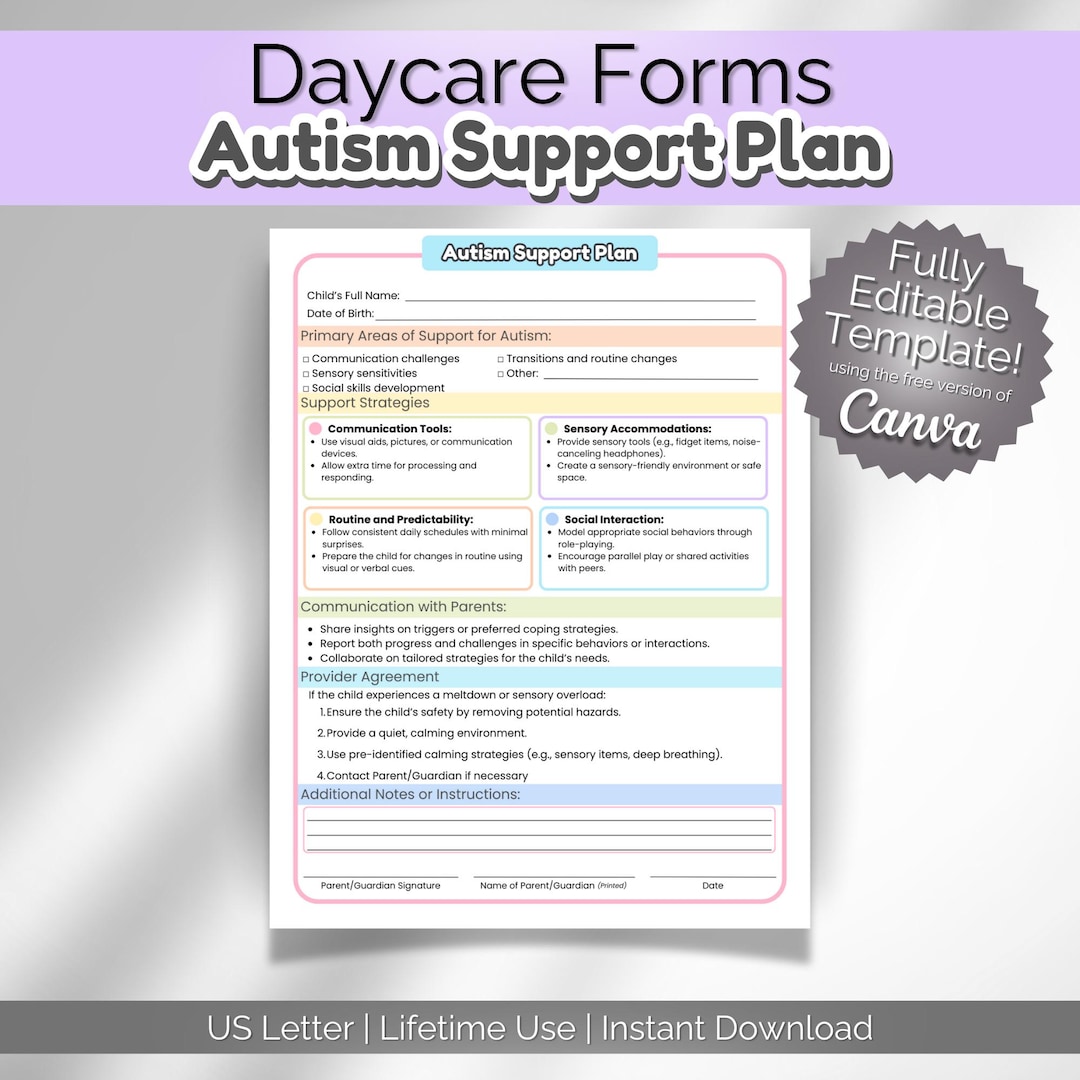
Inclusion initiatives, whether in school or daycares, necessitate environmental modifications and sensitivity training for peers and staff alike. Such measures diminish stigmatization and promote empathetic engagement. Simultaneously, structured social skills groups provide safe spaces for practicing interpersonal communication in a controlled setting.
Evaluating and Revising the Plan Regularly
Flexibility and adaptability are integral to maintaining the efficacy of an autism support plan. Periodic evaluations—both formal and informal—gauge the child’s responsiveness and inform necessary revisions. This iterative process acknowledges developmental shifts and emerging challenges, ensuring that goals remain relevant and attainable.
Documentation plays a critical role, creating a repository of observations, progress metrics, and feedback. This transparency fortifies collaboration and adjusts strategies in real time. Ultimately, the support plan is a living document, evolving in tandem with the child’s changing needs.
Developing a comprehensive autism support plan is both an art and a science. It requires a nuanced understanding of the child’s unique world, a commitment to collaborative action, and the foresight to adapt amidst change. By addressing not only the observable behaviors but also the underlying motivations and fascinations, such a plan lays a foundation for thriving—allowing children with autism to flourish within a world designed to embrace their unparalleled gifts.