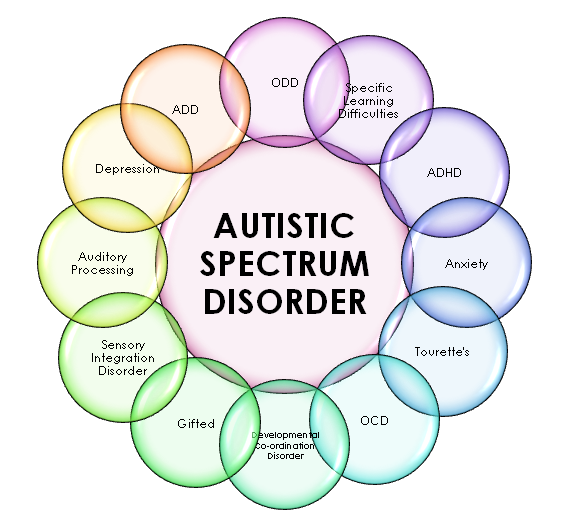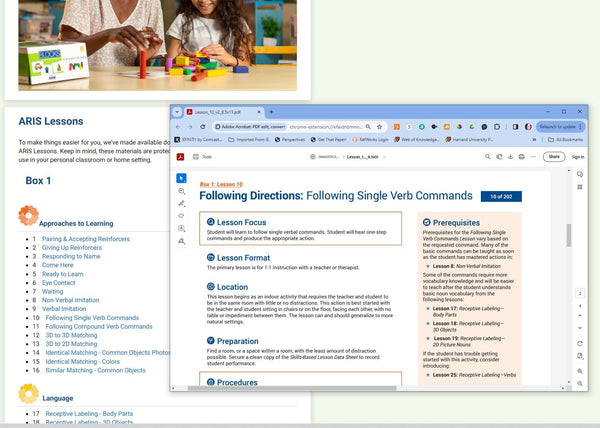
In a world where conventional education often feels like a one-size-fits-all straitjacket, homeschooling emerges as a liberating alternative—especially for families navigating the intricate landscape of autism. The rigid structures of traditional classrooms can feel like a cacophony of distractions for neurodivergent learners, where the hum of fluorescent lights and the rustle of papers drown out the very essence of understanding. Yet, within the quiet corners of a home, where learning is tailored to the rhythm of a child’s mind, a revolution unfolds. Homeschooling, when paired with a thoughtfully crafted curriculum, doesn’t just accommodate autism—it celebrates it, transforming challenges into strengths and curiosity into mastery. This isn’t merely about avoiding the status quo; it’s about redefining what education can be when it dances to the beat of a different drummer.
The Autism Advantage: Why Homeschooling Unlocks Potential
Autism isn’t a barrier to learning—it’s a different kind of doorway. For many neurodivergent children, the sensory overload of a traditional classroom can stifle their ability to absorb information, let alone thrive. Homeschooling dismantles these obstacles by placing the child at the center of their educational journey. Without the pressure of fitting into a mold, autistic learners can explore subjects at their own pace, delving deeper into passions that might otherwise be dismissed as distractions. Imagine a child captivated by the intricacies of marine biology, not because it’s on the syllabus, but because it sparks their curiosity. In a homeschool setting, such obsessions aren’t just tolerated—they’re nurtured, becoming the foundation for a lifelong love of learning. The result? A child who doesn’t just memorize facts but understands them, who doesn’t just follow instructions but innovates beyond them.
The social dynamics of traditional schools, often fraught with unspoken rules and unpredictable interactions, can be a minefield for autistic students. Homeschooling offers a sanctuary where socialization isn’t forced but fostered organically. Whether through structured group activities, community programs, or one-on-one interactions with peers who share similar interests, the social landscape becomes a garden rather than a battlefield. Here, friendships are built on mutual understanding, not on the fragile threads of conformity. For parents, this shift is nothing short of transformative—it’s the difference between watching their child struggle to survive in an environment that wasn’t designed for them and watching them flourish in one that is.
Curriculum Design: Crafting a Path That Resonates
Designing a curriculum for an autistic learner isn’t about watering down content; it’s about distilling it into its most potent, engaging form. The key lies in flexibility and personalization. A rigid, linear progression through subjects may work for some, but for others, a spiral approach—where concepts are revisited with increasing complexity—can reinforce learning without overwhelming. Visual schedules, hands-on experiments, and multisensory activities aren’t just teaching tools; they’re bridges between abstract ideas and tangible understanding. For instance, a history lesson about ancient civilizations might come alive through a hands-on project building a miniature pyramid, complete with hieroglyphics etched into clay. The goal isn’t to simplify the material but to make it accessible, to turn the act of learning into an adventure rather than a chore.
Technology, often vilified for its role in distraction, can become a powerful ally in homeschooling. Adaptive learning platforms, such as those that adjust difficulty based on performance, ensure that a child is neither bored nor overwhelmed. Screen time isn’t a mindless escape but a targeted tool, whether it’s using apps to practice math through gamified challenges or virtual reality to explore historical sites. The trick is balance—leveraging technology where it enhances learning while ensuring it doesn’t replace the richness of human interaction. For autistic learners, who often thrive in structured, predictable environments, these digital aids can provide the consistency they crave, turning what might feel like chaos into a clear, navigable path.
Sensory-Friendly Strategies: Learning Beyond the Noise
Sensory processing differences are a hallmark of autism, and they demand a curriculum that respects—not ignores—them. A classroom that feels like a sensory minefield—a flickering light here, a humming projector there—can derail even the most determined learner. Homeschooling allows parents to curate an environment where sensory needs are met proactively. This might mean dimming harsh lighting, incorporating fidget tools into lessons, or allowing breaks in a quiet, sensory-deprived space when overstimulation strikes. The goal isn’t to eliminate all distractions but to control them, creating a space where focus can flourish. For some children, this might mean learning while swinging gently in a hammock or using noise-canceling headphones to block out disruptive sounds. The result is a learning environment that doesn’t just accommodate sensory differences but leverages them as strengths.
Movement, often seen as a disruption in traditional classrooms, can be a powerful learning tool for autistic students. Kinesthetic learners absorb information best when they’re active, whether it’s pacing while reciting multiplication tables or using gestures to reinforce grammar rules. Incorporating movement into lessons isn’t just about keeping a child engaged—it’s about tapping into a natural way of processing the world. A science lesson about the solar system might involve a game of “planet tag,” where each child represents a celestial body, orbiting and colliding in a scaled-down model of the cosmos. The physicality of the activity reinforces the concepts, making abstract ideas tangible and memorable. In this way, learning becomes an embodied experience, not just an intellectual one.
Community and Collaboration: The Power of Shared Learning
Homeschooling doesn’t mean isolation. In fact, the most successful homeschooling journeys are often those that weave in community connections, turning solitary learning into a collaborative tapestry. Local homeschool co-ops, where families gather for group lessons, field trips, and social events, provide a sense of belonging without the pressures of a traditional classroom. These communities can be particularly valuable for autistic learners, offering a space to practice social skills in a low-stakes environment. Whether it’s a weekly art class, a coding club, or a nature exploration group, these shared experiences foster friendships built on shared interests rather than forced conformity. For parents, these networks are a lifeline—a place to exchange resources, offer support, and celebrate milestones together.
Beyond local groups, online communities offer a global perspective, connecting homeschooling families across continents. Virtual book clubs, science fairs, and even pen-pal programs can broaden a child’s horizons, exposing them to diverse cultures and ideas. For autistic learners who may struggle with face-to-face interactions, these digital spaces provide a comfortable way to engage with peers. The key is to find communities that align with a child’s interests and communication style, whether that’s through written forums, video calls, or collaborative projects. In these spaces, learning becomes a shared adventure, not a solitary struggle.
Assessment Without Anxiety: Redefining Success
Traditional testing often feels like a high-stakes gamble for autistic students, where the pressure to perform can overshadow the joy of learning. Homeschooling offers the freedom to redefine assessment, focusing on progress rather than perfection. Portfolios, where a child’s work is collected over time, can showcase growth in a way that standardized tests never could. Project-based assessments, where a child demonstrates understanding through a creative or practical endeavor, can reveal depths of knowledge that written exams might miss. For instance, a child who struggles with written expression might excel in a multimedia presentation, using video, audio, and visuals to convey their understanding of a historical event. The goal isn’t to avoid evaluation but to make it meaningful, to measure what truly matters: a child’s curiosity, creativity, and growth.

The Future of Learning: A Blueprint for Neurodivergent Minds
The homeschooling revolution isn’t just about avoiding the pitfalls of traditional education—it’s about pioneering a new model, one that recognizes and celebrates neurodiversity. As more families embrace this path, the ripple effects are profound. Children who once felt like square pegs in round holes begin to see themselves as innovators, artists, and thinkers. Parents who once felt powerless in the face of rigid systems discover the joy of reclaiming their child’s education. And society, in turn, benefits from a generation of thinkers who approach problems with fresh perspectives, unburdened by the constraints of conformity.
The journey isn’t without its challenges. Curriculum design requires patience, creativity, and a willingness to adapt. Socialization demands intentionality, not just convenience. But for those who take the leap, the rewards are immeasurable. A child who learns to read not because they’re forced to but because they’re captivated by a story. A teenager who explores calculus not as a requirement but as a puzzle to solve. A young adult who enters the world not as a reluctant participant but as a confident, curious learner. This is the promise of homeschooling for autistic children—a promise not of perfection, but of possibility.
The path forward isn’t about rejecting traditional education wholesale; it’s about asking what education could be if it were designed with neurodivergent minds in mind. Homeschooling offers a glimpse of that future—a future where every child, regardless of how their brain is wired, has the opportunity to learn, grow, and thrive on their own terms. It’s a future where the question isn’t “How can we make this child fit the system?” but “How can we make the system fit this child?” And in that shift lies the true magic of homeschooling.