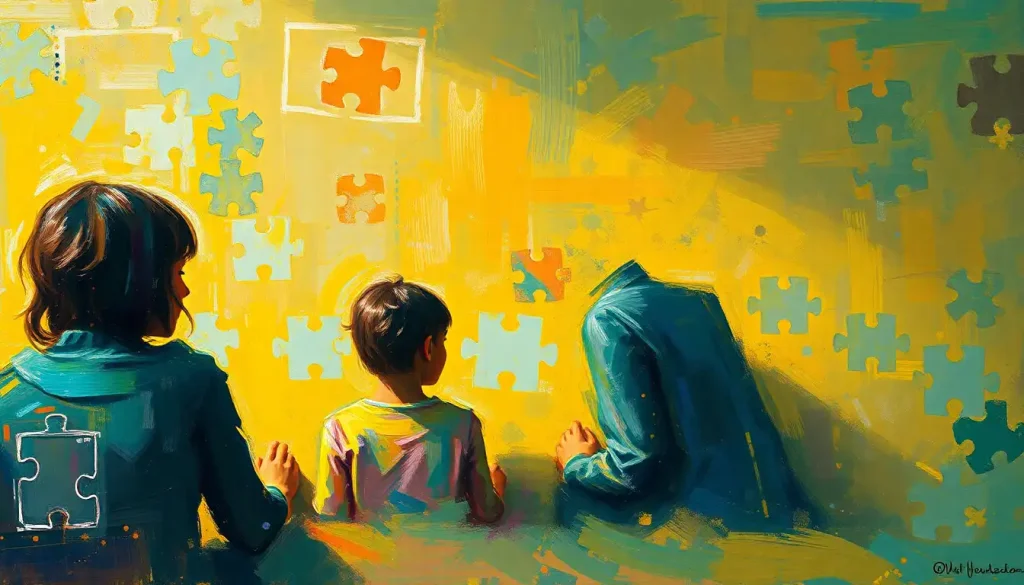
In the evolving landscape of neurodiversity, autism organizations have increasingly captured public interest and admiration. This fascination often stems from a profound desire to understand the complexities of autism spectrum disorder (ASD) and to support those who navigate its unique challenges. Beyond mere curiosity lies a recognition of the significant societal impact such advocacy groups have, not only in enhancing awareness but also in transforming lives. This article explores ten autism organizations that have made a difference through their pioneering work, innovative programs, and unwavering dedication to fostering inclusivity and understanding.
1. Autism Society: A Pioneer in Advocacy and Community Engagement
Established decades ago, the Autism Society serves as one of the earliest and most influential organizations dedicated to improving the lives of individuals with autism. Its commitment transcends advocacy; it emphasizes local community engagement, providing resources that bridge gaps between families, educators, and healthcare providers. Through its expansive network, it cultivates a sense of solidarity, which many find invaluable amidst the complex realities of autism diagnosis and intervention.
2. Autism Speaks: Illuminating Awareness with a Spectrum of Initiatives
Autism Speaks has become synonymous with research funding and public awareness campaigns. Its influence on policy and public consciousness is substantial, leveraging extensive educational tools that demystify autism’s nuances. This organization’s efforts extend into early intervention strategies, promising a pathway toward improved outcomes for children diagnosed with ASD. Despite some controversies surrounding its approach, the organization undeniably catalyzes conversations that were once whispered in obscurity.
3. The Autism Research Institute: Advancing Science at the Nexus of Hope
Science and advocacy converge at the Autism Research Institute, where relentless empirical inquiry meets a compassionate pursuit of effective treatments. The organization promotes evidence-based approaches and educates families on the latest scientific breakthroughs. Its emphasis on biomedical research addresses the often-overlooked physiological aspects of autism, inviting a more holistic understanding that challenges reductionist perspectives.
4. National Autism Association: Safeguarding and Supporting Families
Focused on the safety and wellbeing of children with autism, the National Autism Association tackles critical issues such as wandering prevention and emergency preparedness. Their programs provide families practical tools and resources essential for everyday security. This focus on protective measures and crisis intervention highlights a side of autism advocacy often overshadowed by academic discourse, underscoring real-world implications.
5. Autism Self Advocacy Network (ASAN): Elevating the Voices of Autistic Individuals
ASAN champions the crucial principle of “nothing about us without us,” advocating from within the autistic community itself. It represents a paradigm shift—where self-advocacy and autonomy take precedence—challenging stereotypes and promoting acceptance over cure. Its initiatives empower autistic individuals to lead dialogues about their experiences and rights, offering a counter-narrative to traditional clinical models.
6. Organization for Autism Research: Bridging Knowledge with Practical Solutions
The Organization for Autism Research (OAR) focuses on generating usable knowledge to improve services and policies. Through rigorous studies and grants, it cultivates a fertile environment where empirical findings translate directly into actionable interventions. OAR’s commitment to evidence-based practice fills a crucial void between academic research and real-world application, a translational effort crucial for sustained progress.
7. Autism Ontario: Community-Centric Support and Advocacy
Rooted in Canadian advocacy, Autism Ontario exemplifies the benefits of regional and culturally sensitive support networks. It provides a multi-faceted support system that includes educational services, community outreach, and government liaison. Its work highlights the importance of localized, culturally attuned approaches to autism, resonating with families seeking tailored assistance.
8. The Whole Child Center: A Holistic Approach to Autism Treatment
Innovation in treatment is embodied by The Whole Child Center, which integrates diverse therapeutic disciplines to address the multifaceted nature of autism. Their model combines physical, behavioral, and developmental interventions, underscoring the interconnectedness of mind and body in fostering progress. Such integrative care challenges the fragmented approaches that often characterize autism services.

9. Autism Making the Difference – Artofit: Arts as a Catalyst for Expression
Harnessing creativity, Autism Making the Difference – Artofit leverages artistic endeavors as therapeutic and communicative tools. Its programs enable individuals on the spectrum to express themselves beyond conventional language constraints, fostering confidence and social connection. This artistic approach reveals the untapped potential within the autistic population, celebrating difference rather than deficit.

10. The Simons Foundation Autism Research Initiative (SFARI): Catalyzing Genetic and Neuroscientific Discoveries
SFARI stands at the forefront of genetic and neuroscientific research aimed at unraveling autism’s biological foundations. Its funding and collaborative projects drive groundbreaking discoveries, painting a more intricate portrait of ASD’s origins. By fostering collaboration among scientists, SFARI accelerates the quest for personalized interventions and broadens the scientific community’s understanding of neurodiversity.
These organizations collectively illuminate the multifaceted nature of autism—where science, advocacy, community, and creativity intersect. Their work transcends basic awareness, delving into deeper layers of inclusion, support, and empowerment. The fascination that surrounds autism organizations is not only a reflection of the enigmatic nature of autism itself but also a testament to humanity’s enduring capacity for empathy and innovation.
In the continuum of neurodiversity advocacy, these ten entities stand as beacons of hope and progress. They embody a commitment to breaking down barriers, fostering understanding, and reshaping the narrative surrounding autism. As society’s fascination deepens, so too does the imperative to support these organizations whose efforts ripple across families, communities, and the broader human experience.