Have you ever wondered what would happen if a child with autism could practice social interactions with a companion that never tires, never judges, and always responds with unwavering patience? Enter the world of socially assistive robotics—a field where machines are not just tools but gentle guides, helping children navigate the complex landscape of social cues and emotional expression. This isn’t science fiction; it’s a growing reality reshaping how we approach autism therapy.
Autism Spectrum Disorder (ASD) presents unique challenges in social communication, often making it difficult for children to interpret facial expressions, maintain eye contact, or engage in reciprocal conversations. Traditional therapies, while invaluable, can sometimes feel overwhelming or inconsistent. Enter robots—programmed to adapt to each child’s pace, offering a predictable and controlled environment where social skills can flourish. But how exactly do these mechanical allies work, and what makes them so effective?
The Science Behind Socially Assistive Robots
At the heart of this innovation lies the concept of socially assistive robotics (SAR), a branch of robotics focused on aiding human users through social interaction rather than physical assistance. These robots are designed to be approachable, with simplified features that reduce sensory overload—think large, expressive eyes or gentle, rhythmic movements. Unlike humans, they don’t exhibit frustration or impatience, making them ideal companions for children who may struggle with unpredictable social responses.
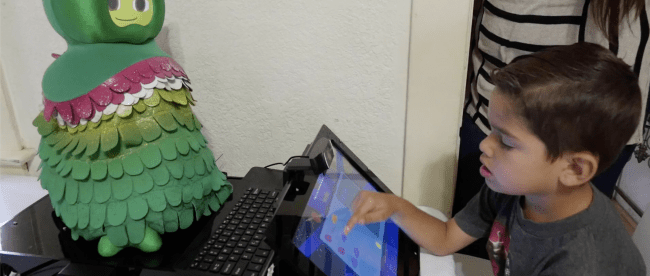
Research has shown that robots like NAO or Leka can significantly improve social engagement in children with autism. By incorporating interactive games, storytelling, or even dance routines, these robots create a structured yet engaging environment. The key lies in their ability to scaffold learning—breaking down complex social behaviors into manageable steps. For instance, a robot might guide a child through a greeting ritual, reinforcing turn-taking and eye contact in a way that feels safe and rewarding.
But the magic doesn’t stop at interaction. These robots are equipped with sensors and AI that allow them to adapt in real-time. If a child struggles with a particular task, the robot can adjust its approach, offering simpler prompts or additional encouragement. This dynamic responsiveness ensures that the child remains engaged without feeling overwhelmed—a balance that human therapists often strive to achieve but can’t always replicate with consistency.
Breaking Down Social Barriers with Mechanical Companions
Imagine a child who freezes when someone raises their voice or avoids eye contact altogether. For many children with autism, these reactions stem from an overstimulation of sensory inputs or an inability to process social cues efficiently. Robots, with their controlled demeanor and predictable behaviors, provide a low-stakes environment where these challenges can be addressed without fear of judgment.
Take, for example, the use of robots in teaching emotional recognition. A robot might display a series of facial expressions—happy, sad, surprised—and ask the child to mimic or identify them. Unlike a human therapist, the robot can repeat the exercise endlessly, reinforcing learning through repetition. Over time, this practice can translate into real-world interactions, where the child becomes more attuned to the emotions of others.
Another breakthrough lies in the robots’ ability to gamify social skills. Through interactive games, children learn to take turns, share, and collaborate—all while having fun. These games are designed to be intuitive, often incorporating visual and auditory cues that align with the child’s sensory preferences. The result? A child who not only practices social skills but also associates them with positive experiences.
Yet, this approach isn’t without its challenges. One of the most pressing questions is: Can these skills truly transfer to real-life interactions? While robots provide a controlled environment, the ultimate goal is to help children navigate the unpredictable nature of human relationships. This raises a critical point—robots are a tool, not a replacement. They serve as a bridge, but the child must eventually apply these skills in the real world, where social dynamics are far more nuanced.
The Ethical Considerations: Where Do We Draw the Line?
As with any technological advancement, the integration of robots into autism therapy raises ethical questions. Is it appropriate to rely on machines for social development? Could this lead to a scenario where children become overly dependent on robotic companions, further isolating them from human interactions?
Proponents argue that robots are merely a supplement to traditional therapy, offering additional support where it’s needed most. They emphasize that the goal is not to replace human connection but to enhance it. For children who struggle with traditional therapy methods, robots can provide a stepping stone—one that builds confidence before transitioning to human-led interactions.
However, critics caution against over-reliance on technology. They worry that excessive use of robots could hinder the development of genuine social bonds, leaving children ill-prepared for the complexities of human relationships. The key, they suggest, lies in balance—using robots as a temporary aid while ensuring that human therapists remain central to the process.
Another ethical concern revolves around data privacy. Robots equipped with AI often collect data on a child’s interactions, behaviors, and progress. While this data can be invaluable for tailoring therapy, it also raises questions about consent and security. Parents and therapists must ensure that this information is handled with the utmost care, protecting the child’s privacy at every stage.
The Future of Robotics in Autism Therapy
The potential of socially assistive robotics is vast, but we’re only scratching the surface. Researchers are already exploring how robots can be integrated into classrooms, homes, and even public spaces to support children with autism in real-time. Imagine a robot that accompanies a child to school, gently reminding them to raise their hand before speaking or to wait their turn in a conversation.
Advancements in AI are also paving the way for more sophisticated interactions. Future robots may be able to detect subtle emotional cues, such as a child’s tone of voice or body language, and respond accordingly. This level of personalization could make therapy even more effective, ensuring that each child receives the support they need.
Yet, the journey is far from over. As with any emerging field, there are hurdles to overcome—funding, accessibility, and widespread adoption among therapists and educators. But the progress thus far is undeniable. For many families, robots have become a beacon of hope, offering a new avenue for growth and connection.
So, what does the future hold? Will robots become as common in therapy rooms as stethoscopes are in doctors’ offices? Only time will tell. But one thing is certain: the fusion of robotics and autism therapy is not just a fleeting trend—it’s a transformative movement that has the power to change lives.
As we stand on the precipice of this technological revolution, let’s ask ourselves: Are we ready to embrace a future where machines help us become more human?