The intricate dance between genetics and autism has long captivated researchers, clinicians, and families alike. While autism spectrum disorder (ASD) manifests through a spectrum of behavioral and developmental traits, its roots often trace back to the molecular blueprint we inherit—our DNA. The latest discoveries in genomics have not only deepened our understanding of autism’s genetic underpinnings but also unveiled a labyrinth of chromosomal anomalies, epigenetic modifications, and polygenic risks that challenge conventional wisdom. What begins as a simple observation—why does autism run in families?—unravels into a narrative of evolutionary whispers, cellular missteps, and the delicate balance between stability and variation in the human genome.
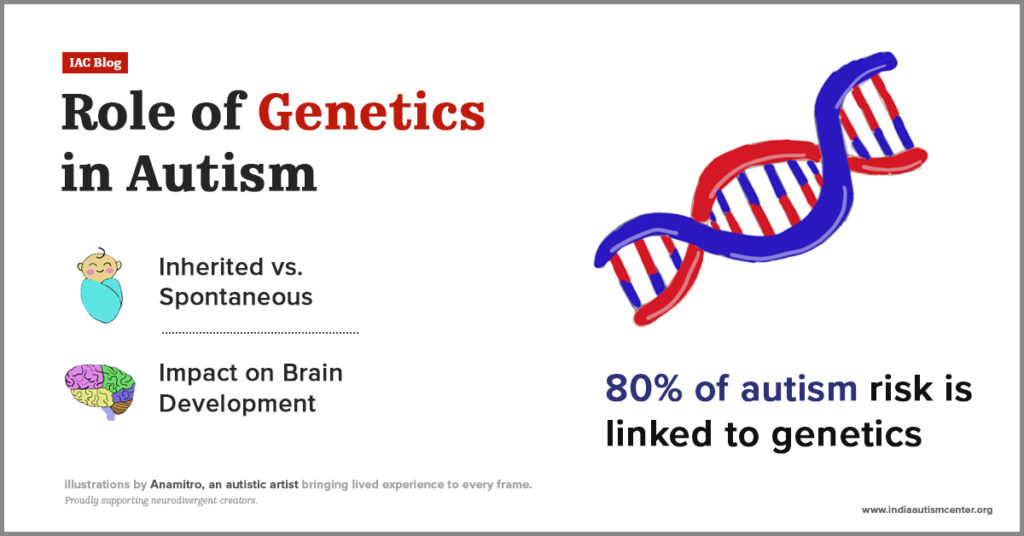
The Genetic Mosaic: How DNA Variations Shape Autism
At the heart of autism’s genetic landscape lies a mosaic of variations—some rare, some common—each contributing a fragment to the larger puzzle. Single nucleotide polymorphisms (SNPs), the most frequent type of genetic variation, dot the genome like constellations, some subtly altering protein function while others remain silent. Yet, it is the de novo mutations—spontaneous alterations not inherited from parents—that often steal the spotlight. These genetic “typos” can disrupt critical neurodevelopmental pathways, particularly in genes like CHD8, SHANK3, and SCN2A, which govern synaptic connectivity and neuronal signaling. The discovery of these mutations has illuminated why autism often appears without a clear family history, suggesting that the condition arises from a confluence of inherited predispositions and random genetic events.
Beyond SNPs and de novo mutations, copy number variations (CNVs)—deletions or duplications of DNA segments—further complicate the genetic narrative. Conditions like 16p11.2 deletion or duplication syndromes, for instance, are strongly associated with ASD, yet their effects vary widely even among siblings sharing the same CNV. This variability hints at the role of modifier genes and environmental interactions, where the same genetic lesion can yield vastly different outcomes depending on the cellular context.
Chromosomal Anomalies: When the Genome Goes Off-Script
Chromosomes, the thread-like structures that package our DNA, occasionally veer from their intended blueprint. In autism, such deviations often involve sex chromosomes, with males—who carry a single X chromosome—being four times more likely to receive an ASD diagnosis than females. The X-linked genes, such as NLGN4X and MECP2, have been implicated in synaptic dysfunction, offering a plausible explanation for the gender disparity. Yet, the story does not end there. Females, despite their lower diagnostic prevalence, may harbor a greater burden of rare, protective genetic variants, suggesting a phenomenon known as the “female protective effect.” This evolutionary safeguard could explain why autism manifests differently across genders, with females often exhibiting more subtle traits or higher cognitive functioning.
Another chromosomal player in the autism saga is the Y chromosome, particularly its SRY gene, which orchestrates male development. While not directly linked to ASD, its presence may influence hormonal pathways that intersect with neural wiring, adding another layer to the genetic tapestry. Meanwhile, autosomal chromosomes like chromosome 7, home to the FOXP2 gene—critical for language development—have been scrutinized for their role in the social and communicative facets of autism. The interplay between these chromosomal anomalies and their downstream effects on brain architecture underscores the complexity of ASD’s genetic etiology.
Epigenetics: The Silent Orchestrators of Gene Expression
If DNA is the script, epigenetics is the director, modulating gene expression without altering the underlying sequence. In autism, epigenetic dysregulation has emerged as a silent yet potent force. DNA methylation, the addition of methyl groups to cytosine residues, can suppress gene activity, while histone modifications—chemical tags on proteins that package DNA—can either tighten or loosen chromatin structure, influencing accessibility to transcriptional machinery. Studies have revealed that genes involved in synaptic function, such as OXTR (oxytocin receptor) and RELN (reelin), often exhibit aberrant methylation patterns in individuals with ASD, potentially explaining the social and sensory differences observed.
The placenta, a transient yet critical organ, has also become a focal point in epigenetic research. Prenatal environmental factors—such as maternal immune activation, nutritional deficiencies, or exposure to toxins—can leave epigenetic imprints on the fetal genome, predisposing the child to neurodevelopmental conditions. This phenomenon bridges the gap between nature and nurture, suggesting that autism’s origins may lie not just in the genes we inherit but in the molecular memories etched into our DNA during gestation.
Polygenic Risk: The Cumulative Weight of Common Variants
While rare, high-impact mutations capture headlines, the majority of autism’s genetic risk is polygenic—distributed across hundreds, if not thousands, of common variants, each exerting a modest effect. Genome-wide association studies (GWAS) have identified loci on chromosomes 5, 7, and 15 that contribute to ASD susceptibility, though their individual contributions are often too small to predict diagnosis. Instead, it is the cumulative burden of these variants that may tip the scales toward neurodevelopmental divergence. This polygenic architecture explains why autism often clusters in families without a clear Mendelian inheritance pattern, resembling a genetic “perfect storm” where multiple subtle factors converge.
The polygenic nature of autism also sheds light on its heterogeneity. Two individuals with ASD may share no overlapping genetic risk variants, yet both exhibit core symptoms. This lack of genetic uniformity underscores the condition’s multifaceted origins, where diverse pathways—from synaptic pruning to immune regulation—can lead to similar behavioral outcomes. It is a reminder that autism is not a monolith but a constellation of conditions united by shared traits rather than shared genetics.
Evolutionary Echoes: Why Does Autism Persist?
The persistence of autism in the population raises a provocative question: if ASD confers significant challenges in social and cognitive domains, why has it not been weeded out by natural selection? One theory posits that certain genetic variants linked to autism may confer advantages in specific contexts. For instance, the FOXP2 gene, associated with language development, has been linked to enhanced verbal creativity in some individuals with ASD. Similarly, the same CNVs that increase autism risk may also be tied to traits like enhanced pattern recognition or attention to detail, which could have been advantageous in ancestral environments.
Another evolutionary perspective involves the concept of antagonistic pleiotropy, where genes that confer benefits in early life may later contribute to pathology. For example, genes that promote synaptic plasticity—essential for learning and adaptation—might, when dysregulated, lead to excessive neural connectivity, a hallmark of autism. This duality suggests that autism’s genetic underpinnings are not merely errors but echoes of evolutionary trade-offs, where the same mechanisms that once conferred adaptability now manifest as neurodevelopmental diversity.
The Future of Genetic Research: From Diagnosis to Intervention
As our understanding of autism’s genetic landscape deepens, the focus shifts from mere identification to actionable insights. Precision medicine, tailored to an individual’s genetic profile, holds promise for targeted interventions. For instance, drugs that modulate synaptic function—such as mTOR inhibitors or oxytocin analogs—are being explored for their potential to ameliorate core symptoms. Similarly, gene therapy approaches, though still in their infancy, offer a tantalizing glimpse into a future where genetic anomalies can be corrected at the source.
The integration of artificial intelligence and machine learning into genomics is accelerating this progress. By analyzing vast datasets of genetic and phenotypic information, researchers can identify novel risk genes, predict clinical outcomes, and even model the effects of environmental exposures on neurodevelopment. This data-driven approach may one day allow for early detection and personalized interventions, transforming autism from a condition defined by its challenges into one characterized by its potential.

The journey to unravel autism’s genetic mysteries is far from over, but each discovery brings us closer to understanding its origins and, ultimately, its possibilities. From the silent whispers of epigenetic modifications to the thunderous impact of chromosomal anomalies, the genome of autism is a testament to the complexity of human biology. It is a reminder that within every variation lies a story—one of resilience, adaptation, and the boundless intricacy of life itself.