Autism and Power of Attorney: Planning for the Future
Navigating the complexities of legal and financial planning for an autistic loved one requires foresight, empathy, and meticulous preparation. Power of Attorney (POA) is not merely a legal instrument; it is a lifeline that ensures autonomy, security, and continuity in decision-making when circumstances shift. For families touched by autism, establishing a POA is a proactive step toward safeguarding the future—whether for an adult child transitioning into independence or a parent facing unforeseen health challenges. This article explores the multifaceted dimensions of Power of Attorney in the context of autism, from understanding its types to practical steps in implementation, while addressing the emotional and ethical considerations that often accompany such decisions.

The Imperative of Proactive Legal Planning for Autistic Individuals
Autism Spectrum Disorder (ASD) presents a spectrum of needs, strengths, and challenges that evolve over a lifetime. While some autistic individuals may achieve full independence, others may require lifelong support in decision-making, financial management, or healthcare advocacy. The absence of a Power of Attorney can lead to crises—unexpected hospitalizations, financial exploitation, or bureaucratic hurdles—when a family member is unable to act on behalf of their loved one. Proactive legal planning mitigates these risks by clarifying roles, responsibilities, and boundaries before a crisis arises.
Consider the case of a 25-year-old autistic adult who thrives in a structured environment but struggles with unexpected changes. Without a POA, medical professionals or financial institutions may hesitate to share critical information with family members, even in emergencies. A well-drafted POA ensures that designated agents—whether parents, siblings, or trusted professionals—can step in seamlessly, preserving the individual’s dignity and autonomy. Moreover, it provides a framework for respecting the autistic person’s preferences, ensuring their voice remains central in decisions about their life.
Deciphering the Types of Power of Attorney: Which One Fits Your Needs?
The landscape of Power of Attorney is not monolithic; it encompasses several types, each tailored to distinct circumstances. Understanding these variations is crucial for families navigating autism-related planning.
General Power of Attorney: A Broad but Temporary Solution
A General Power of Attorney grants an agent broad authority to act on behalf of the principal in financial, legal, or business matters. However, this authority ceases if the principal becomes incapacitated—a critical limitation for autistic individuals who may face fluctuating capacities. While useful for short-term needs, such as managing a bank account during a hospital stay, it is not a substitute for long-term planning.
Durable Power of Attorney: The Bedrock of Long-Term Security
The Durable Power of Attorney (DPOA) remains effective even if the principal loses decision-making capacity. This is the most common type used in autism planning, as it ensures continuity in financial management, healthcare decisions, or legal affairs. For autistic adults who may struggle with executive function or sudden cognitive shifts, a DPOA provides stability. It is essential to specify the scope of authority—whether it covers healthcare, finances, or both—to avoid ambiguity.
Limited Power of Attorney: Precision in Delegation
In some cases, a Limited Power of Attorney is appropriate, granting authority for specific tasks, such as signing a lease or managing a single investment. This option is ideal for autistic individuals who can handle most aspects of their lives independently but require assistance in particular areas. The precision of a Limited POA allows for tailored support without overreaching into areas where the individual is capable.
Springing Power of Attorney: Triggered by Specific Conditions
A Springing Power of Attorney activates only under predefined conditions, such as a medical diagnosis or loss of capacity. This type is useful for families hesitant to grant immediate authority but wanting to ensure a safety net exists. However, it can introduce delays if the triggering event is disputed or unclear. Clear documentation of the conditions—such as a physician’s assessment—is vital to prevent complications.
Navigating the Ethical and Emotional Terrain of POA Decisions
The decision to establish a Power of Attorney for an autistic loved one is rarely straightforward. It intersects with deeply personal questions about autonomy, trust, and the nature of support. For many autistic adults, the idea of relinquishing control can feel like a violation of their independence, even if the intent is protective. Conversely, parents may grapple with guilt or fear, questioning whether they are overstepping boundaries or failing to prepare adequately.
Ethically, the process demands a balance between safeguarding and empowerment. The best POAs are collaborative, involving the autistic individual in discussions to the greatest extent possible. For those with high support needs, the POA can be structured to reflect their preferences—whether that means involving a sibling in financial decisions or appointing a professional guardian for healthcare matters. The goal is not to impose control but to create a safety net that respects the individual’s dignity and self-determination.
Emotionally, this process can be a journey of acceptance. Families may mourn the loss of the “what if” scenarios they once envisioned, while autistic individuals might resist the idea of needing help. Open dialogue, perhaps facilitated by a neutral third party like a social worker or therapist, can ease these tensions. The POA then becomes not just a legal document but a testament to the family’s commitment to lifelong support.

Practical Steps: Drafting and Implementing a Power of Attorney
Turning the concept of a Power of Attorney into reality requires careful execution. The process begins with introspection: What are the autistic individual’s current and future needs? Who can be trusted to act in their best interests? What legal and financial structures are already in place?
The first step is to consult an attorney specializing in disability law or estate planning. A generic POA template may not account for the nuances of autism, such as fluctuating capacity or the need for supported decision-making. The attorney can help tailor the document to include specific clauses, such as provisions for periodic reviews or the involvement of a trusted advocate in decision-making processes.
Next, choose the right agent. This person should be someone who understands the autistic individual’s preferences, communicates effectively with them, and is willing to act in their best interests. For families, this might mean appointing co-agents—a parent for financial matters and a sibling for healthcare decisions—to distribute the responsibility. It’s also wise to name alternate agents in case the primary choice is unavailable.
Once the POA is drafted, it must be signed and notarized according to state laws. Some states require witnesses or specific language to validate the document. After execution, the agent should receive a copy, and the autistic individual should be informed of their rights and the scope of the POA. Regular reviews—annually or when significant life changes occur—ensure the document remains relevant.
Finally, integrate the POA with other legal and financial tools. A Special Needs Trust, for example, can complement the POA by managing assets without jeopardizing government benefits. Healthcare directives, such as a living will or advance healthcare directive, should align with the POA to create a cohesive plan. Together, these documents form a comprehensive framework for the future.
Common Pitfalls and How to Avoid Them
Even with the best intentions, families can encounter obstacles in the Power of Attorney process. One frequent misstep is assuming that a POA is a one-size-fits-all solution. Autism is a spectrum, and a document that works for one individual may not suit another. Tailoring the POA to the specific needs and preferences of the autistic person is essential.
Another pitfall is failing to communicate the POA’s existence and purpose. If the autistic individual is unaware of the document, they may resist the agent’s involvement, leading to conflict. Transparency fosters trust and cooperation. Similarly, agents should be educated about their roles—what they can and cannot do, how to handle disagreements, and when to seek professional advice.
Financial institutions and healthcare providers may also pose challenges. Some are reluctant to honor a POA, citing concerns about fraud or liability. To mitigate this, provide the agent with a certified copy of the document and, if necessary, a letter from the attorney explaining its validity. In persistent cases, switching to a financial institution known for accommodating special needs planning can simplify the process.
Lastly, neglecting to update the POA can render it obsolete. Life changes—marriage, divorce, the birth of a sibling, or the agent’s relocation—can all impact its effectiveness. A POA should be reviewed every few years or whenever a major life event occurs.
Beyond the Document: Building a Supportive Ecosystem
A Power of Attorney is a critical tool, but it is not the sole component of a robust support system. For autistic individuals, a network of advocates—family members, friends, therapists, and legal professionals—can provide layered support. Supported decision-making agreements, where trusted individuals assist in making choices without full legal authority, offer an alternative for those who prefer less formal arrangements.
Community resources also play a vital role. Organizations specializing in autism advocacy can provide guidance on local legal aid, financial planning, and guardianship alternatives. Workshops and seminars on POA and estate planning tailored to neurodiverse families can demystify the process and connect families with shared experiences.
Technology, too, can enhance the effectiveness of a POA. Digital tools for budgeting, healthcare tracking, and communication can streamline the agent’s responsibilities. For autistic individuals who use augmentative and alternative communication (AAC), ensuring these tools are accessible and integrated into the POA’s framework can bridge gaps in understanding and participation.
Conclusion: Empowerment Through Preparation
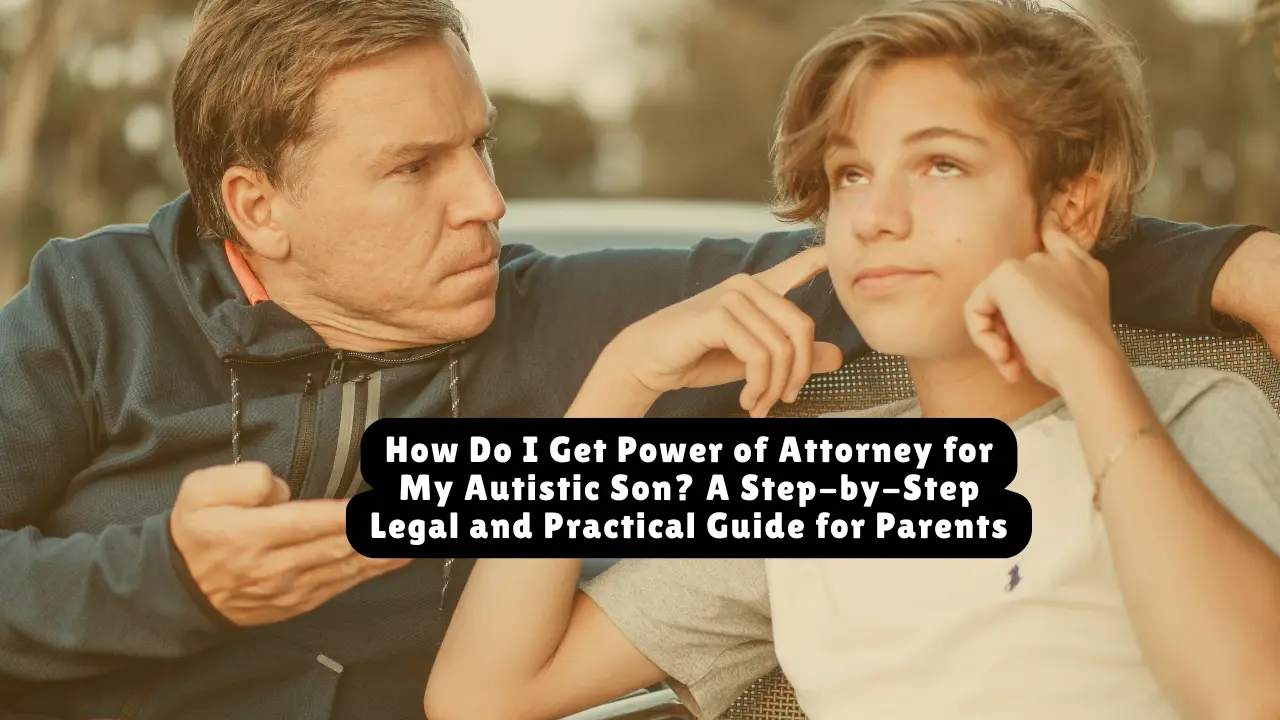
The future is uncertain, but the steps we take today can shape it with clarity and compassion. For families navigating autism, a Power of Attorney is more than a legal safeguard—it is an act of love, foresight, and respect. By understanding the types of POA, addressing ethical considerations, and executing the process with care, families can create a foundation that honors their loved one’s autonomy while providing the support they need to thrive.
Planning for the future is not about predicting every twist and turn; it is about building resilience, trust, and adaptability into the framework of care. With the right tools and mindset, families can face the unknown with confidence, knowing that their loved one’s best interests are protected—today and in the years to come.