In the vast, uncharted territories of human cognition, there exists a constellation of minds that perceive the world not as a linear path, but as a labyrinth of interconnected patterns—a mosaic where logic and intuition dance in delicate harmony. Autism, often misunderstood as a mere deviation from the neurotypical norm, is in truth a kaleidoscope of cognitive strengths, particularly in the realms of science, technology, engineering, and mathematics (STEM). For those who navigate this labyrinth, the pursuit of STEM is not just an academic endeavor; it is an odyssey of discovery, where every equation is a riddle, every experiment a revelation, and every discovery a testament to the unique brilliance of a mind wired differently. This exploration delves into the symbiotic relationship between autism and STEM education, illuminating how the strengths inherent in autistic cognition can be harnessed to foster innovation, creativity, and unparalleled problem-solving prowess.
The journey begins with the recognition that autistic individuals often exhibit a hyperfocus—an almost gravitational pull toward subjects of intense interest. In STEM fields, this hyperfocus becomes a superpower. While neurotypical learners may struggle to maintain sustained attention across disparate topics, autistic students frequently immerse themselves in the minutiae of a subject, dissecting it with the precision of a surgeon and the curiosity of an explorer. This relentless pursuit of knowledge is not merely a quirk; it is the bedrock upon which groundbreaking discoveries are built. Consider the case of Temple Grandin, whose autistic mind allowed her to visualize complex systems in three dimensions, revolutionizing livestock handling equipment. Her ability to see the world through a lens of structural logic enabled her to solve problems that had eluded others for decades.
Yet, the path to leveraging these strengths is fraught with challenges. Traditional educational systems, designed for conformity rather than divergence, often fail to accommodate the unique learning styles of autistic students. The rigid structures of standardized curricula can stifle the very creativity that autistic minds bring to STEM. To counter this, educators must adopt a neurodiversity-affirming approach—one that celebrates differences rather than pathologizing them. This means moving beyond the one-size-fits-all model and embracing differentiated instruction, where teaching methods are tailored to the individual’s cognitive profile. Visual aids, hands-on experiments, and project-based learning can transform abstract concepts into tangible experiences, making STEM accessible and engaging for autistic learners.
Another critical aspect of this journey is the role of sensory integration
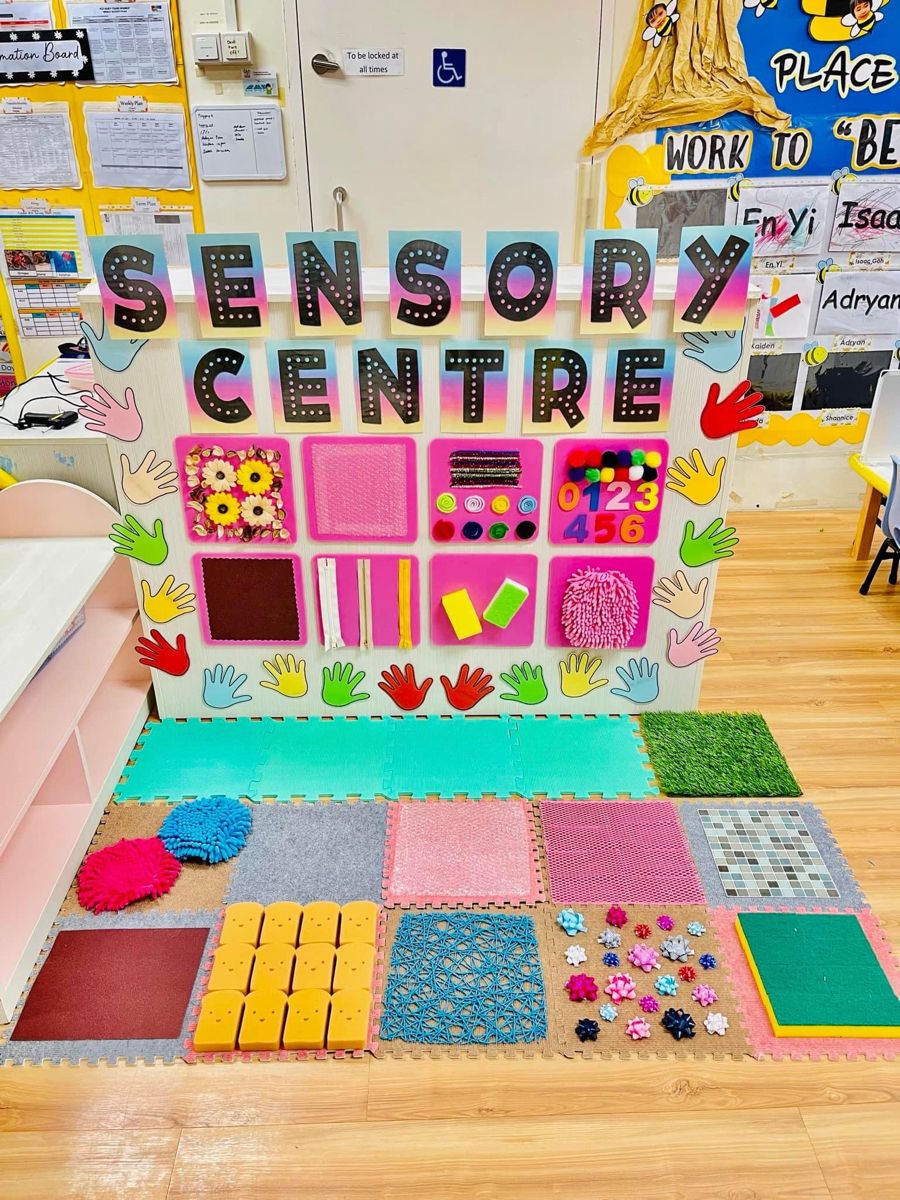
The sensory landscape of a STEM classroom can either be a sanctuary or a battleground for autistic students. The cacophony of fluorescent lights, the hum of fluorescent bulbs, the tactile discomfort of certain materials—these seemingly minor distractions can derail focus and impede learning. To mitigate this, educators can create sensory-friendly environments, where lighting is adjustable, noise levels are controlled, and materials are chosen for their tactile comfort. The goal is not to eliminate all sensory stimuli but to curate an environment where the autistic mind can thrive without the constant interference of sensory overload. This is not merely about comfort; it is about unlocking potential. When an autistic student is not distracted by their surroundings, their cognitive resources are freed to engage with the subject matter at hand, allowing them to excel in ways that were previously unimaginable.
The intersection of autism and STEM is also a fertile ground for collaborative innovation. While autistic individuals may prefer solitary work, their strengths in pattern recognition, logical reasoning, and attention to detail make them invaluable team members in group projects. The key lies in structuring collaborations in a way that respects their need for autonomy while fostering synergy. For instance, assigning clear roles within a team—such as data analysis, hypothesis formulation, or experimental design—can provide the structure that autistic students crave, while still allowing them to contribute their unique insights. Moreover, peer mentorship programs can bridge the gap between autistic students and their neurotypical counterparts, fostering mutual understanding and respect. In these environments, the autistic mind is not just tolerated; it is celebrated as an essential component of the team’s success.
Technology, too, plays a pivotal role in this narrative. Assistive technologies, such as text-to-speech software, graphic organizers, and virtual reality simulations, can level the playing field for autistic students in STEM. These tools not only accommodate their learning needs but also amplify their strengths. For example, a student with dysgraphia may struggle to write equations by hand, but with a digital stylus and note-taking app, they can express their mathematical reasoning with clarity and precision. Similarly, virtual reality can provide a controlled, immersive environment where autistic students can practice complex procedures—such as surgical techniques or engineering simulations—without the pressure of real-world consequences. The integration of technology in STEM education is not just about accessibility; it is about creating a playground where autistic minds can experiment, fail, and iterate without fear.
Yet, the journey does not end in the classroom. The real-world applications of autistic strengths in STEM are vast and transformative. From the development of life-saving medical technologies to the creation of sustainable energy solutions, autistic individuals are at the forefront of innovation. Their ability to see patterns where others see chaos, to solve problems with a tenacity that borders on obsession, and to approach challenges with a fresh perspective makes them indispensable in fields that demand creativity and precision. Consider the work of Dr. Stephen Shore, an autistic professor of special education, whose research on autism and education has reshaped our understanding of neurodiversity. His contributions to the field are a testament to the power of autistic cognition in driving progress.
The path forward requires a paradigm shift—a move from viewing autism as a deficit to recognizing it as a cognitive advantage in STEM. This shift begins with educators, who must be equipped with the knowledge and tools to support autistic students effectively. Professional development programs that focus on neurodiversity and inclusive teaching strategies can empower educators to create classrooms where every student, regardless of their cognitive profile, can thrive. Policymakers, too, must play a role by funding research into the intersection of autism and STEM, ensuring that the unique talents of autistic individuals are not only acknowledged but actively cultivated.
For autistic students themselves, the journey is one of self-discovery and empowerment. It is about finding their niche in a world that often fails to accommodate their differences. It is about embracing their strengths, not as a consolation prize, but as the foundation of a future where they can contribute meaningfully to society. The story of autism and STEM is not a tale of overcoming adversity; it is a celebration of diversity, a testament to the idea that the most groundbreaking innovations often come from those who see the world differently.
In the grand tapestry of human achievement, autistic minds are the threads that add texture, depth, and brilliance. Their contributions to STEM are not just valuable; they are irreplaceable. By fostering an educational environment that nurtures their strengths, we do more than prepare students for careers—we unlock the potential for discoveries that could change the world. The labyrinth of autistic cognition is not a maze to be navigated but a landscape to be explored, and within it lies the key to a future where science and mathematics are not just disciplines to be mastered, but gateways to a more inclusive and innovative world.