In the vast, uncharted territories of the human mind, where words often stumble and emotions linger in silence, there exists a bridge—one that doesn’t rely on spoken language but instead dances on the stage of imagination. Drama therapy, a transformative force in the realm of autism intervention, offers a sanctuary where individuals on the spectrum can explore, express, and evolve. It is not merely a therapeutic technique; it is a theatrical odyssey, a voyage into the self through the lens of role-playing, where social skills are not taught but *lived*. This journey is not about perfection; it is about presence, about the raw, unfiltered authenticity that emerges when one steps into a character, even if only for a moment.
Imagine, if you will, a world where the rigid structures of social norms dissolve into the fluidity of a well-rehearsed play. Here, the autistic mind is not constrained by the fear of missteps or the weight of expectations. Instead, it is liberated, allowed to experiment with identity, to rehearse interactions in a space where mistakes are not failures but stepping stones. Drama therapy is the alchemy that turns social awkwardness into social artistry, where every pause, every gesture, becomes a brushstroke on the canvas of connection. It is a testament to the idea that healing is not about changing who you are, but about uncovering the facets of yourself that have always been there, waiting to be revealed.
The Stage as a Sanctuary: Redefining Social Interaction
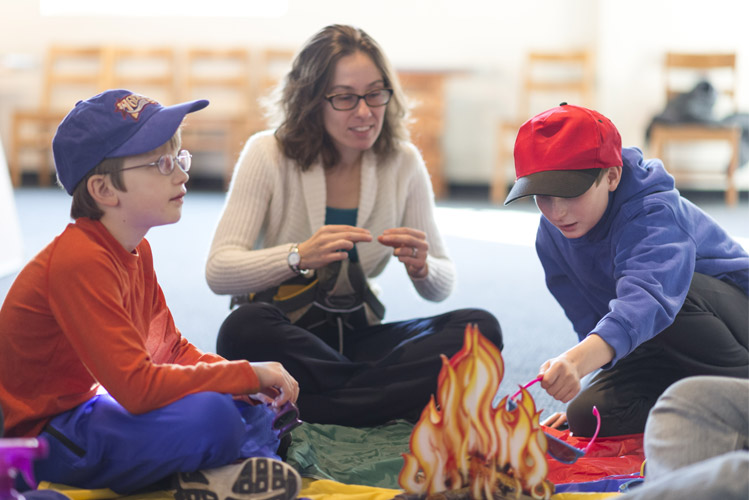
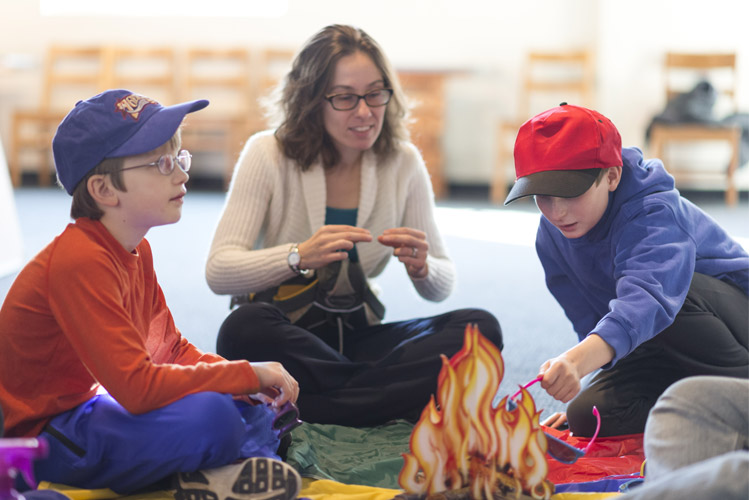
For many individuals with autism, the social landscape can feel like a labyrinth of unwritten rules and unpredictable terrain. The fear of misreading cues or offending others can be paralyzing, turning every interaction into a high-stakes performance. Drama therapy dismantles this pressure by reframing social engagement as a collaborative art form. In this space, the stage is not a place of judgment but a crucible of experimentation. Participants are encouraged to embody different roles—whether it’s a confident leader, a curious explorer, or a playful trickster—each iteration offering a new perspective on communication and connection.
The magic of drama therapy lies in its ability to externalize the internal. Social skills, often abstract and elusive, become tangible through the act of performance. A child who struggles to make eye contact might find themselves drawn into a character who commands attention with every word and gesture. An adult who feels isolated may discover, through improvisation, that their voice carries weight when it is part of a shared narrative. This is not about mimicry; it is about discovery. The stage becomes a mirror, reflecting not the person they think they should be, but the person they are capable of becoming.
Consider the metaphor of a kaleidoscope. Each twist of the wrist reveals a new pattern, a new configuration of colors and shapes, yet the pieces themselves remain unchanged. Drama therapy operates similarly. The individual remains the same, but the way they perceive and interact with the world shifts with every role they inhabit. The rigid edges of social expectations soften, allowing for a more fluid, adaptive approach to communication. It is a reminder that social skills are not a fixed destination but a dynamic journey, one that can be navigated with curiosity and creativity.
Role-Playing: The Alchemy of Empathy and Identity
Role-playing in drama therapy is more than a tool; it is a crucible where empathy is forged and identity is explored. For individuals with autism, who often experience the world with intense focus and deep emotional resonance, role-playing offers a structured yet expansive way to engage with emotions and perspectives beyond their own. It is a sandbox where the boundaries of the self can be stretched, where one can step into the shoes of another and, in doing so, gain a deeper understanding of both the other and themselves.
Think of role-playing as a linguistic playground, where language is not just spoken but *embodied*. A teenager who finds it difficult to articulate their feelings might find their voice through a character who speaks with unfiltered honesty. A young adult who struggles with perspective-taking can practice empathy by inhabiting a role that requires them to navigate complex social dynamics. This is not about pretending to be someone else; it is about uncovering the layers of one’s own emotional landscape. The character becomes a vessel, a temporary vessel, through which the individual can explore emotions, conflicts, and resolutions in a safe, controlled environment.
There is a profound beauty in this process. It is the beauty of the chameleon, an organism that adapts to its surroundings not out of deception, but out of necessity. For individuals with autism, role-playing is not about losing themselves; it is about finding new facets of themselves. It is a reminder that identity is not a single, static entity but a constellation of possibilities, each role a star that illuminates a different aspect of the self.

The Script of Social Skills: Improvisation as a Path to Fluency
Improvisation, the lifeblood of drama therapy, is where social skills are not learned but *lived*. In a world where social interactions often follow predictable scripts, improvisation shatters the mold, forcing individuals to think on their feet, to adapt, and to respond in real time. For someone with autism, who may rely on rigid routines and structured environments, improvisation can feel like stepping into uncharted territory. Yet, it is precisely this unpredictability that makes it so powerful. It teaches flexibility, resilience, and the art of turning chaos into connection.
Consider the metaphor of a jazz musician. A jazz musician does not follow a rigid score; instead, they listen, respond, and create in the moment. Their music is a conversation, a dialogue between the musician and the audience, the instrument and the air. Improvisation in drama therapy operates on the same principle. It is a conversation without a script, where every word, every gesture, is a response to the present moment. For individuals with autism, this can be both exhilarating and daunting. Yet, with guidance, it becomes a playground where social skills are honed not through repetition, but through spontaneity.
The beauty of improvisation lies in its emphasis on process over product. There is no right or wrong way to perform; there is only the act of doing. This liberates individuals from the pressure of perfection, allowing them to focus on the joy of exploration. A child who struggles with turn-taking might find themselves in a scene where they must listen and respond to a partner’s cues. An adult who feels overwhelmed by social expectations might discover, through improvisation, that their instincts are often more attuned than they realize. It is a reminder that social fluency is not about following a manual; it is about trusting one’s instincts and embracing the unpredictability of human connection.
The Ensemble Effect: Building Connections Through Shared Narratives
Drama therapy is not a solitary endeavor; it is an ensemble experience, a symphony of voices, gestures, and emotions. The group dynamic is where the true magic of drama therapy unfolds. In a world where individuals with autism may feel isolated or misunderstood, the ensemble becomes a microcosm of acceptance and collaboration. It is a space where differences are not erased but celebrated, where each person’s unique perspective contributes to the collective narrative.
Think of the ensemble as a living organism, a body where each member plays a vital role. The shy participant might find their voice as the storyteller. The energetic individual might become the catalyst for movement and energy. The quiet observer might notice details that others overlook, adding depth to the narrative. This is the power of the ensemble: it transforms individual struggles into shared triumphs. It teaches the art of listening, of adapting, of finding one’s place within a larger whole.
For individuals with autism, the ensemble can be a revelation. It is a place where they are seen not for their deficits, but for their contributions. It is a reminder that connection is not about being the same, but about being part of something greater. The ensemble becomes a mirror, reflecting the beauty of diversity and the strength of unity. It is a testament to the idea that we are all, in some way, actors on the stage of life, each playing our part in the grand narrative of human experience.

In the grand tapestry of human experience, drama therapy is a thread that weaves together the disparate strands of emotion, identity, and connection. It is a reminder that healing is not about conforming to a mold, but about embracing the full spectrum of what it means to be human. For individuals with autism, drama therapy offers a sanctuary where they can explore, express, and evolve without fear of judgment. It is a journey of discovery, where every role, every interaction, is a step toward a more authentic, connected self.
The stage is not just a place of performance; it is a place of transformation. It is where the quietest voices can find their roar, where the most rigid minds can learn to bend, and where the most isolated hearts can find a home. Drama therapy is not a cure; it is a celebration of the human spirit in all its complexity and beauty. It is a testament to the idea that we are all, in some way, performers—each playing our part in the grand, unfolding drama of life.