In a world where political engagement is often framed as a monolithic endeavor—one-size-fits-all, with clear pathways and predictable outcomes—there exists a quiet revolution brewing at the intersection of neurodiversity and civic participation. Autism, a spectrum of cognitive diversity that shapes perception, communication, and social interaction, is redefining what it means to be politically active. It is not merely about casting a ballot or joining a march; it is about reshaping the very fabric of political discourse through a lens of authenticity, intensity, and unfiltered perspective. This article explores how autistic individuals are not just participating in politics but transforming it, challenging conventional norms, and demanding a more inclusive future.
The narrative of political engagement has long been dominated by extroverted ideals—charismatic leaders, persuasive rhetoric, and the ability to navigate social spaces with ease. Yet, the autistic community offers a radical departure from this paradigm. Their approach to politics is often characterized by deep focus, unwavering commitment to principles, and a refusal to conform to performative norms. This is not a deficit; it is a different kind of strength, one that can cut through the noise of superficial debate and ground political action in tangible, evidence-based outcomes. The question is no longer whether autistic individuals can engage politically, but how their unique cognitive frameworks are already reshaping the landscape of civic life.
The Spectrum of Political Participation: Beyond the Ballot Box
Political engagement is not a singular act but a spectrum of behaviors, each influenced by individual strengths, challenges, and societal perceptions. For many autistic individuals, traditional forms of participation—such as voting or attending town halls—can be daunting due to sensory overload, social anxiety, or communication barriers. Yet, this does not equate to disengagement. Instead, it often leads to alternative forms of activism that are equally potent, if not more so.
Consider the autistic individual who spends hours meticulously researching policy documents, not for a school assignment, but to draft detailed, evidence-based critiques of legislation. Or the neurodivergent activist who leverages their hyperfocus to organize grassroots campaigns, not through charismatic speeches, but through meticulously structured online forums and digital advocacy. These are not passive participants; they are architects of change, operating in ways that prioritize depth over spectacle, precision over platitudes.
Moreover, the rise of digital activism has provided a fertile ground for autistic individuals to thrive. Online platforms offer a level of control over social interaction that physical spaces often lack. The ability to communicate asynchronously, to curate one’s environment, and to engage in focused, topic-specific discussions aligns seamlessly with autistic strengths. From Twitter threads dissecting policy nuances to Reddit communities mobilizing around disability rights, the internet has become a sanctuary for political expression that transcends traditional barriers.
The Power of Hyperfocus: Turning Obsession into Advocacy
Hyperfocus, a phenomenon often associated with autism, is the intense, sustained concentration on a specific interest or task. While it can be a double-edged sword—leading to burnout or social neglect—it is also a formidable tool in political activism. When directed toward a cause, hyperfocus becomes a laser beam of dedication, capable of dismantling complex issues with surgical precision.
Take, for example, the autistic advocate who becomes so immersed in environmental policy that they can recite carbon emission statistics, legislative timelines, and corporate accountability measures with encyclopedic accuracy. Their knowledge is not performative; it is a weapon against misinformation, a tool for holding power to account. This level of expertise is not easily dismissed, and it forces policymakers to engage with arguments rather than personalities.
Yet, the potential of hyperfocus extends beyond individual activism. When channeled into collective action, it can create movements that are both relentless and uncompromising. Consider the rise of autistic-led organizations that have successfully lobbied for policy changes, such as improved access to healthcare or inclusive education. Their campaigns are not built on fleeting trends or emotional appeals but on a foundation of relentless research, data-driven arguments, and an unyielding commitment to justice. In a political landscape often dominated by short-term gains and superficial messaging, this approach is nothing short of revolutionary.
The Challenge of Sensory and Social Barriers in Civic Spaces
Despite the undeniable contributions of autistic individuals to political discourse, the reality is that civic spaces are rarely designed with neurodiversity in mind. Town halls, debates, and even voting booths can be overwhelming environments, filled with unpredictable stimuli and social expectations that are difficult to navigate. The result? A systemic exclusion that deprives political processes of valuable perspectives.
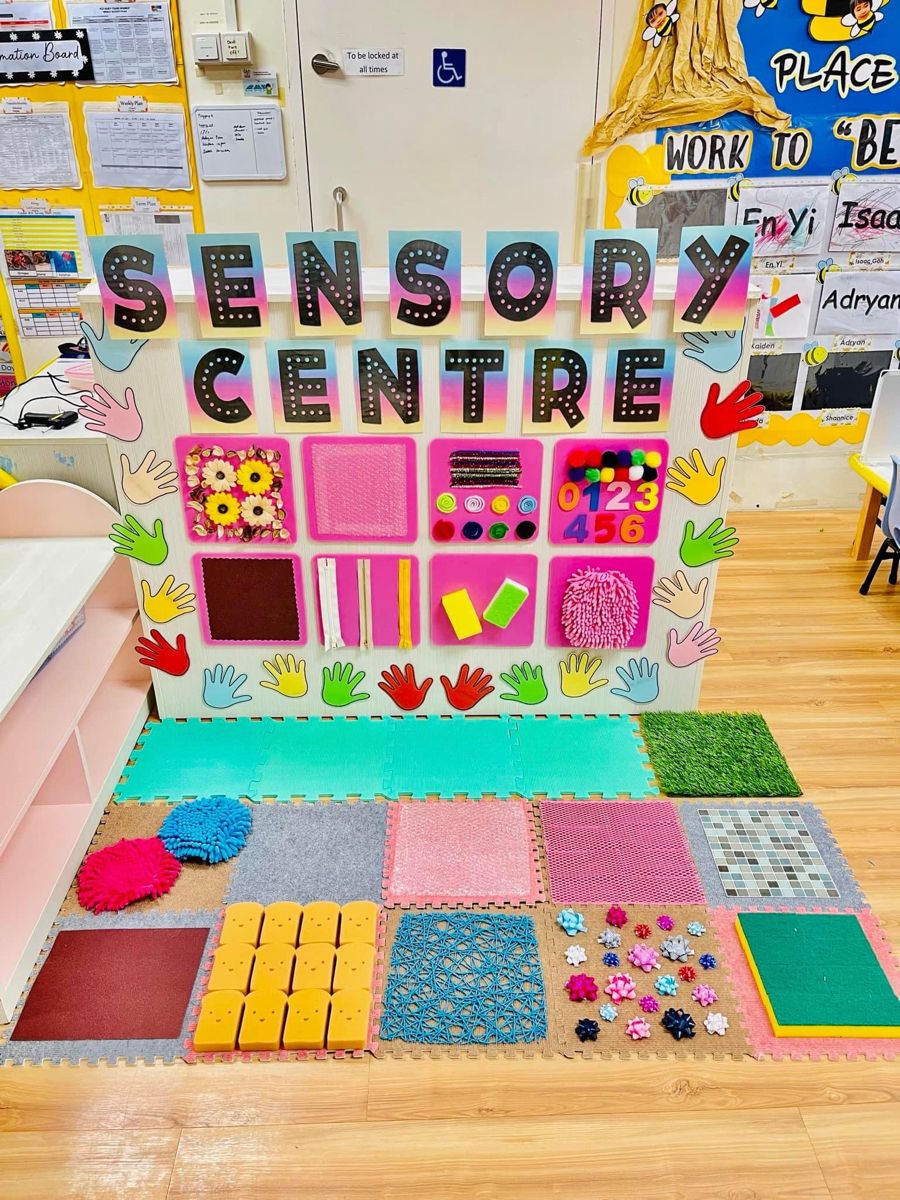
Sensory overload is a well-documented challenge for many autistic people. The fluorescent lighting of a government building, the cacophony of voices in a crowded room, the unpredictability of social interactions—all of these can trigger distress, making participation feel like an insurmountable task. For those who do venture into these spaces, the experience can be exhausting, leading to burnout or a retreat from activism altogether.
Social barriers compound these challenges. The unwritten rules of political engagement—small talk, eye contact, rapid-fire responses—are often inaccessible to autistic individuals. Those who communicate differently, whether through alternative methods like AAC (augmentative and alternative communication) or simply by taking longer to process information, may find themselves sidelined in discussions where speed and social fluency are prized. The result is a political arena that inadvertently silences the very voices it claims to represent.
However, the tide is turning. Advocacy for inclusive civic spaces is gaining momentum, with calls for sensory-friendly polling stations, virtual town halls, and alternative formats for public participation. Some cities have begun experimenting with “quiet hours” in government buildings, where lighting is dimmed, noise is minimized, and social expectations are relaxed. These changes are not just accommodations; they are acknowledgments that political engagement should be accessible to all, regardless of neurology.

From Awareness to Action: Autistic-Led Movements Redefining Advocacy
The past decade has witnessed a surge in autistic-led movements that are not just demanding inclusion but redefining the very nature of political advocacy. These movements are characterized by a rejection of traditional hierarchies, a commitment to intersectionality, and an emphasis on lived experience as a form of expertise. They are not asking for a seat at the table; they are building their own tables.
One such movement is the push for neurodiversity in policymaking. Autistic advocates are increasingly being consulted on legislation that directly impacts them, from education policies to healthcare reforms. Their involvement ensures that policies are not crafted in a vacuum but are grounded in real-world experiences. For instance, autistic-led organizations have been instrumental in advocating for the removal of harmful therapies, the expansion of support services, and the recognition of autism as a form of diversity rather than a disorder.
Another transformative force is the rise of digital activism, where autistic individuals are leveraging their strengths to create change. Online platforms allow for the curation of safe spaces, the dissemination of information without the pressure of real-time interaction, and the mobilization of global communities around shared causes. From hashtag campaigns that challenge stereotypes to virtual rallies that amplify marginalized voices, the internet has become a battleground for justice, one where autistic activists are leading the charge.
Yet, the most radical aspect of these movements is their refusal to conform to the status quo. Autistic activists are not content with incremental change; they are demanding systemic overhauls. They are challenging the notion that political engagement must be performative, that activism must be loud, or that progress must be slow. Their approach is methodical, unapologetic, and relentless—a stark contrast to the often ephemeral nature of mainstream political discourse.
The Future of Political Engagement: A Neurodiverse Democracy
The future of political engagement is not a distant utopia; it is being written today, one autistic voice at a time. As society begins to recognize the value of neurodiversity in civic life, the possibilities for transformation are boundless. Imagine a democracy where policy debates are not dominated by soundbites but by deep, nuanced discussions. Where activism is not measured by the size of a crowd but by the depth of its impact. Where political participation is not a privilege reserved for the socially adept but a right extended to all.
This future is not without its challenges. Systemic barriers, entrenched biases, and the sheer inertia of traditional systems will not disappear overnight. But the momentum is undeniable. Autistic individuals are not waiting for permission to engage; they are forging new pathways, redefining norms, and proving that political engagement is not a monolith but a mosaic of experiences, strengths, and perspectives.
The question, then, is not whether society is ready for a neurodiverse democracy, but whether it can afford to ignore the contributions of those who see the world differently. The answer lies in our willingness to listen, to adapt, and to embrace the radical potential of a politics that is as diverse as the people it seeks to represent.
In the end, the story of autism and political engagement is not just about inclusion; it is about evolution. It is a testament to the fact that the most transformative ideas often come from the margins, from those who dare to challenge the status quo and demand a better way. The future of politics is not just political—it is personal, it is neurodiverse, and it is already here.