In an era where technology reshapes the boundaries of human cognition, a quiet revolution is unfolding—one that marries the intricate tapestry of autism with the boundless potential of science-driven applications. The natural world, with its symphony of patterns and phenomena, becomes a canvas for exploration, not just for the neurotypical mind, but for individuals on the autism spectrum who perceive and process the environment through a uniquely attuned lens. Science apps, designed with neurodiversity in mind, are emerging as bridges between abstract concepts and tangible experiences, offering pathways to discovery that honor individual cognitive styles. This transformation is not merely about accessibility; it is about redefining how we understand learning, engagement, and connection with the world around us.
Imagine a child with autism, standing at the edge of a forest, not overwhelmed by the cacophony of rustling leaves and distant bird calls, but instead captivated by the geometric precision of a spider’s web glistening with morning dew. Science apps, tailored to sensory sensitivities and cognitive preferences, can transform this moment into a structured exploration. They can highlight the web’s radial symmetry, narrate the physics of its construction, or simulate the spider’s hunting strategies—all while allowing the user to control the pace and depth of the experience. This is not passive observation; it is active, immersive inquiry, where technology acts as a catalyst for curiosity rather than a barrier to understanding.

The Confluence of Autism and Digital Exploration
Autism, often characterized by distinctive patterns of thinking and sensory processing, presents both challenges and opportunities in educational contexts. Traditional learning environments, with their linear progression and reliance on social cues, can feel like labyrinths to those who navigate the world through different cognitive pathways. Science apps, however, offer a malleable framework—one that can be customized to accommodate diverse learning styles, from hyperfocus on specific topics to the need for repetitive, predictable interactions. These digital tools do not dilute the complexity of science; they distill it into digestible fragments, allowing users to assemble knowledge at their own rhythm.
Consider the app that transforms the study of ecosystems into an interactive puzzle. For a learner who thrives on visual-spatial reasoning, the app might present a 3D model of a pond, where each organism—from algae to apex predators—can be isolated and examined in detail. For another, who prefers auditory learning, the app could narrate the symbiotic relationships within the ecosystem, using soundscapes to underscore the interconnectedness of life. The key lies in the app’s adaptability: it does not impose a single method of engagement but instead provides a spectrum of entry points, ensuring that each user can find resonance with the material.
Sensory-Smart Design: Crafting Experiences for Unique Perceptions
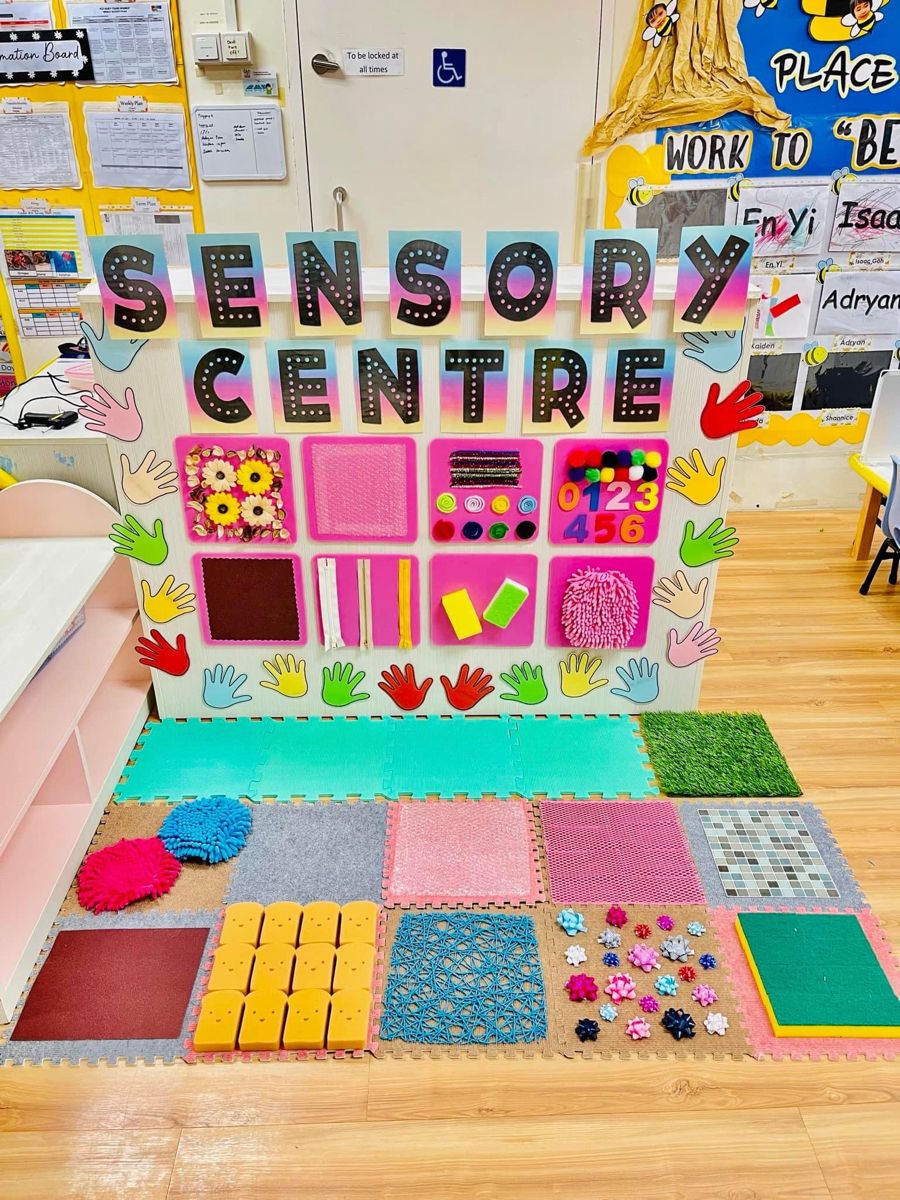
The natural world is a sensory feast, but for individuals with autism, it can also be a source of sensory overload. Science apps that prioritize sensory-smart design recognize this dichotomy, offering tools that either amplify or dampen stimuli based on user preference. Vibrant colors, for instance, can be toggled to softer hues, while background noises can be filtered or replaced with soothing tones. Haptic feedback, when used judiciously, can provide tactile reinforcement for concepts like molecular structures or geological layers, grounding abstract ideas in physical sensation.
Take, for example, an app that simulates the experience of a thunderstorm. For some users, the app might emphasize the visual spectacle of lightning, using slow-motion animations and reduced color saturation to prevent overstimulation. For others, it might focus on the auditory dimension, isolating the deep rumble of thunder or the sharp crack of a lightning strike, allowing the user to explore these sounds in isolation. The goal is not to sanitize the experience but to render it comprehensible, turning potential stressors into opportunities for structured exploration.
Gamification: Turning Curiosity into a Playful Quest
Gamification, when wielded thoughtfully, can transform the act of learning into an engaging adventure. Science apps designed for autistic learners often incorporate game-like elements—quests, rewards, and progress tracking—to motivate exploration without relying on external validation. A virtual scavenger hunt, for instance, might task users with identifying different types of clouds based on their altitude and shape, with each discovery unlocking a new layer of information or a badge of achievement. The gamified structure provides clear goals and immediate feedback, which can be particularly beneficial for learners who thrive on predictability and routine.
Yet, the gamification must remain flexible. Some users may prefer open-ended exploration, where the app serves as a sandbox for experimentation rather than a structured game. Others might benefit from narrative-driven experiences, where scientific concepts are woven into a story, with the user playing a pivotal role in unraveling mysteries. The app’s design should accommodate these variations, ensuring that the gamification enhances rather than constrains the learning experience.
Social Connection Through Shared Discovery
While autism is often associated with challenges in social interaction, science apps can foster connection in unexpected ways. Multiplayer features, for instance, allow users to collaborate on projects, share discoveries, or participate in group challenges. A virtual field trip to a coral reef might become a shared experience, where users communicate through text, symbols, or even pre-recorded voice messages, depending on their comfort level. The focus shifts from social performance to shared curiosity, creating a low-pressure environment where communication is secondary to the act of exploration.
Moreover, these apps can serve as a bridge between neurodivergent learners and the broader scientific community. Features like user-generated content or community forums enable users to contribute their insights, ask questions, or even mentor others. This not only validates their expertise but also reinforces the idea that their unique perspectives are valuable contributions to the collective understanding of the natural world.
The Promise of Personalized Science
The future of science education lies in personalization—a shift from one-size-fits-all curricula to adaptive, user-centered experiences. For autistic learners, this personalization is not a luxury but a necessity. Science apps that leverage artificial intelligence and machine learning can dynamically adjust content based on user behavior, identifying patterns in engagement and tailoring the experience accordingly. A user who repeatedly explores the life cycle of butterflies might receive additional resources on metamorphosis, while another who focuses on geological formations could be guided toward lessons on plate tectonics.
This level of customization extends beyond content to include the very interface of the app. Users can select their preferred navigation style—whether it’s a linear progression, a radial menu, or a grid-based layout—ensuring that the app aligns with their cognitive strengths. The result is an experience that feels intuitive, empowering, and deeply personal, where the natural world is not a distant subject to be studied but a living, breathing entity to be explored.
Beyond the Screen: Bridging Digital and Physical Realms
The most transformative science apps do not exist in isolation; they extend their influence into the physical world. Augmented reality (AR) features, for instance, can overlay digital information onto real-world environments, turning a backyard into a laboratory or a park into a geological survey site. A user standing beneath a tree might use an AR app to identify the species, learn about its ecological role, or even track its growth over time through citizen science initiatives. This seamless integration of digital and physical realms ensures that learning is not confined to a screen but becomes an integral part of everyday life.
For autistic learners, this bridge between virtual and real-world experiences can be particularly powerful. It provides a structured way to engage with the natural world, reducing the unpredictability of unmediated environments while still fostering genuine connection. The app acts as a guide, a translator, and a companion, ensuring that the wonders of the natural world are accessible without being overwhelming.
A New Horizon for Science Education
The intersection of autism and science apps is more than a technological innovation; it is a paradigm shift in how we perceive learning, intelligence, and the natural world. By embracing neurodiversity and leveraging the power of digital tools, we are not just accommodating different ways of thinking—we are enriching our collective understanding of science itself. Each app becomes a testament to the idea that curiosity is not a monolith but a spectrum, and that the most profound discoveries often arise from perspectives that challenge the status quo.
As these tools evolve, they hold the promise of unlocking new pathways to knowledge, where every learner—regardless of their cognitive profile—can find their place in the grand tapestry of scientific inquiry. The natural world, with its infinite complexities, is no longer an enigma to be deciphered but a landscape to be explored, one app at a time. In this new era, science is not just a subject to be taught; it is an adventure to be lived, and every mind, no matter how it processes the world, has a vital role to play.