
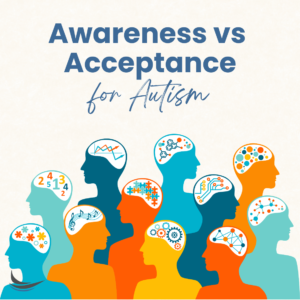
In contemporary discussions around neurodiversity, the terms “autism awareness” and “autism acceptance” are frequently invoked, often interchangeably. Yet, beneath this common linguistic conflation lies a subtle but profound distinction—one that promises to reshape our understanding, the way society interacts with autistic individuals, and how inclusivity is genuinely actualized. Exploring this divergence unveils a compelling promise: a paradigmatic shift in perspective from passive recognition to active embrace.
The Landscape of Autism Awareness
The concept of autism awareness has long served as the foundational step in educating the public about autism spectrum disorder (ASD). It encompasses efforts aimed at illuminating what autism is, highlighting early signs, and dispelling harmful myths. Awareness campaigns commonly proliferate information about prevalence rates, diagnostic criteria, and common behavioral manifestations. Images and messaging often invoke statistics and clinical perspectives designed to inform a largely uninformed audience.
While awareness plays a crucial role in reducing ignorance and fear, it inherently remains an external, observational lens. It asks society to notice autism but stops short of advocating substantial changes in attitudes or systemic structures. Awareness tends to maintain an “othering” perspective by framing autistic traits as differences to be observed, often medicalized or problematized rather than normalized. This can unintentionally reinforce social distance and foster superficial empathy rather than genuine understanding.
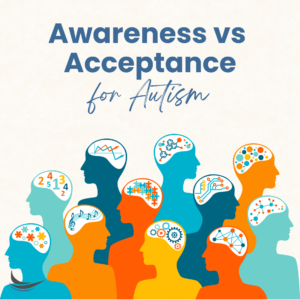
Moreover, awareness campaigns sometimes risk reducing the autistic experience to a checklist of symptoms. This diagnostic gaze minimizes the rich diversity and individuality present within the spectrum. In essence, awareness is the opening act, but it doesn’t guarantee the deeper societal transformation critically needed to improve lives.
The Transformative Promise of Autism Acceptance
In stark contrast, autism acceptance transcends mere awareness, nudging society toward a more empathetic, respectful, and inclusive stance. Acceptance demands that autistic people be embraced as integral members of the community with inherent value, rather than as subjects to be “fixed” or merely understood.
Acceptance involves acknowledging the autistic person’s unique neurological wiring as a facet of human diversity on par with ethnicity, gender, or language. This paradigm shift reframes autism not as a deficit or a set of challenges alone but as a different way of experiencing and interacting with the world—a valid dimension of human variation.

At its core, acceptance fosters environments where accommodations, supports, and respect for individual differences enable autistic people to thrive. It champions neurodiversity, which celebrates cognitive and neurological variation as a natural and valuable part of human existence. Rather than merely tolerating differences, acceptance advocates for systemic changes—in education, employment, social frameworks—that empower autistic individuals to contribute meaningfully without preconditions of conformity.
From Passive Recognition to Active Inclusion
The distinction between awareness and acceptance is one of depth and intentionality. Awareness often requires passivity: recognizing autism exists. Acceptance, however, compels action—changing how communities operate, how social norms evolve, and how we personally approach interactions with autistic people.
This shift echoes larger civil rights movements, where the progression from awareness to acceptance parallels the move from recognition of marginalized identities to securing equality, dignity, and inclusion. Acceptance challenges implicit biases, dismantles stigma, and confronts exclusionary practices that awareness alone cannot overcome.
Consider the practical manifestations of acceptance: implementing sensory-friendly spaces, adopting communication methods that suit autistic preferences, restructuring educational curricula to reflect neurodiverse perspectives, and promoting employment practices that accommodate rather than penalize neurodivergent cognition. These efforts constitute the infrastructure of acceptance.
Implications for Families, Communities, and Policy Makers
For families, distinguishing acceptance from awareness reshapes narratives of hope and advocacy. While awareness can introduce a medicalized, problem-focused discourse, acceptance encourages embracing the autistic individual’s identity fully, shifting from “fixing” to supporting authentic self-expression.
Communities that embrace acceptance cultivate richer, more inclusive social fabrics. People learn to navigate differences without prejudice, enriching cultural understanding and reducing isolation experienced by autistic individuals. Acceptance nurtures empathy in action, forging bonds not based on pity or curiosity but on friendship and equality.
Policy makers must heed this distinction as well. Laws and regulations inspired by acceptance are ones that prioritize accessibility, protections against discrimination, and funding for supports that honor neurodiversity. Policies rooted solely in awareness often fall short, providing visibility without substantive safeguards or resources.
Conclusion: Why Moving Beyond Awareness Matters
Autism awareness is undeniably a vital foundation—it sparks the initial recognition that autism exists and invites curiosity. Yet, without evolving into acceptance, awareness remains a limited gesture, one that risks perpetuating division and superficial understanding.
Acceptance promises a transformative lens that honors autistic individuals in their entirety. It challenges society to reconsider deeply embedded notions about normalcy, ability, and belonging. This is not a simple semantic debate but rather a call to fundamentally recalibrate how humanity embraces difference.
In embracing acceptance, society embarks upon a more profound journey—one that intertwines respect, accommodation, and celebration of diversity. It is a promise of shifting from tolerance to genuine inclusion, ensuring that autistic voices are not only heard but valued as essential threads in the complex tapestry of human experience.












