The intricate relationship between autism spectrum disorder (ASD) and its co-occurring conditions has long intrigued clinicians, researchers, and families alike. At the heart of this fascination lies the challenge of accurately diagnosing autism amid a constellation of overlapping symptoms and comorbidities. This complexity, often underestimated, poses significant questions about the nuances of neurodevelopmental diagnoses and the lived experiences of individuals on the spectrum. As knowledge deepens, so too does an appreciation for how co-occurring conditions affect diagnosis, treatment, and the broader understanding of autism itself.
The Multifaceted Nature of Autism and Its Diagnostic Challenges
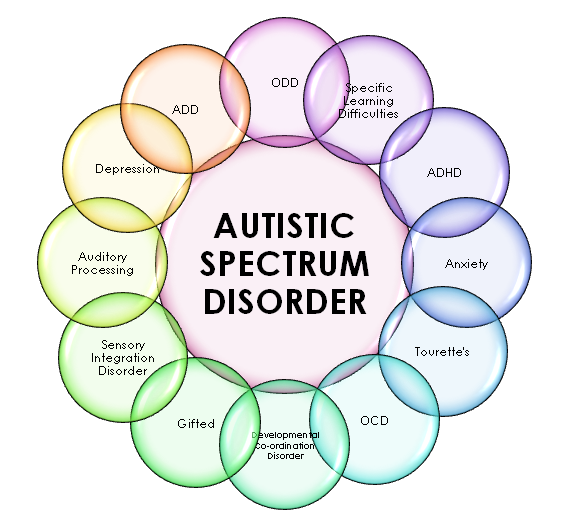
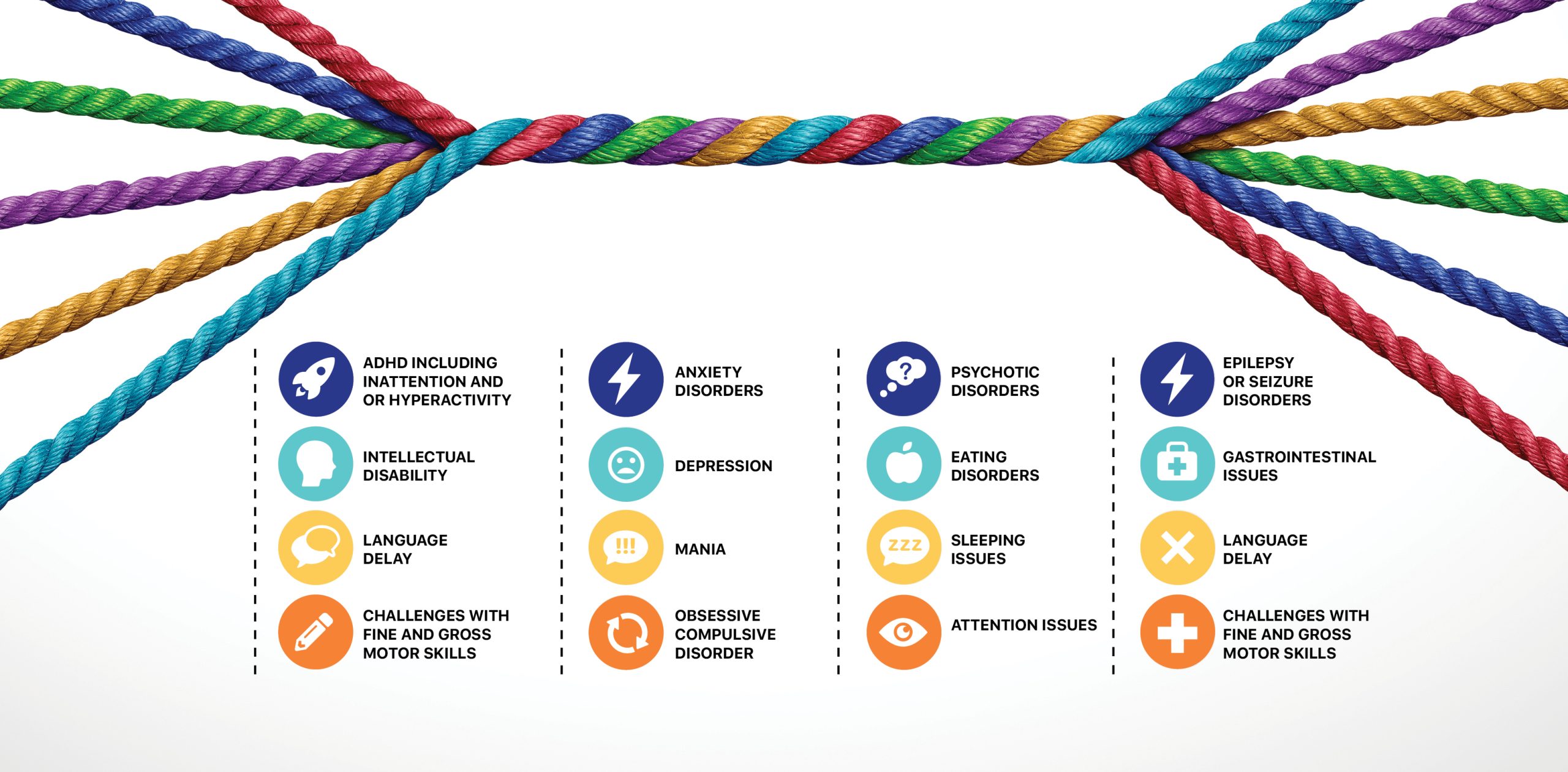
Autism is famously heterogeneous, characterized by divergent developmental trajectories, behavioral manifestations, and cognitive profiles. However, what complicates this heterogeneity further is the high prevalence of co-occurring conditions such as anxiety disorders, attention-deficit/hyperactivity disorder (ADHD), sensory processing disorders, and intellectual disabilities. These conditions do not merely coexist; they intertwine, creating a complex clinical mosaic that can obscure core autistic features.
Diagnostic overshadowing often ensues, where symptoms of co-occurring conditions mask or mimic those of autism. For instance, a child exhibiting social withdrawal due to severe anxiety might not immediately trigger suspicion for autism. Conversely, behaviors attributed to autism might overshadow signs of mood or attention disorders, leading to underdiagnosis or misdiagnosis. This dynamic complicates early identification, critical for timely intervention and support.
How Co-Occurring Conditions Influence Diagnostic Criteria and Processes
The diagnostic process for autism relies heavily on behavioral observations and standardized criteria, such as those outlined in the DSM-5. Yet, these criteria were primarily formulated to define autism in the absence of complicating comorbidities. Real-world presentations are often far messier. Co-occurring conditions can alter the expression of typical autistic behaviors either by amplifying them or muting characteristic traits.

This interplay naturally challenges diagnostic certainty. The presence of intellectual disabilities, for example, can confound the evaluation of social communication deficits, a foundational hallmark of autism. Sensory processing issues, common in both autism and other neurological conditions, may complicate clinical assessments and observational interpretations.
Additionally, the clinical setting itself—often time-constrained—may not allow for comprehensive evaluation across the spectrum of potential co-occurring disorders, incrementally increasing the risk of incomplete or inaccurate diagnoses.
Neurobiological Underpinnings and Shared Etiologies
Besides clinical complexities, there is an underlying neurobiological fascination with why these co-occurring conditions frequently cluster with autism. Emerging research suggests shared genetic and environmental etiologies may contribute to overlapping clinical presentations. Certain gene variants implicated in neurodevelopment may predispose individuals simultaneously to autism and conditions such as epilepsy, mood disorders, or ADHD.
This overlap hints at common neurodevelopmental pathways disrupted during critical windows of brain maturation. The convergence of diverse symptomatology might reflect a spectrum not just of behavioral phenotypes, but of neurobiological endophenotypes—distinct biological markers underlying different facets of the clinical picture.
The Impact on Treatment Planning and Long-Term Outcomes
Diagnosing autism with consideration of co-occurring conditions is more than an academic exercise; it forms the cornerstone for effective intervention. Misdiagnosis or partial diagnosis can lead to treatments that fail to address the full scope of an individual’s needs, thereby compromising outcomes. For example, treating only the social communication deficits of autism without addressing concurrent anxiety or ADHD can limit functional gains and quality of life improvements.
Integrative treatment paradigms have thus emerged, emphasizing tailored strategies that consider the totality of an individual’s neurological profile. This holistic approach demands clinicians with expertise across multiple domains and underscores the importance of multidisciplinary teams. Individualized education plans, combined pharmacological and behavioral interventions, and family-centered supports collectively create the scaffolding for resilience and development.
Societal Perceptions and Diagnostic Biases
The ways in which co-occurring conditions impact diagnosis also reflect broader societal and systemic biases. Autism, historically stereotyped with narrow presentations, may be underrecognized in populations where co-occurring conditions predominate or manifest atypically. Girls, for instance, more commonly present with internalizing symptoms like anxiety, which can overshadow or camouflage autistic traits, leading to diagnostic delays or inaccuracies.
Such biases not only hinder accurate diagnosis but perpetuate disparities in access to care and support. Awareness of how co-occurring conditions shape diagnostic visibility is essential to fostering equity in neurodevelopmental healthcare.
Emerging Tools and Future Directions in Diagnostic Precision
To navigate these complexities, novel diagnostic tools leveraging technology and neuroimaging are under exploration. Machine learning algorithms analyzing behavioral data, combined with biomarker research, hold promise to enhance diagnostic validity by discerning subtle patterns obscured by co-occurring conditions.

Moreover, a paradigm shift toward dimensional rather than categorical diagnosis may better capture the fluidity and intersectionality of symptoms. This approach recognizes that co-occurring conditions do not merely accompany autism but are intrinsic to many individuals’ lived realities.
Ultimately, the fascination with autism and its co-occurring conditions stems from their complex interdependencies and the imperative to untangle them for improved clinical clarity. As research advances and diagnostic frameworks evolve, the hope is for a future where every individual’s unique neurodevelopmental profile is understood in its fullness—ushering in more precise diagnoses, personalized interventions, and enhanced quality of life across the lifespan.