
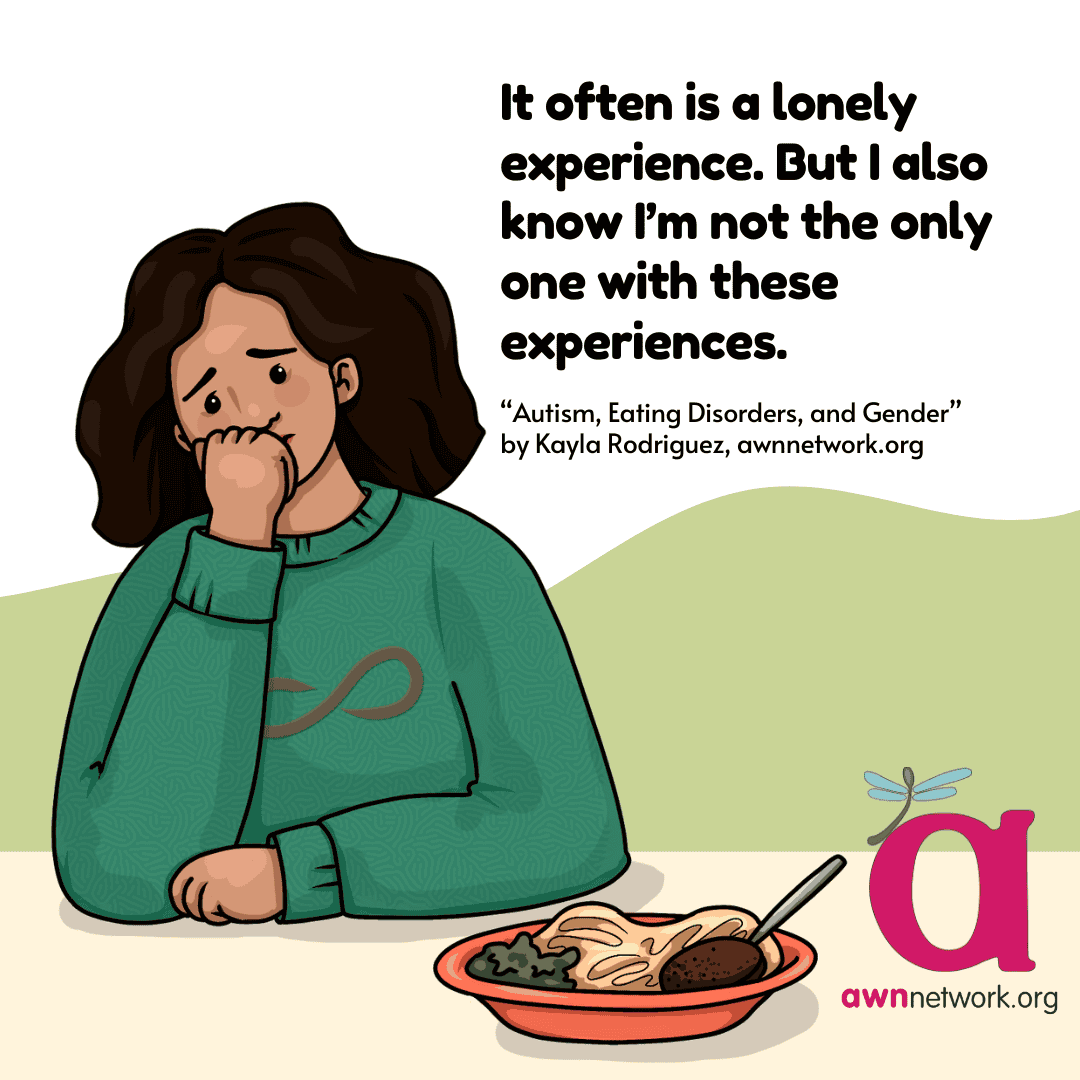
Autism and eating disorders often exist in the shadows of medical discourse, their interplay dismissed as coincidental or overshadowed by more visible challenges. Yet, beneath the surface lies a complex, often misunderstood relationship—one that demands attention, empathy, and a willingness to challenge preconceived notions. For too long, the narrative has centered on the individual traits of autism or the clinical manifestations of eating disorders in isolation. But what if the convergence of these conditions reveals a hidden spectrum of experiences? What if recognizing the signs isn’t just about diagnosis, but about reshaping how we perceive support, treatment, and even human connection?
The intersection of autism and eating disorders is not a fringe case; it’s a quietly pervasive reality that shapes the lives of countless individuals. Research suggests that autistic individuals are disproportionately affected by eating disorders, with studies indicating a prevalence rate up to three times higher than in neurotypical populations. Yet, the signs are frequently misattributed—rigid eating habits dismissed as mere pickiness, social challenges misread as disinterest, and sensory sensitivities confused for willful defiance. This misalignment in perception doesn’t just delay intervention; it perpetuates cycles of isolation, misunderstanding, and unmet needs.
To truly grasp the gravity of this intersection, we must first dismantle the assumption that autism and eating disorders are siloed experiences. Autism, with its spectrum of traits—from sensory hypersensitivities to rigid thought patterns—can create fertile ground for disordered eating behaviors to take root. A refusal to eat certain foods might not stem from mere preference but from an overwhelming sensory aversion. Social eating, already a minefield for many autistic individuals, can become a battleground when paired with the rigid rules and rituals that often accompany eating disorders. The result? A silent struggle that often goes unnoticed until it’s too late.
The Hidden Language of Sensory Overload
Imagine a world where the texture of a single food triggers a visceral reaction akin to physical pain. For an autistic individual, this isn’t an exaggeration—it’s a daily reality. Sensory processing differences mean that the act of eating can be fraught with discomfort, leading to avoidance behaviors that mimic the restrictive patterns seen in anorexia. Yet, where anorexia is often framed as a pursuit of thinness, the autistic experience is rooted in an entirely different motivation: survival. The refusal to eat isn’t about control; it’s about avoiding sensory assault.
This distinction is critical. Traditional eating disorder treatments, which prioritize nutritional rehabilitation and cognitive-behavioral strategies, may inadvertently clash with the autistic individual’s needs. A rigid meal plan, for instance, could feel like an imposition rather than a solution. The key lies in recognizing that the eating disorder isn’t just a standalone condition—it’s a coping mechanism, a way to navigate a world that feels overwhelming. Addressing it requires a nuanced approach that honors both the autistic experience and the disordered eating patterns, blending sensory integration techniques with therapeutic support.

The Social Paradox: Isolation and the Fear of Judgment
Social eating is a minefield for many autistic individuals. The unspoken rules of mealtime—when to speak, how to chew, what to say—can feel like an unsolvable puzzle. Add an eating disorder into the mix, and the pressure intensifies. The fear of being judged for eating too little, too much, or the wrong foods can amplify social anxiety, creating a vicious cycle of avoidance. For autistic individuals, who may already grapple with feelings of alienation, this can lead to profound isolation.
Yet, the irony is that many autistic individuals crave connection. The challenge lies in finding safe spaces where they can eat without fear of scrutiny. Traditional group therapy settings, often designed for neurotypical individuals, may exacerbate feelings of inadequacy. Instead, the solution might lie in tailored support groups where autistic individuals can share their experiences without the pressure to conform to social norms. Peer-led discussions, sensory-friendly meal planning, and a focus on individual needs rather than collective expectations can transform mealtime from a source of dread into an opportunity for growth.
Rigid Rituals: When Routine Becomes a Crutch
Autism is often characterized by a deep need for routine and predictability. For some, this extends to eating habits—specific foods at specific times, arranged in a particular order. When these rituals are disrupted, the resulting distress can mirror the rigidity seen in obsessive-compulsive disorder (OCD), a condition that frequently co-occurs with both autism and eating disorders. The line between harmless routine and disordered behavior blurs, leaving caregivers and clinicians struggling to discern where one ends and the other begins.
This is where the concept of “functional rigidity” comes into play. Not all rigid eating behaviors are pathological; some serve as a coping mechanism in an unpredictable world. The challenge is distinguishing between behaviors that provide comfort and those that cause harm. A comprehensive assessment must consider the individual’s emotional state, nutritional status, and overall well-being. For instance, an autistic individual who insists on eating only beige foods may not be exhibiting disordered eating if they’re maintaining a healthy weight and experiencing no distress. However, if the same individual is restricting intake to the point of malnutrition or experiencing severe anxiety when deviating from their routine, intervention becomes necessary.
The Role of Masking and the Invisible Struggle
Masking—suppressing autistic traits to fit into neurotypical expectations—is a well-documented phenomenon. For autistic individuals with eating disorders, masking can be a double-edged sword. On one hand, it allows them to navigate social situations with apparent ease, concealing their struggles behind a facade of compliance. On the other, it delays diagnosis and treatment, as the signs of disordered eating are attributed to “just being picky” or “going through a phase.”
The consequences of masking are profound. An autistic individual may spend years struggling in silence, their eating disorder worsening as they internalize shame and guilt. The act of masking itself is exhausting, leaving little energy for self-advocacy or seeking help. Breaking this cycle requires a shift in how we perceive autism and eating disorders. It demands that we listen more closely, ask better questions, and recognize that the absence of visible struggle doesn’t equate to the absence of need.
Redefining Treatment: A Holistic Approach
Traditional eating disorder treatments often fall short when applied to autistic individuals. Cognitive-behavioral therapy (CBT), while effective for many, may not address the sensory or social challenges that underpin disordered eating in autism. Instead, a holistic approach that integrates occupational therapy, sensory integration techniques, and trauma-informed care is essential.
Occupational therapists can work with autistic individuals to desensitize sensory triggers related to food, gradually introducing new textures and flavors in a controlled, supportive environment. Trauma-informed care acknowledges that the eating disorder may be a response to past experiences of bullying, exclusion, or even medical trauma. By addressing the root causes rather than just the symptoms, this approach fosters long-term healing.
Nutritional counseling must also be tailored to the autistic experience. Meal plans should account for sensory preferences, and caregivers should be educated on how to support without imposing. The goal isn’t to force compliance but to create a framework where eating feels safe and manageable. This might involve incorporating preferred foods into a balanced diet or using visual schedules to demystify mealtime routines.
The Power of Advocacy and Community
Change begins with awareness. For autistic individuals with eating disorders, advocacy isn’t just about raising awareness—it’s about reshaping systems. Schools, workplaces, and healthcare providers must be educated on the unique challenges faced by this population. Accommodations, such as sensory-friendly dining areas or flexible meal times, can make a world of difference. Support groups, both online and in-person, provide a lifeline for individuals who feel isolated in their struggles.
Community plays a pivotal role in breaking the cycle of misunderstanding. When autistic individuals share their stories, they challenge stereotypes and pave the way for others to seek help without fear. The narrative shifts from one of deficit to one of resilience, where the focus is on strengths rather than limitations. This isn’t just about improving outcomes—it’s about redefining what it means to live a fulfilling life with autism and an eating disorder.
Autism and eating disorders are not two separate entities but threads in a larger tapestry of human experience. Recognizing the signs isn’t just about early intervention; it’s about embracing a more compassionate, nuanced understanding of neurodiversity and mental health. It’s about listening when words fail, seeing when others look away, and holding space for the quiet battles that unfold behind closed doors. The journey toward healing begins with a single step: the willingness to look deeper, to ask better questions, and to recognize that every individual, regardless of their challenges, deserves to be seen.












