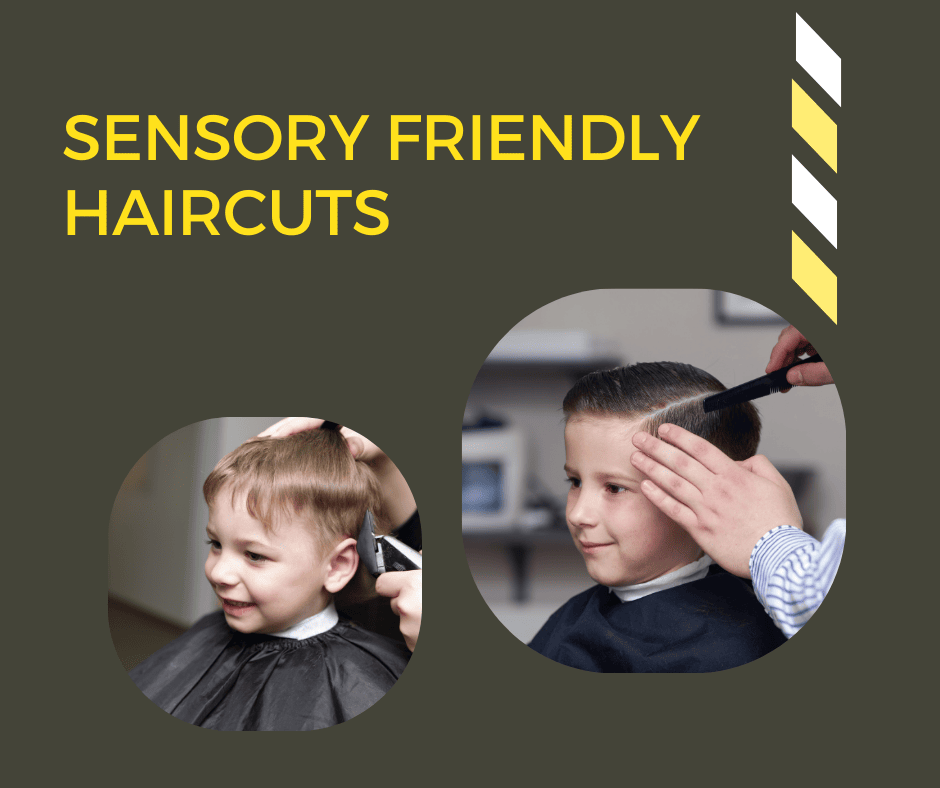
In the delicate ballet of parenting, few acts demand as much grace—or provokes as much trepidation—as the ritual of the haircut. For children with autism, this seemingly mundane task can spiral into a symphony of sensory disruptions, where the hum of clippers feels like a swarm of bees and the weight of a cape becomes an anchor pulling them into the abyss of discomfort. Yet, beneath the surface of this challenge lies an opportunity: a chance to transform a moment of tension into one of triumph, where trust is woven thread by thread, and the clippers become not a threat, but a tool of empowerment. The haircut, in its essence, is more than a trim; it is a rite of passage, a negotiation of boundaries, and a dance of patience. For those who navigate this terrain with autism, the key lies not in forcing compliance, but in choreographing an experience that respects their rhythm.
The Sensory Labyrinth: Decoding the Haircut’s Hidden Challenges
Imagine standing in a room where every sound is amplified to the roar of a freight train, where the scent of chemicals clings to the air like a fog, and the touch of fabric against skin feels like sandpaper. For a child with autism, a haircut can resemble such a sensory labyrinth—a place where the ordinary becomes extraordinary in its intensity. The buzz of scissors isn’t just noise; it’s a vibration that resonates through the bones, a frequency that disrupts the fragile equilibrium of their nervous system. The cape, though intended as a shield against stray hairs, can feel like a straitjacket, its weight and texture triggering tactile defensiveness. Even the anticipation of the experience can be paralyzing, as the mind races through a cascade of “what-ifs”: *What if the clippers snag my hair? What if the stylist’s hands are too cold? What if I can’t stay still?*
This sensory overload isn’t a choice; it’s a physiological response. The brain of a child with autism often processes stimuli differently, filtering out the mundane to focus on the overwhelming. The challenge, then, is not to dismiss these reactions as mere fussiness, but to recognize them as valid signals in a language of discomfort. The solution begins with empathy—not just understanding that the haircut is difficult, but *why* it is difficult. It’s about peeling back the layers of the experience to uncover the hidden triggers, then gently dismantling them one by one.
The Art of Preparation: Turning Anxiety into Anticipation
Preparation is the alchemy that can transmute dread into curiosity. For a child with autism, the unknown is a shadowy figure lurking at the edges of their comfort zone, and the antidote to fear is familiarity. Start by demystifying the process through storytelling. Use social stories—simple, illustrated narratives that walk through each step of the haircut, from entering the salon to the final snip. These stories act as a mental rehearsal, allowing the child to visualize the experience in a controlled, predictable way. Pair this with role-playing at home, where you mimic the motions of a haircut using a toy or a sibling, turning the act into a game rather than a chore. The goal isn’t to eliminate all uncertainty, but to shrink its shadow until it’s no bigger than a pebble underfoot.
Timing is another critical ally. For some children, the morning is a fortress of calm, while others thrive in the quiet of late afternoon. Observe your child’s natural rhythms and schedule the haircut during a window when they are most receptive. Avoid times of hunger, fatigue, or overstimulation, as these can amplify sensory sensitivities. Consider the environment itself: a quiet salon during off-hours, or a familiar space like home, where the tools of the trade can be introduced gradually. The key is to create a cocoon of predictability, where each element—from the scent of the salon to the texture of the cape—is a known quantity rather than a surprise.
Tools of the Trade: Crafting a Sensory-Friendly Arsenal
In the battle against sensory overwhelm, the right tools can be the difference between retreat and resilience. Start with the clippers. Not all clippers are created equal; some emit a high-pitched whine that can feel like a dentist’s drill to sensitive ears, while others hum at a lower, more soothing frequency. Seek out models designed for quiet operation, or even battery-operated alternatives that minimize vibration. The cape, too, can be a source of contention. Opt for lightweight, breathable fabrics that drape gently rather than cling, or consider skipping the cape altogether in favor of a towel draped over the shoulders—a less restrictive option that still offers some protection. For children who are particularly averse to touch, a weighted lap pad or compression shirt worn during the haircut can provide grounding pressure, a tactile anchor in the storm of sensations.
Visual distractions can also serve as a lifeline. A tablet loaded with favorite videos or interactive games can redirect focus away from the clippers, while noise-canceling headphones or earplugs can muffle the intrusive sounds of the salon. For some children, the act of holding a fidget toy—a textured ball, a smooth stone, or a squishy stress reliever—can channel restless energy into a calming rhythm. The goal is to curate a sensory toolkit that acts as a buffer, softening the edges of the experience without erasing them entirely. After all, the aim isn’t to create a sensory void, but to sculpt an environment where the child feels in control.

The Power of Choice: Negotiating Autonomy in a Structured World
Choice is the currency of autonomy, and in a world that often dictates the terms of engagement, offering even the smallest sliver of control can be transformative. For a child with autism, the haircut doesn’t have to be a top-down imposition; it can be a collaboration. Start by presenting options that are meaningful to them. Would they prefer to sit in a regular chair or a booster seat? Would they like to choose the color of the cape, or even the order of the steps—*clipper first, then scissors, or vice versa?* These choices aren’t frivolous; they are affirmations of agency, tiny rebellions against the unpredictability of the experience. Even the language used matters. Instead of saying, *”It’s time for a haircut,”* frame it as an invitation: *”When would you like to get your hair trimmed this week?”* The shift from obligation to invitation can recalibrate the entire dynamic.
For children who struggle with verbal communication, nonverbal cues can bridge the gap. A visual schedule with icons—scissors, clippers, comb—can outline the sequence of events, allowing the child to follow along at their own pace. A “stop” card, held up when they need a break, gives them a voice in a process that often silences theirs. The message is clear: *Your boundaries matter. Your comfort is the priority.* This isn’t just about the haircut; it’s about reinforcing a sense of self-determination that extends far beyond the salon chair.
The Aftermath: Celebrating the Victory, No Matter the Size
When the clippers are stowed away and the last stray hair has settled, the true work begins—not in tidying up the salon, but in honoring the journey. For a child with autism, the aftermath of a haircut can be as significant as the event itself. Some children may need time to decompress, retreating to a quiet space to process the sensory onslaught. Others might revel in the novelty of their new look, admiring their reflection with a sense of accomplishment. Whatever the reaction, it’s essential to acknowledge the effort, not just the outcome. Praise isn’t about the haircut’s appearance; it’s about the resilience it took to sit through it. *”You did it,”* you might say. *”You stayed so calm, even when it felt hard.”* These words aren’t just affirmations; they’re seeds planted in the soil of self-confidence.
For parents and caregivers, the post-haircut ritual can be a moment of reflection. What worked? What didn’t? Perhaps the clippers were too loud, or the cape too scratchy. Maybe the timing was off, or the environment too chaotic. Use these insights to refine the approach, turning each haircut into a lesson in what your child needs to thrive. Over time, the process may evolve from a battle of wills to a dance of mutual understanding, where trust replaces tension and the haircut becomes just another thread in the tapestry of your child’s growth.
The haircut, in all its mundane glory, is a microcosm of the larger journey of parenting a child with autism. It’s a reminder that progress isn’t always linear, that small victories are still victories, and that the most profound transformations often happen in the quiet spaces between the clippers’ buzz. What begins as a challenge can become a ritual, what starts as a struggle can become a story of resilience. And in the end, the haircut isn’t just about the hair—it’s about the hands that guide, the hearts that understand, and the quiet triumph of a child who, against all odds, found their way through the storm.