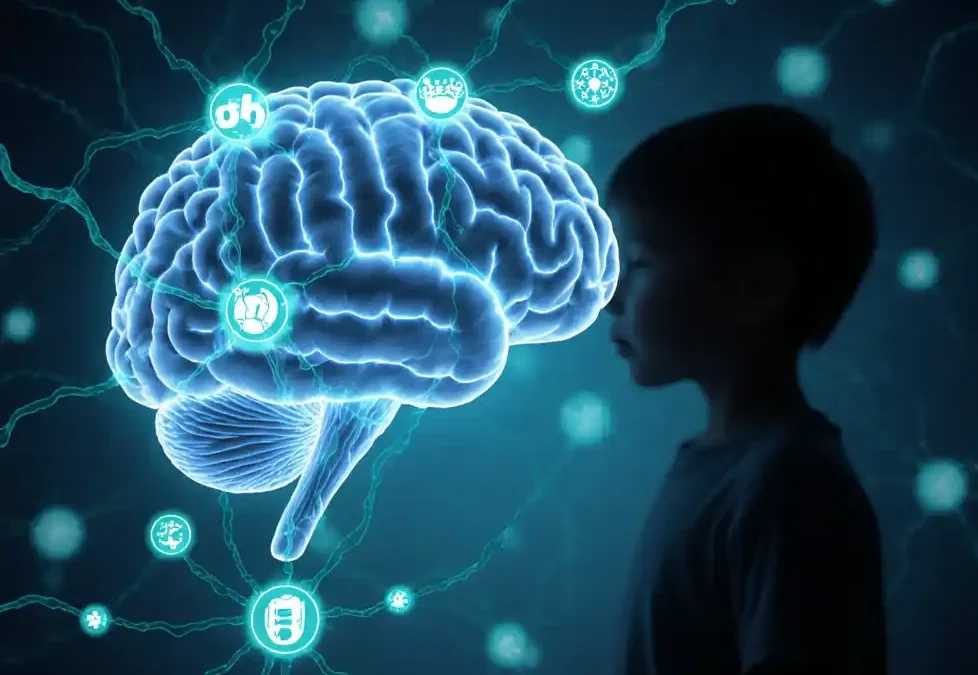
The human brain is not a static fortress of fixed pathways, but a living tapestry of shifting threads—constantly rewoven by experience, intention, and even adversity. Nowhere is this dynamism more profound than in the interplay between autism and neuroplasticity, where the brain’s capacity to reshape itself becomes both a mirror and a catalyst for transformation. For decades, autism was framed through a lens of deficit, a rigid blueprint of wiring that set limits on potential. Yet, as neuroscience unravels the mysteries of neuroplasticity—the brain’s lifelong ability to reorganize its structure and function—we glimpse a more hopeful narrative: one in which autism and neuroplasticity dance in a delicate, evolving waltz. This is not a story of correction, but of co-creation, where the brain’s malleability becomes a bridge between difference and possibility.
The Brain as a Sculptor’s Clay: Understanding Neuroplasticity
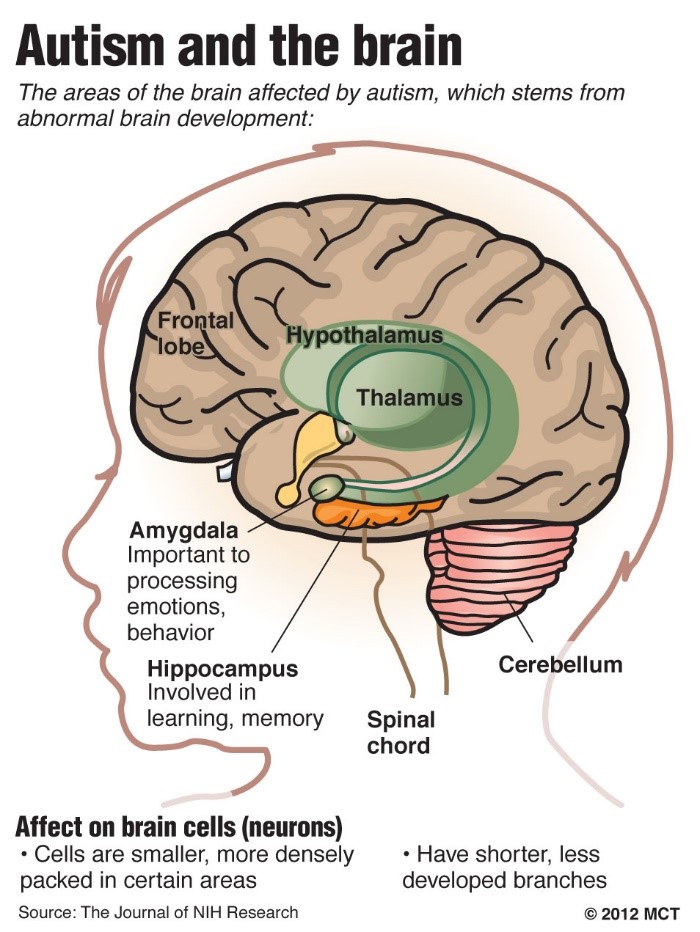
Imagine the brain as a block of wet clay, pliable and responsive to the touch of experience. Neuroplasticity is the unseen hand that molds it—strengthening ridges where fingers trace, smoothing valleys where pressure is absent. This capacity is not confined to childhood; it persists across the lifespan, though its pace may slow with age. In the context of autism, neuroplasticity takes on a special resonance. The autistic brain, often described as having a distinct “wiring,” may process information differently, but it is not inherently broken. Instead, it may be sculpted by a unique interplay of genetic predispositions and environmental interactions, forming circuits that prioritize pattern recognition, deep focus, or sensory intensity. These differences are not flaws to be erased, but signatures of a brain that learns—and rewires—on its own terms.
Consider the phenomenon of synaptic pruning, a process where unused neural connections are trimmed away to enhance efficiency. In autism, this pruning may occur differently, leaving behind a landscape rich with hyperconnectivity in certain regions. Yet, neuroplasticity offers a counterbalance: the brain’s ability to forge new pathways, to reroute signals when obstacles arise. This adaptability is not just theoretical—it is visible in the stories of individuals who, through targeted interventions, therapy, and self-directed learning, have reshaped their cognitive and emotional landscapes. The brain, it seems, is less a finished sculpture and more a living organism, perpetually in dialogue with its environment.
Autism as a Unique Neural Tapestry: Beyond the Deficit Model
To speak of autism is to encounter a mosaic of strengths and challenges, where the threads of perception, communication, and social interaction are woven with uncommon intricacy. The traditional narrative often fixates on what is absent—the social cues missed, the verbal exchanges that falter—but neuroplasticity invites us to ask: what is present? The autistic brain may excel in tasks requiring precision, such as pattern recognition in data or music, or in the ability to hyperfocus on areas of intense interest. These are not anomalies; they are expressions of a brain that processes the world through a different lens. Neuroplasticity, in this context, becomes a tool for amplification rather than correction.
Take, for example, the concept of “special interests.” For many autistic individuals, these passions are not mere hobbies but gateways to deep learning and mastery. A child obsessed with dinosaurs may develop encyclopedic knowledge, honing memory and analytical skills that extend far beyond the subject itself. Neuroplasticity ensures that these interests leave indelible marks on the brain, strengthening neural pathways associated with focus, categorization, and even creativity. The key lies not in suppressing these traits but in harnessing them—channeling the brain’s plasticity toward growth, rather than conformity. This shift in perspective transforms autism from a limitation into a distinct cognitive style, one that thrives when given the right conditions to flourish.
The Alchemy of Intervention: How Therapy and Experience Reshape the Autistic Brain
Neuroplasticity does not operate in a vacuum; it responds to the alchemy of experience. For autistic individuals, interventions such as occupational therapy, speech-language pathology, and cognitive behavioral approaches can act as catalysts, gently guiding the brain toward new configurations. These therapies are not about “fixing” autism but about unlocking its potential—teaching the brain to navigate social nuances, manage sensory overload, or communicate more effectively. The magic lies in repetition and reinforcement: each targeted exercise strengthens neural pathways, making new behaviors feel increasingly natural.
Consider the case of a nonverbal autistic child who, through augmentative and alternative communication (AAC) devices, begins to express thoughts and emotions. Initially, the brain may struggle to integrate this new mode of output, but with consistent practice, the pathways for language production adapt. Neuroplasticity ensures that the brain, like a river carving a new channel, eventually flows smoothly through this alternative route. Similarly, social skills training can help autistic individuals decode facial expressions or tone of voice, not by changing their innate wiring but by building bridges between their unique perception and societal expectations.
Yet, the most powerful interventions are often those that emerge from within—self-directed learning, creative expression, or the pursuit of passions. When an autistic individual engages deeply with a subject they love, the brain’s reward systems ignite, reinforcing the neural networks involved. This intrinsic motivation is a potent force, driving neuroplastic changes that can ripple across multiple domains of life. The lesson is clear: neuroplasticity thrives when it is nurtured by curiosity, not coercion.
The Sensory Symphony: How Neuroplasticity Interacts with Autistic Perception
Autism often brings with it a heightened sensitivity to sensory input—a world of textures, sounds, and lights that can feel overwhelming or exhilarating. Neuroplasticity plays a crucial role in how the brain adapts to these experiences. For some, repeated exposure to sensory stimuli can lead to desensitization, a gradual rewiring that makes once-intolerable sensations more manageable. For others, it may foster a deeper appreciation for sensory richness, turning what others perceive as noise into a symphony of meaning.
Imagine a child who initially finds the hum of a fluorescent light unbearable. Over time, through gradual exposure and coping strategies, the brain may learn to filter out the distraction, or even reinterpret it as a neutral background hum. This is neuroplasticity in action—an adaptive response that transforms discomfort into resilience. Conversely, an autistic individual might develop an extraordinary sensitivity to certain sounds, like the rustle of paper or the timbre of a voice, turning these perceptions into sources of insight or creativity. The brain, in its plasticity, does not erase difference; it transforms it into a unique lens through which the world is experienced.
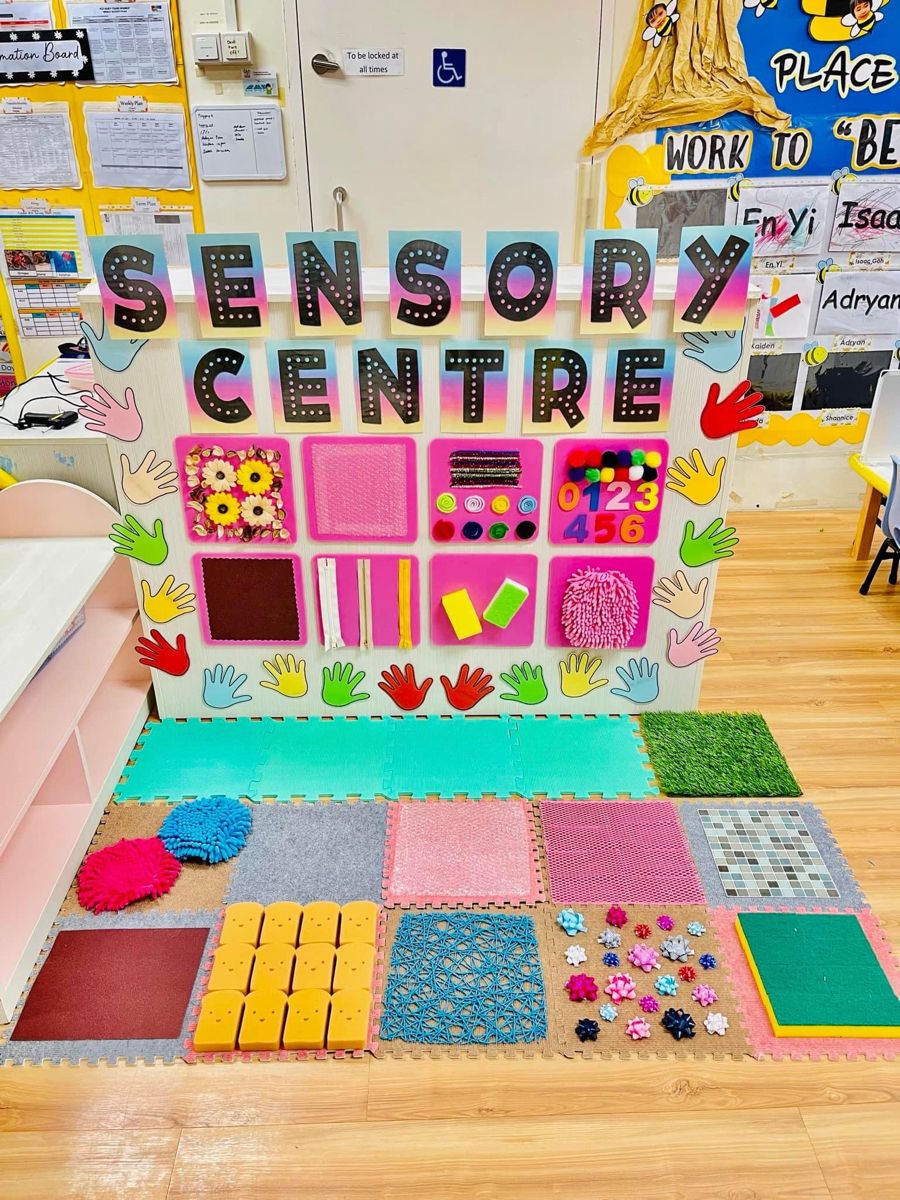
This sensory dance is not one-sided. The environment, too, can be shaped to accommodate autistic perception. Noise-canceling headphones, weighted blankets, or dimly lit spaces are not just accommodations; they are tools that allow the brain’s plasticity to unfold without the burden of sensory overload. By designing spaces and routines that align with autistic needs, we create conditions where neuroplasticity can flourish, unencumbered by unnecessary stress.
The Future Unwritten: Neuroplasticity and the Promise of Potential
The story of autism and neuroplasticity is still being written, with each discovery adding new chapters to our understanding. Emerging technologies, such as neurofeedback and transcranial magnetic stimulation, offer tantalizing glimpses into the brain’s capacity for self-regulation. These tools, when used ethically and collaboratively, could provide autistic individuals with greater agency over their cognitive and emotional landscapes. Imagine a future where an autistic person can, through neurofeedback, learn to modulate their brainwaves in real time, reducing anxiety or enhancing focus. This is not science fiction; it is the frontier of neuroplasticity, where the brain’s adaptability becomes a tool for empowerment.
Yet, the most profound frontier may lie in society’s willingness to embrace neurodiversity. Neuroplasticity teaches us that the brain is not a machine to be standardized but a garden to be cultivated. Autism, in this light, is not a deviation from the norm but a variation with its own logic and beauty. When we shift our focus from “fixing” to “facilitating,” we unlock the brain’s innate capacity for growth. The autistic brain, with its unique wiring, may teach us more about neuroplasticity than any textbook ever could—revealing the extraordinary ways in which difference can be a source of innovation, resilience, and connection.
The journey of autism and neuroplasticity is not about changing the brain to fit the world, but about creating a world that honors the brain’s capacity to change itself. It is a testament to the brain’s relentless creativity—a reminder that even in its most intricate patterns, there is always room for reinvention. The threads of the neural tapestry may shift, but the story they tell is one of endless possibility.