In a world where awareness campaigns often tread the line between advocacy and solemnity, a curious phenomenon has emerged—one that wields humor as both shield and sword. Parody, in its most subversive form, has begun to challenge the tropes surrounding autism, transforming well-intentioned but heavy-handed messaging into something far more palatable: laughter. This shift isn’t about diminishing the gravity of autism’s realities but about recalibrating how society engages with its complexities. By lampooning the clichés—whether they stem from well-meaning ignorance or outright misrepresentation—parody invites us to confront discomfort with levity, fostering a dialogue that is as enlightening as it is entertaining.
The power of parody lies in its ability to invert expectations. What begins as a jest often ends as a revelation, peeling back layers of cultural conditioning to expose the absurdity beneath. Autism, a spectrum as vast as it is misunderstood, has long been pigeonholed into narrow narratives: the savant genius, the nonverbal genius trapped in a broken body, the child who doesn’t make eye contact. These tropes, while rooted in some truths, flatten the lived experiences of autistic individuals into caricatures that serve no one. Parody, however, flips the script. It doesn’t erase the struggles; it reframes them, offering a mirror that reflects not just the stereotypes but the humanity behind them.
The Art of Subversion: How Parody Challenges Autism Tropes
Consider the iconic “Parental Advisory” label, a staple on albums deemed too edgy for mainstream consumption. When repurposed as a parody for autism awareness, it becomes a sly commentary on the way society labels and marginalizes neurodivergent individuals. The juxtaposition of a warning sticker—often associated with rebellion—against the backdrop of autism advocacy underscores a glaring irony: the very communities that seek to protect often end up stifling. This isn’t just humor for humor’s sake; it’s a pointed critique of how language and imagery shape perception. By co-opting familiar symbols, parody forces us to question why certain narratives persist and who benefits from their perpetuation.
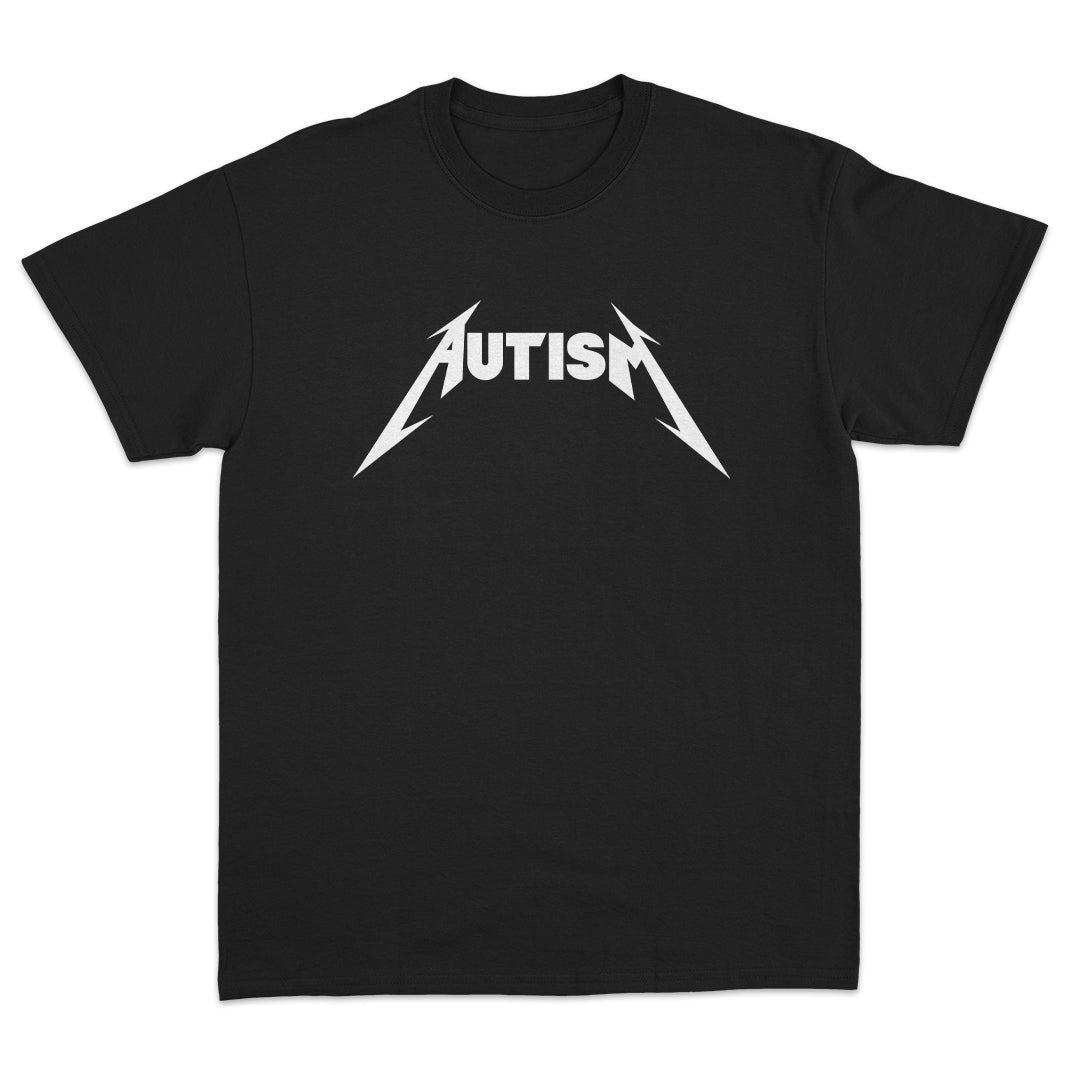
Another trope ripe for parody is the “cure narrative,” a pervasive theme in autism discourse that frames neurodivergence as something to be fixed rather than embraced. Parodic merchandise, like the “Autism Metallica Parody T-shirt,” plays with this idea by blending heavy metal aesthetics with autism advocacy. The result is a visual pun that simultaneously celebrates and satirizes the relentless pursuit of normalcy. It’s a reminder that humor can be a form of resistance—a way to push back against the pressure to conform. When autistic individuals and allies reclaim these tropes, they transform them from tools of oppression into badges of pride.
The Psychology Behind Laughter: Why Parody Works
Laughter is a universal language, but its role in social change is often underestimated. Psychologists have long noted that humor disarms defensiveness, making it an effective vehicle for delivering uncomfortable truths. When we laugh at a parody, we’re not just amused; we’re also lowering our guard, allowing ideas to seep in that might otherwise be dismissed as preachy or polarizing. This psychological sleight of hand is particularly potent in discussions about autism, where the stakes are high and emotions run deep.
Take, for instance, the parody of the “Autism Speaks” organization, a group whose messaging has been widely criticized for its fear-mongering and lack of autistic representation. A satirical take on their branding might exaggerate their most tone-deaf campaigns, highlighting the absurdity of their approach. The humor lies not in mocking autism itself but in exposing the flaws in the systems meant to support it. This isn’t about belittling the cause; it’s about holding it accountable. By laughing, we acknowledge the absurdity without losing sight of the seriousness of the issues at hand.
Moreover, humor fosters a sense of community. When autistic individuals and allies share parodic content, they create a shared language—a way to bond over shared frustrations and triumphs. This communal laughter becomes a form of solidarity, reinforcing the idea that no one has to navigate the complexities of autism alone. It’s a subtle but powerful shift from isolation to inclusion, all while keeping the conversation light enough to invite participation rather than alienation.
The Fine Line: When Parody Crosses into Insensitivity
Of course, not all parody is created equal. The line between clever subversion and outright insensitivity is thin, and crossing it can do more harm than good. The key lies in intent and execution. A parody that mocks autistic individuals or reinforces harmful stereotypes—even unintentionally—does a disservice to the very cause it claims to support. The goal should always be to challenge tropes, not to perpetuate them.
For example, a parody that plays on the idea of autism as a “disease” to be eradicated risks reinforcing the very stigma it seeks to dismantle. Similarly, humor that relies on outdated or offensive language—even if meant to be ironic—can alienate rather than unite. The best parodies are those that target the systems and narratives, not the people they affect. They are sharp but not cruel, biting but not dehumanizing.
This is where autistic voices become indispensable. When autistic creators lead the charge in parody, their lived experiences ensure that the humor lands with precision and purpose. They know which tropes sting and which ones can be safely lampooned. This collaborative approach—where allies amplify autistic voices rather than speak over them—is crucial for ensuring that parody remains a force for good rather than a misguided misstep.
The Ripple Effect: How Parody Shapes Broader Conversations
The impact of parody extends beyond individual laughs or viral memes. It seeps into the cultural zeitgeist, influencing how autism is discussed in media, education, and policy. When parody gains traction, it forces mainstream narratives to reckon with their own shortcomings. Suddenly, the tropes that once went unchallenged become fodder for debate, and the conversation shifts from “How do we fix autism?” to “How do we better understand and support autistic individuals?”
Consider the way parody has influenced autism representation in pop culture. Shows like Community and Atypical have used humor to explore neurodivergence, but their approaches differ vastly. The former leans into absurdity, using parody to highlight the absurdity of societal expectations. The latter, while well-intentioned, often falls into the trap of centering neurotypical perspectives. The distinction is subtle but significant: parody that subverts tropes versus parody that reinforces them. The former paves the way for more authentic representation, while the latter risks perpetuating the very stereotypes it aims to dismantle.
This ripple effect is also evident in advocacy. Organizations that once relied on fear-based messaging are now rethinking their strategies, incorporating humor and parody into their campaigns. The result is a more nuanced, relatable approach to autism awareness—one that doesn’t shy away from the challenges but also doesn’t reduce autistic individuals to a monolith. It’s a balancing act, to be sure, but one that holds immense promise for the future of neurodiversity advocacy.
Embracing the Shift: A Call to Action
The rise of autism parody isn’t just a fleeting trend; it’s a cultural shift, a testament to the power of humor as a tool for change. It challenges us to look at autism not as a problem to be solved but as a facet of human diversity to be celebrated. This shift requires courage—from autistic individuals who are reclaiming their narratives, from allies who are willing to listen and learn, and from society at large, which must be open to re-evaluating its assumptions.
So, how can we embrace this shift? Start by engaging with parody thoughtfully. Share it, discuss it, and reflect on the messages beneath the humor. Support autistic creators who are leading the charge in subversive storytelling. And most importantly, be willing to laugh—not at the expense of others, but as a way to bridge gaps and foster understanding.
In the end, parody is more than just a joke. It’s a mirror, a megaphone, and a catalyst for change. By embracing its potential, we can transform the way we talk about autism—one laugh at a time.
The journey toward a more inclusive, nuanced understanding of autism is ongoing. Parody is just one tool in the toolbox, but it’s a powerful one. As we continue to navigate the complexities of neurodiversity, let’s remember that laughter can be a form of revolution—one that challenges, enlightens, and ultimately, unites.