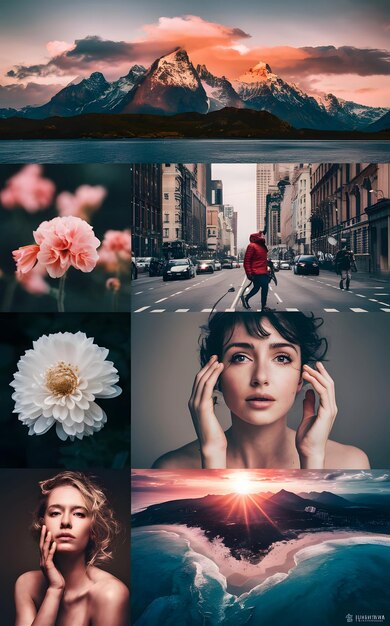
In a world where sensory experiences often overwhelm, photography emerges not just as an art form but as a sanctuary—a way to distill chaos into clarity, to frame the fleeting moments that define existence. For those with autism, whose perception of the world is uniquely vivid, the camera becomes more than a tool; it transforms into an extension of self, a bridge between inner landscapes and external realities. Autism and photography intertwine in a dance of light and shadow, where every click of the shutter captures not just an image, but a fragment of an otherwise unspoken narrative. This fusion of neurodiversity and visual storytelling promises to reshape how we perceive both art and identity, inviting us to see the world through lenses that refract reality in unexpected ways.
Photography, at its core, is an act of curation. It demands patience, precision, and an acute awareness of detail—qualities that many autistic individuals possess in abundance. The camera does not judge, does not rush, does not demand conformity. Instead, it offers a silent dialogue, a means to communicate without words, to capture the nuances of a moment that might otherwise slip through the cracks of conventional perception. For those who experience the world with heightened sensitivity, photography can be a way to assert control over the sensory onslaught, to freeze a single moment in time and examine it at leisure. It is a form of empowerment, a way to reclaim agency in a world that often feels overwhelmingly loud and chaotic.
The Art of Seeing: How Autism Enhances Photographic Perception
Autism is often described as a different way of processing the world, where the brain’s wiring leads to a heightened focus on details that others might overlook. This hyper-awareness can be a superpower in photography, where the ability to notice subtle shifts in light, texture, and composition can elevate an image from ordinary to extraordinary. Autistic photographers frequently exhibit an uncanny ability to capture the mundane in ways that reveal its hidden beauty—a dewdrop on a spider’s web, the interplay of shadows on a weathered wall, the fleeting expression of a stranger’s face. These are not just photographs; they are visual poems, each frame a testament to the photographer’s unique vision.
Moreover, the repetitive and structured nature of photography can be deeply comforting for autistic individuals. The ritual of setting up a shot, adjusting settings, and waiting for the perfect moment aligns with the need for predictability and routine. There is a meditative quality to the process, a rhythm that soothes the mind and allows for deep immersion in the creative act. For those who struggle with social interactions or verbal communication, photography offers a non-verbal outlet for self-expression, a way to communicate emotions and ideas that might otherwise remain unexpressed. It is a language of light and shadow, where every photograph tells a story without the need for words.
Consider the work of photographers who see the world through an autistic lens. Their images often possess a clarity and precision that is striking, devoid of the clutter and noise that can obscure the essence of a scene. They have a knack for isolating the extraordinary within the ordinary, for finding beauty in the overlooked corners of the world. This ability to distill complexity into simplicity is not just a technical skill; it is a form of cognitive alchemy, transforming the raw material of perception into something tangible and meaningful.

Breaking Barriers: Photography as a Tool for Neurodiverse Expression
Photography has long been a medium for self-expression, but for autistic individuals, it can be a lifeline—a way to navigate a world that often feels incomprehensible. The camera becomes a companion, a silent confidant that listens without judgment and records without distortion. For those who struggle with social cues or emotional regulation, photography offers a structured and predictable outlet for creativity, a way to externalize inner experiences in a tangible form. It is a form of therapy, a way to process emotions and make sense of the world.
In recent years, there has been a growing recognition of the therapeutic potential of photography for autistic individuals. Programs and workshops designed specifically for neurodiverse participants have emerged, providing a safe space for exploration and growth. These initiatives often emphasize the process over the product, encouraging participants to experiment with different techniques and styles without the pressure of perfection. The focus is on the act of creation itself, on the joy of discovery and the satisfaction of seeing one’s vision come to life.
Photography can also serve as a bridge between autistic individuals and the broader community. By sharing their work, autistic photographers can challenge stereotypes and misconceptions about autism, offering a glimpse into their unique perspectives. Their images can spark conversations, foster empathy, and inspire others to see the world through a different lens. In this way, photography becomes more than an art form; it becomes a catalyst for social change, a tool for breaking down barriers and building connections.

The Unseen World: Photography as a Window into Autistic Perception
To truly understand autism is to recognize that perception is not a one-size-fits-all experience. For autistic individuals, the world is often a symphony of sensory inputs, each note distinct and demanding attention. Photography, with its ability to isolate and magnify, can serve as a window into this unseen world, offering a glimpse into the way autistic minds interpret and interact with their surroundings. The images produced by autistic photographers are not just visual records; they are windows into a different way of seeing, a testament to the diversity of human experience.
Consider the way autistic photographers capture movement. For many, motion is not a blur but a series of discrete moments, each frozen in time. A child spinning in a circle becomes a study in centrifugal force and joy, while a flock of birds taking flight is transformed into a choreography of grace and precision. These images are not just photographs; they are visual symphonies, each frame a note in a larger composition. They challenge the viewer to slow down, to pay attention, to see the world in a new way.
Photography can also reveal the hidden beauty of the natural world, a realm where autistic individuals often find solace and inspiration. The intricate patterns of a leaf, the symmetry of a snowflake, the play of light on water—these are the subjects of autistic photographers, who find in nature a sense of order and predictability. Their images are not just depictions of the natural world; they are celebrations of its complexity and wonder, a reminder that beauty can be found in the most unexpected places.

Challenges and Triumphs: Navigating the Photographic Landscape
Despite its many benefits, photography is not without its challenges for autistic individuals. The technical aspects of the craft—understanding aperture, shutter speed, and ISO—can be daunting, requiring a level of abstract thinking that may not come naturally to everyone. The social dynamics of photography, from networking with other artists to navigating the expectations of clients or audiences, can also pose difficulties. For those who struggle with executive function or sensory overload, the pressure to produce “perfect” images can be overwhelming.
Yet, these challenges are not insurmountable. With the right support and accommodations, autistic photographers can thrive in the creative landscape. Adaptive tools and technologies, such as voice-activated cameras or simplified interfaces, can make the technical aspects of photography more accessible. Mentorship programs and inclusive workshops can provide a supportive environment for learning and growth, where mistakes are seen as opportunities for experimentation rather than failures. The key is to foster an environment that values individuality and creativity, where the unique perspectives of autistic photographers are celebrated rather than constrained.
It is also important to recognize that the definition of “success” in photography is not one-size-fits-all. For some, success may mean capturing a single, breathtaking image that speaks to their soul. For others, it may mean the joy of the creative process itself, the satisfaction of seeing their vision come to life. The goal is not to conform to external standards but to find one’s own voice, to create work that resonates on a personal level. In this way, photography becomes a journey of self-discovery, a way to explore and celebrate one’s unique place in the world.
The act of photography is, at its heart, an act of connection—between the photographer and the subject, between the image and the viewer, between the self and the world. For autistic individuals, this connection takes on a special significance, offering a way to bridge the gap between inner and outer realities. Through the lens, they find a voice, a way to communicate their experiences and perceptions in a language that transcends words. Their images are not just photographs; they are invitations to see the world differently, to appreciate the beauty in the details, and to celebrate the diversity of human experience.
As society continues to evolve in its understanding of neurodiversity, photography stands as a powerful testament to the richness of autistic perception. It challenges us to look beyond the surface, to seek out the hidden stories in the world around us, and to embrace the unique ways in which we all experience life. In the hands of autistic photographers, the camera becomes more than a tool; it becomes a bridge, a sanctuary, and a celebration of the extraordinary in the ordinary. Through their lenses, we are invited to see the world anew, to find wonder in the overlooked, and to appreciate the beauty of a perspective that is as unique as it is profound.