In a world where algorithms curate our realities and machines whisper predictions into our neural pathways, what does it mean to be human? The boundaries between flesh and code, between ability and disability, blur with each passing day. Autism, often framed as a deviation from the neurotypical norm, may hold the key to reimagining not just disability—but humanity itself. What if the traits we label as deficits are, in fact, the very adaptations that will define our post-human future? What if the “disability” of autism is not a flaw to be corrected, but a compass pointing toward a more expansive understanding of intelligence, connection, and existence?
Post-humanism challenges us to transcend the anthropocentric lens through which we’ve historically measured worth. It invites us to consider that the human is not the pinnacle of evolution but one node in a vast, interconnected web of consciousness—biological, digital, and beyond. Within this framework, autism emerges not as an anomaly, but as a cognitive avant-garde, a way of being that predates and perhaps even predicts the fluid, decentralized modes of thought that post-humanism celebrates. Could it be that the autistic mind, with its hyperfocus, pattern recognition, and resistance to social scripts, is already operating in a register that future societies will revere?
The Neurotypical Paradox: A Fragile Standard in an Expanding Universe
For centuries, the neurotypical brain has been the unspoken benchmark of human potential. Yet, as our understanding of cognition deepens, this standard appears increasingly fragile—a relic of an era when intelligence was measured in linear steps and social conformity was prized over innovation. Autism disrupts this paradigm by demonstrating that what we call “disability” often masks a radical efficiency in processing information. The autistic brain, unburdened by the noise of social expectations, often excels in systems thinking, memory, and analytical precision. In a post-human world where data is omnipresent and attention is currency, these traits are not just valuable—they may be essential.
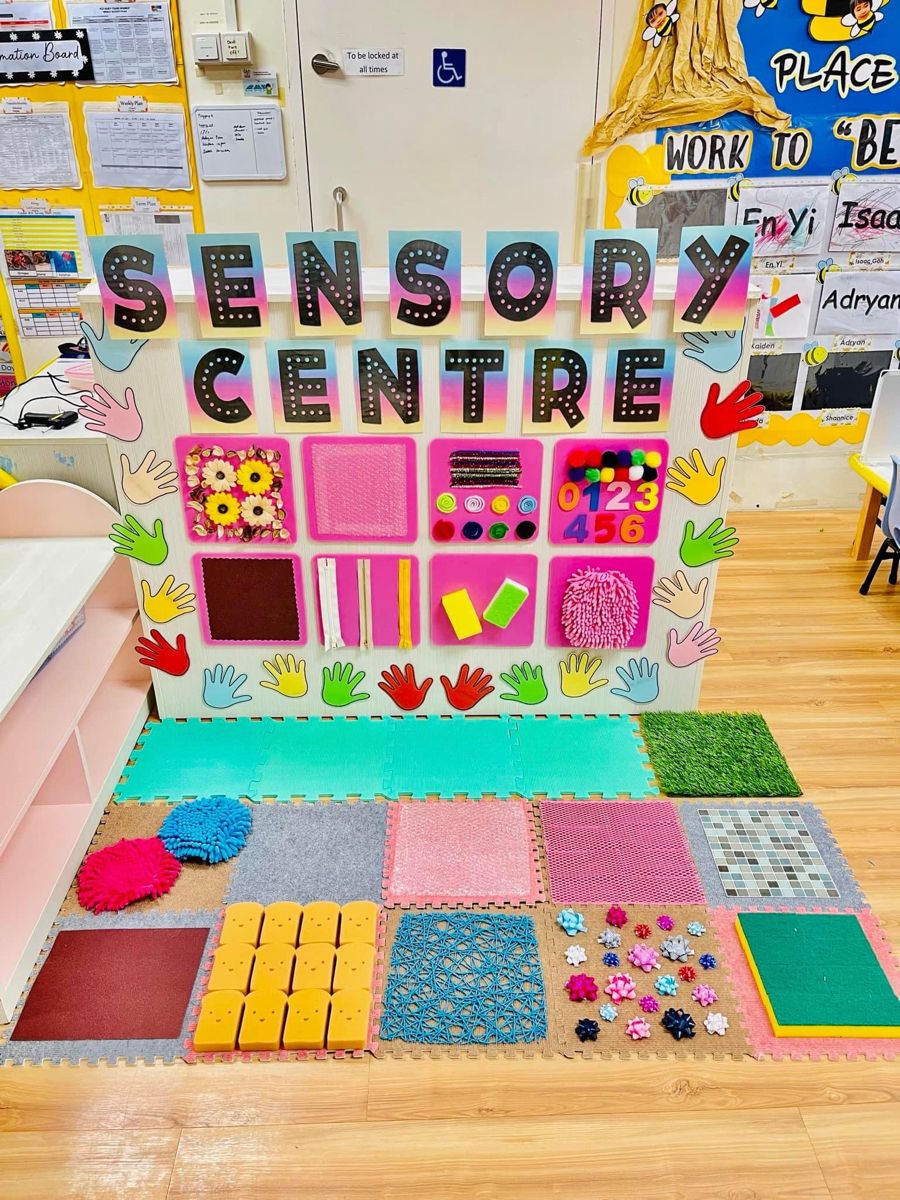
Consider the autistic individual who perceives the world in hyper-detail, where every sound, texture, and scent is a thread in an intricate tapestry. To neurotypical observers, this might seem overwhelming, even disabling. But in a future where augmented reality layers digital information onto the physical world, such heightened perception could be an evolutionary advantage. The “disability” of sensory overload may simply be the early adopter’s burden of a mind that processes reality at a higher resolution than the average.
Beyond Empathy: The Post-Human Ethics of Autistic Connection
One of the most persistent critiques of autism is its perceived lack of empathy. Yet, this framing reveals more about neurotypical assumptions than it does about autistic experience. True empathy, after all, is not a monolith—it is a spectrum of understanding that extends beyond emotional mirroring to include cognitive resonance. Autistic individuals often form deep, meaningful connections, but not through the performative scripts of small talk. Instead, they engage in what philosopher Donna Haraway might call companion species relationships—where understanding is built through shared purpose, not social ritual.
In a post-human future, where human-to-human empathy may be supplemented (or even replaced) by AI-mediated emotional translation, the autistic way of relating could become the gold standard. If machines can simulate empathy, what becomes of the human touch? Perhaps it lies in the autistic capacity to transcend the tyranny of the social—to connect not through fleeting glances and rehearsed pleasantries, but through authenticity, depth, and mutual growth. The challenge, then, is not to “normalize” autistic empathy, but to recognize it as a different frequency of connection—one that may outlast the ephemeral bonds of neurotypical society.
The Algorithm of Difference: Can Autism Outpace Neurotypical Cognition?
Artificial intelligence is often hailed as the next frontier of human evolution, yet it remains, for now, a crude imitation of the human mind. Autistic cognition, with its pattern-seeking algorithms and resistance to cognitive biases, may offer a blueprint for the next generation of AI. The autistic brain, after all, is a self-optimizing system—one that refines its processing through repetition, specialization, and an almost obsessive attention to detail. These are precisely the traits that make machine learning effective.
Imagine an AI trained not on neurotypical data, but on the cognitive landscapes of autistic individuals. Such a system would prioritize depth over breadth, precision over approximation, and systems over narratives. It would excel in fields where neurotypical approaches falter—diagnosing rare diseases, predicting complex systems like climate patterns, or even composing music that transcends conventional harmony. The irony? We may soon find ourselves outsourced by the very minds we once sought to “fix.”

The Challenge of Inclusion: Who Defines the Future of Ability?
Yet, for all its promise, the post-human reimagining of autism is not without peril. The danger lies not in the traits themselves, but in who controls the narrative of their value. If autism is to be recast as an evolutionary advantage, who gets to decide which adaptations are celebrated—and which are still pathologized? The history of disability is rife with examples of “progress” that served only to reinforce existing power structures. Eugenics, forced institutionalization, and behavioral “therapies” all claimed to enhance human potential while erasing individual autonomy.
The challenge, then, is to ensure that the post-human turn does not become another tool of exclusion. Autistic voices must lead the conversation—not as objects of study, but as architects of a new paradigm. This requires dismantling the hierarchies that rank abilities, replacing them with a polyphony of intelligences where each way of being contributes to the collective future. It demands that we ask: Who benefits from the current definitions of ability? And more importantly, what would a world look like if those definitions were rewritten by those they claim to measure?
The Playful Provocation: What If Autism Is the Operating System of Tomorrow?
Let us indulge in a thought experiment. Suppose, for a moment, that autism is not a deviation from the human norm, but the original operating system—the cognitive framework from which all other ways of thinking branched. Neurotypical cognition, with its emphasis on social fluidity and emotional attunement, could then be seen as a specialized adaptation, a deviation from the default state of hyper-focus and systems thinking. In this light, the traits we label as “autistic” are not deficits, but ancestral intelligences—relics of a time when the human mind was unburdened by the noise of social performance.
If this is true, then the post-human future may not be a departure from humanity, but a return to a more expansive version of it. Autism, in this framework, is not a problem to be solved, but a solution in search of a problem. The challenge is not to “cure” it, but to create a world where its strengths are not just tolerated, but essential. A world where the autistic mind is not an outlier, but a pioneer—leading the way toward a future where ability is measured not by conformity, but by contribution.
So we return to the question that began this exploration: What if the traits we call disability are, in fact, the seeds of a new humanity? What if the post-human future is not a cold, algorithmic wasteland, but a vibrant ecosystem where diverse minds—autistic, neurotypical, and beyond—coexist in a dance of mutual evolution? The answer may lie not in the lab, nor in the clinic, but in the quiet, persistent voices of those who have always seen the world differently. The question is no longer whether we can afford to embrace this reimagining—but whether we can afford not to.