Autism spectrum disorder (ASD) presents a unique set of challenges and opportunities in public spaces. For parents navigating these environments with their children, understanding the protections afforded by the Americans with Disabilities Act (ADA) is not just a legal safeguard—it’s a pathway to fostering inclusion, dignity, and growth. The ADA, a landmark civil rights legislation, ensures that individuals with disabilities, including those with autism, have equal access to public accommodations. Yet, the application of these rights in real-world settings often remains shrouded in ambiguity, leaving families to decipher their child’s entitlements amidst the cacophony of societal norms. This guide illuminates the ADA’s role in shaping accessible public spaces for children with autism, offering clarity on rights, practical strategies, and the deeper principles that underpin these protections.
The ADA’s Framework: A Foundation for Inclusion
The ADA’s mandate is deceptively simple: no individual shall be excluded from participation in or denied the benefits of services, programs, or activities provided by public entities or private businesses open to the public. For children with autism, this translates to a legal obligation on the part of schools, parks, theaters, restaurants, and other public venues to remove barriers—whether architectural, communication-based, or attitudinal—that impede access. The law distinguishes between “reasonable modifications” and “undue burdens,” a nuanced distinction that balances the needs of individuals with disabilities against the practical constraints of businesses and public entities. For parents, this means advocating for accommodations that are not merely symbolic but tangibly enhance their child’s ability to engage with the world.
Consider the case of a child with sensory sensitivities in a bustling museum. The ADA may require the institution to provide noise-canceling headphones, a quiet room for breaks, or advance notice of loud exhibits. These adjustments are not concessions but rights, grounded in the principle that public spaces must be as accommodating as they are accessible. Yet, the law’s flexibility also invites interpretation, leaving room for negotiation and collaboration between families and institutions. The key lies in framing requests not as demands but as collaborative efforts to enrich the experience for all visitors.
Public Accommodations: Navigating Everyday Spaces
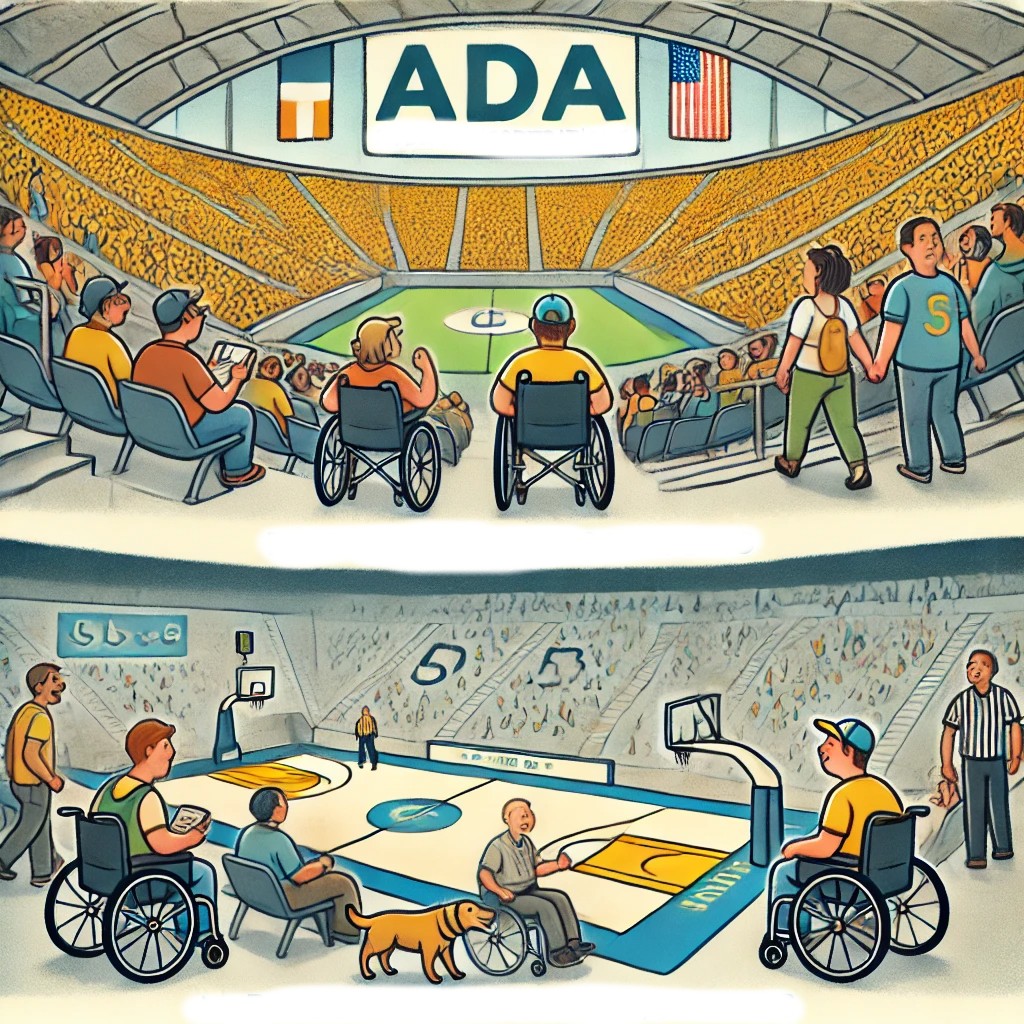
Public accommodations—ranging from libraries to sports arenas—are microcosms of societal inclusion. For children with autism, these spaces can either be sanctuaries of engagement or minefields of overstimulation. The ADA’s protections extend to ensuring that these environments are designed with neurodiversity in mind. For instance, a movie theater may be required to offer sensory-friendly screenings with dimmed lights, reduced volume, and relaxed policies on movement or noise. Similarly, a restaurant might need to accommodate a child who prefers to eat at a quieter time or in a booth with fewer distractions.
Yet, the law’s reach does not end with physical adjustments. Communication barriers are equally critical. A child with autism who relies on a communication device must have access to it in public spaces, just as a wheelchair user requires a ramp. This extends to digital accessibility as well—websites and apps for public services, such as transit systems or parks and recreation departments, must be compatible with assistive technologies. The ADA’s emphasis on communication underscores a profound truth: inclusion is not a one-size-fits-all endeavor but a dynamic, evolving process that requires empathy and adaptability.

Schools and Educational Settings: The ADA’s Role in Learning
For many children with autism, schools are the primary public spaces they inhabit. The ADA intersects with the Individuals with Disabilities Education Act (IDEA) to ensure that educational environments are not just physically accessible but also pedagogically inclusive. This means that schools must provide reasonable accommodations, such as preferential seating, extended time for tests, or the use of fidget tools, to support a child’s learning. The ADA also mandates that schools communicate effectively with nonverbal students or those with limited verbal skills, whether through sign language interpreters, visual aids, or alternative communication devices.
The challenge, however, lies in the implementation. Schools often grapple with resource constraints, leading to delays or incomplete accommodations. Parents must become adept at documenting their child’s needs, requesting evaluations, and, if necessary, filing complaints with the Office for Civil Rights (OCR). The ADA’s protections are not self-enforcing; they require vigilance and advocacy. Yet, when implemented effectively, these accommodations can transform a child’s educational experience, turning a classroom from a place of frustration into one of growth and possibility.
Recreational and Social Spaces: Beyond the Basics
Public spaces designed for recreation and socialization—parks, playgrounds, community centers—are vital for a child’s development. The ADA requires that these spaces be accessible, but accessibility is more than just ramps and wide doorways. It encompasses the design of playground equipment that accommodates children with motor skill challenges, the availability of quiet zones in parks, or the provision of trained staff to assist children with autism during organized activities. For example, a summer camp might need to adjust its schedule to include frequent breaks or hire staff trained in autism support to ensure a child can participate fully.
The deeper principle here is the normalization of neurodiversity in public life. When a child with autism can play alongside peers in a sensory-friendly playground, attend a theater performance without fear of judgment, or participate in a sports league with adaptive equipment, society takes a step toward true inclusion. These spaces become not just venues for activity but platforms for building confidence, social skills, and a sense of belonging. The ADA’s role in this context is to dismantle the invisible barriers that often exclude neurodivergent children from these formative experiences.
Advocacy and Empowerment: Tools for Parents
Understanding the ADA is only the first step; advocating for its application is where the real work begins. Parents must become fluent in the language of the law, familiarizing themselves with terms like “reasonable modification,” “undue burden,” and “auxiliary aids.” Documentation is critical—keeping records of requests, responses, and any incidents of discrimination can strengthen a case if legal action becomes necessary. Organizations like the Autism Society or Disability Rights Advocates can provide guidance, but parents must also cultivate relationships with school administrators, business owners, and community leaders to foster collaboration.
Empowerment, however, extends beyond legal knowledge. It involves teaching children with autism to self-advocate, whether by communicating their needs to a teacher or requesting accommodations in a public space. Role-playing scenarios, social stories, and visual schedules can prepare a child for interactions in unfamiliar environments. The goal is to shift the narrative from one of limitation to one of agency, where the child’s rights are not just protected but celebrated.
Challenges and Criticisms: The ADA’s Limitations
Despite its strengths, the ADA is not without flaws. Critics argue that the law’s reliance on “reasonableness” creates ambiguity, allowing institutions to reject accommodations on vague grounds of cost or feasibility. Others point to the lack of enforcement mechanisms, leaving many families to navigate disputes without recourse. The ADA’s focus on physical and communication barriers also sometimes overlooks the attitudinal barriers that persist in society—judgmental glances in a restaurant, exclusion from a birthday party, or the assumption that a child’s behavior is a result of poor parenting rather than a neurological difference.
These challenges underscore the need for a cultural shift. The ADA is a tool, but it is not a panacea. True inclusion requires a collective effort to redefine what it means to be a public space—one that embraces diversity in all its forms. For parents, this means not only leveraging the ADA but also challenging societal norms that marginalize neurodivergent children. It means demanding not just access but acceptance, not just accommodations but understanding.
Conclusion: A Blueprint for a More Inclusive World
The ADA is more than a legal document; it is a blueprint for a society that values every individual’s right to participate fully in public life. For children with autism, this blueprint offers a path to dignity, opportunity, and belonging. Yet, the law’s effectiveness depends on the actions of those who wield it—parents, educators, business owners, and policymakers alike. By understanding the ADA’s protections, advocating for their application, and fostering a culture of inclusion, we can transform public spaces into places where every child, regardless of neurological makeup, can thrive.
The journey toward true accessibility is ongoing, but it begins with a single step: recognizing that the right to access is not a privilege but a fundamental human right. For families navigating the complexities of autism in public spaces, the ADA is not just a shield—it is a beacon, guiding them toward a future where their children’s rights are not just acknowledged but celebrated.