Recognizing autism in babies during the earliest stages of development can profoundly influence the trajectory of intervention and support. While every child develops uniquely, certain behavioral and neurological markers may signal the presence of autism spectrum disorder (ASD). Understanding these early warning signs equates to empowering caregivers, clinicians, and educators to provide timely and tailored assistance. This comprehensive exploration elucidates seven pivotal indicators of autism in infants, backed by nuanced observations and expert interpretations.
1. Atypical Eye Contact and Social Engagement
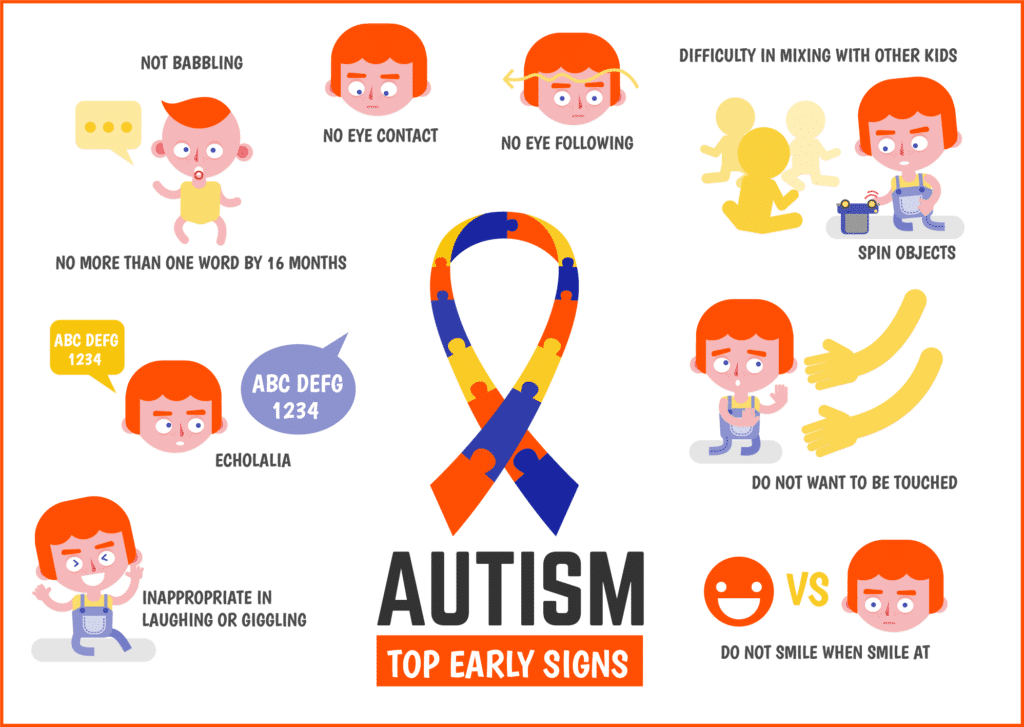
One of the most discernible early signals lies in the infant’s reluctance or inability to establish consistent eye contact. Unlike typical infants who often seek visual connection as a primary means of social interaction, babies exhibiting early autism traits may avert their gaze, presenting a disconnection from their social milieu. This deviation, though subtle, is significant. Eye contact facilitates bonding, emotional exchange, and social reciprocity. When an infant shies away from this essential social cue, it may indicate underlying neural processing differences that impact social engagement.

2. Delayed or Absent Babbling and Vocalizations
The emergence of babbling is a hallmark of early communicative development. By approximately 4 to 6 months, most infants begin experimenting with repetitive consonant-vowel sounds, such as “ba” or “da.” A pronounced delay or absence in these vocalizations often signals neurodevelopmental anomalies. In autistic babies, the vocalization patterns may be markedly irregular, monotonous, or limited in variety. This deficit hinders early conversational turn-taking and pre-linguistic communication, impeding language acquisition milestones.
3. Limited Response to Name and Auditory Stimuli
Responsiveness to auditory stimuli, including one’s own name, constitutes a fundamental communicative benchmark. Typically developing infants react promptly when called by name, demonstrating awareness and attentional shifts. Conversely, babies on the autism spectrum may exhibit a diminished or absent response. This lack of auditory orienting is not merely a matter of hearing ability but indicates atypical sensory processing and social attention. It underscores the child’s difficulty in linking sounds with social interaction cues.
4. Repetitive Motor Movements and Stereotypies
Another hallmark of early autism is the manifestation of repetitive behaviors or motor stereotypies. These may include hand-flapping, finger-flicking, rocking, or other rhythmic motions that are persistent and appear purposeless. While occasional repetitive play is common in infants, the intensity, frequency, and fixation in autistic infants are more pronounced. These motor patterns may serve as self-soothing mechanisms or indicate heightened sensory sensitivities and neurological differences in motor control.

5. Atypical Play Patterns and Lack of Joint Attention
Play serves as the foundational context for cognitive, social, and emotional development. Infants typically engage in exploratory play, demonstrating curiosity and flexibility. However, autistic babies often exhibit atypical play behaviors, characterized by an intense preoccupation with specific objects, rather than interactive or imaginative play. Moreover, a deficit in joint attention—sharing a gaze or point of interest with another person—is a critical early sign. Lack of joint attention undermines the social bonding process and the infant’s ability to learn from social environments.
6. Sensory Processing Differences
Heightened or diminished sensory sensitivity is frequently observed in babies on the autism spectrum. These infants may react adversely to certain textures, sounds, lights, or smells, or conversely, may appear indifferent to sensory input that typically garners attention. This anomalous sensory processing can manifest as distress during routine caregiving activities, such as bathing or feeding, or conversely, an unusual fascination with sensory stimuli like bright lights or spinning objects. Recognizing these sensory peculiarities is crucial for designing supportive environments that accommodate the infant’s sensory profile.
7. Delayed Motor Skills and Coordination Challenges
Motor development milestones, such as rolling over, sitting up, or crawling, tend to follow a predictable timeline in typical infants. Delays in achieving these milestones often co-occur with autism, linked to differences in muscle tone, coordination, or planning motor sequences. Early identification of gross and fine motor delays not only signals potential developmental concerns but also highlights the necessity for targeted physical and occupational therapy to foster motor proficiency and self-sufficiency.
Early recognition of these seven warning signs facilitates a proactive approach to autism diagnosis and intervention. Each indicator contributes a unique piece to the complex developmental puzzle, underscoring the importance of comprehensive, multidisciplinary assessment. Families equipped with this knowledge can advocate for specialized developmental screenings and initiate evidence-based therapies during a critical window of neuroplasticity.
Ultimately, understanding autism in babies transcends mere symptom enumeration. It embodies a commitment to recognizing neurodiverse trajectories with empathy, precision, and an emphasis on nurturing potential. Timely intervention informed by vigilance to these early signs can dramatically enhance developmental outcomes and quality of life, reaffirming the profound impact of early detection in the journey of autism care.