In the labyrinth of neurodevelopmental distinctions, few comparisons spark as much curiosity as the delineation between high-functioning autism and Asperger’s syndrome. These terms, often bandied about in clinical and lay circles alike, hint at a deeper fascination with the spectrum of human cognition and behavior. While they share a constellation of traits, their nuances reveal a tapestry of neurological diversity that challenges conventional understanding. To grasp their differences is to peer into the intricate workings of the human mind, where labels often blur but individual experiences remain profoundly unique.
At first glance, high-functioning autism and Asperger’s may appear interchangeable, yet their historical and diagnostic trajectories have woven distinct threads into their definitions. The evolution of these terms reflects not just medical progress but also societal shifts in perception. What began as rigid categories in the annals of psychiatry has gradually given way to a more fluid understanding of neurodiversity. This transformation invites us to explore not only the clinical distinctions but also the lived realities of those who navigate these labels. The fascination lies not in the labels themselves but in the stories they encapsulate—stories of resilience, adaptation, and the ceaseless quest for belonging.
The Historical Tapestry: From Kanner to Asperger
The origins of these terms trace back to the mid-20th century, when psychiatrists Leo Kanner and Hans Asperger independently documented distinct patterns of behavior in children. Kanner’s work in 1943 described a group of children with profound social and communication challenges, which he termed “early infantile autism.” Meanwhile, Asperger, in 1944, identified a subset of children with milder social difficulties but preserved cognitive and language abilities, coining the term “autistic psychopathy.” For decades, these observations remained largely unconnected, until the 1980s and 1990s when the Diagnostic and Statistical Manual of Mental Disorders (DSM) began to formalize these distinctions.
The DSM-III, published in 1980, introduced the term “infantile autism,” while the DSM-IV, in 1994, carved out a separate category for Asperger’s syndrome, defined by significant social impairments without the language or cognitive delays seen in classic autism. This bifurcation reflected a growing recognition that autism existed on a spectrum, with varying degrees of severity. However, the distinction between high-functioning autism and Asperger’s remained a subject of debate, particularly as research revealed overlapping traits and shared genetic underpinnings. The eventual removal of Asperger’s as a standalone diagnosis in the DSM-5 (2013) and its absorption into the broader category of Autism Spectrum Disorder (ASD) underscored the fluidity of these labels, leaving many to grapple with the nuances of their differences.
Cognitive Profiles: The Spectrum of Strengths and Challenges
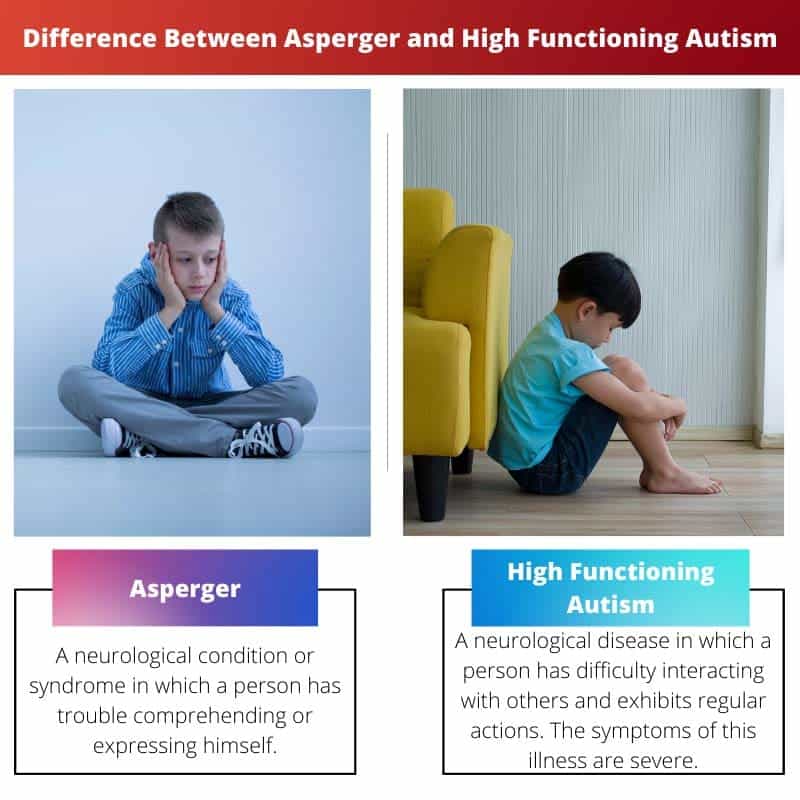
When dissecting high-functioning autism and Asperger’s, the cognitive profiles of individuals within these categories often serve as a focal point. High-functioning autism typically refers to individuals on the autism spectrum who exhibit average or above-average intellectual abilities, yet struggle with social communication, sensory sensitivities, and repetitive behaviors. In contrast, Asperger’s syndrome—though no longer a distinct diagnosis—is often associated with individuals who possess strong verbal skills and average to high intelligence, alongside pronounced difficulties in social reciprocity, nonverbal communication, and restricted interests.
The cognitive strengths in both groups can be striking. Many individuals with high-functioning autism or Asperger’s exhibit exceptional attention to detail, pattern recognition, and analytical thinking. These traits often translate into remarkable talents in fields such as mathematics, engineering, music, or visual arts. However, the challenges they face are equally profound. Social interactions, for instance, can feel like navigating a minefield of unspoken rules, where eye contact, tone of voice, and body language are misinterpreted or overlooked. The struggle to “read” others or to express emotions in a conventional manner can lead to feelings of isolation, despite a deep desire for connection.
Sensory processing differences further complicate these experiences. A fluorescent light that hums imperceptibly to most may feel like a screeching siren to someone with high-functioning autism, while the texture of a shirt’s fabric might evoke an intense, overwhelming sensation. These sensitivities are not mere quirks but integral aspects of how individuals with these traits perceive the world. Understanding these differences requires a shift from viewing them as deficits to recognizing them as part of a unique neurocognitive architecture.
Social Navigation: The Unwritten Rules of Human Interaction
The social landscape for individuals with high-functioning autism or Asperger’s is fraught with ambiguity. While both groups may struggle with the nuances of conversation—such as turn-taking, sarcasm, or implied meanings—their approaches to social engagement often diverge in subtle yet significant ways. Those with Asperger’s may exhibit a more formal, almost pedantic style of communication, with a tendency to monologue on preferred topics without recognizing the listener’s disengagement. In contrast, individuals with high-functioning autism might struggle with initiating interactions altogether, preferring solitary pursuits or parallel play in social settings.
Empathy, often misunderstood as a lack of emotional attunement, is another area where these groups display distinct patterns. While individuals with Asperger’s may intellectualize empathy—understanding the concept but struggling to apply it intuitively—those with high-functioning autism might experience empathy in a more visceral, overwhelming way, leading to emotional exhaustion or shutdowns. The concept of “theory of mind,” or the ability to attribute mental states to others, is frequently cited as a challenge for both groups, but the manifestations can vary widely. Some may develop compensatory strategies over time, while others continue to grapple with the unpredictability of human behavior.
The double empathy problem, a term coined by sociologist Damian Milton, offers a compelling lens through which to view these social difficulties. It posits that the breakdown in communication is not solely the responsibility of the autistic individual but is a two-way street. Neurotypical individuals, too, may struggle to understand or adapt to the communication styles of those with autism, leading to mutual frustration. This perspective challenges the notion that social deficits are inherent to autism, instead framing them as a mismatch in communication frameworks.
Language and Communication: More Than Words
Language development serves as a critical dividing line between high-functioning autism and Asperger’s, though the lines are not absolute. Historically, Asperger’s was characterized by the absence of significant language delays, with individuals often displaying advanced vocabulary and formal speech patterns from an early age. In contrast, high-functioning autism may include a history of language delays, though these often resolve by school age, leaving behind a profile of pragmatic language difficulties—such as literal interpretations, difficulties with idioms, or challenges in maintaining a conversational flow.
The prosody, or rhythm and intonation, of speech can also set these groups apart. Individuals with Asperger’s may speak in a monotonous or overly precise manner, while those with high-functioning autism might exhibit a more varied but still atypical prosody. These differences are not merely stylistic but can significantly impact how their words are received. A statement delivered in a flat tone may be perceived as cold or unfeeling, even when the intent is neutral or positive. Similarly, the tendency to take language literally can lead to misunderstandings, particularly in contexts where sarcasm, humor, or figurative language are employed.
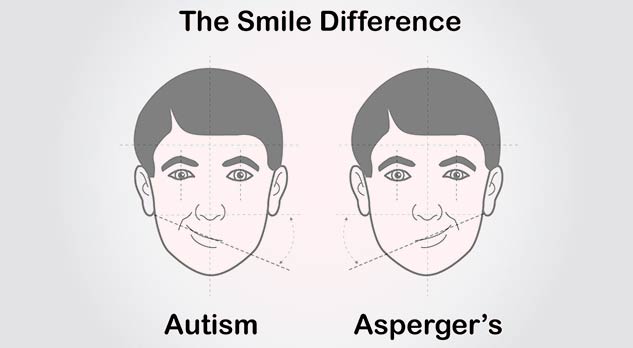
Nonverbal communication, too, plays a pivotal role. Difficulties with eye contact, facial expressions, and gestures can create barriers in social interactions, making it challenging for others to gauge intent or emotion. For some, these challenges are a source of anxiety, while for others, they are simply an accepted part of their communication style. The key lies in recognizing that these differences are not indicative of a lack of interest in connection but rather a reflection of the diverse ways in which humans express themselves.
The Intersection of Identity and Diagnosis
The labels of high-functioning autism and Asperger’s carry more than clinical implications; they shape identities, self-perceptions, and societal expectations. For many diagnosed in adulthood, these terms provide a framework for understanding lifelong struggles with social interactions, sensory overload, or executive functioning. The relief of finally having a name for their experiences can be profound, even as it comes with the burden of navigating a world that often misunderstands or stigmatizes neurodivergence.
However, the absorption of Asperger’s into the broader ASD category has left some feeling adrift. The term “Asperger’s” carried with it a sense of pride for many, particularly those who identified with its association with high intelligence and unique strengths. The loss of this label has sparked debates about identity and belonging, with some advocating for its reinstatement as a cultural and social identifier rather than a clinical one. This tension underscores the broader conversation about neurodiversity: whether labels are tools for understanding or barriers to acceptance.
For others, the distinction between high-functioning autism and Asperger’s is less about the labels and more about the lived experience. The focus shifts from diagnosis to accommodation, from categorization to support. Whether one identifies with a specific term or not, the goal remains the same: to foster environments where neurodivergent individuals can thrive without the pressure to conform to neurotypical norms. This shift requires not only awareness but also a willingness to adapt systems—educational, professional, and social—to accommodate diverse cognitive styles.
The Future of Understanding: Beyond Labels
As research advances, the distinctions between high-functioning autism and Asperger’s continue to blur, revealing a more nuanced picture of the autism spectrum. Genetic studies, for instance, have identified shared biological pathways between the two, suggesting that they may represent different manifestations of the same underlying condition. Neuroimaging research has also highlighted similarities in brain structure and function, further challenging the notion of rigid categorical boundaries.
The future of understanding these differences lies in embracing a more dimensional approach—one that recognizes the spectrum not as a linear hierarchy but as a constellation of traits and experiences. This perspective aligns with the neurodiversity movement, which advocates for the acceptance of cognitive differences as natural variations of human diversity rather than disorders to be cured. It calls for a society that values the unique contributions of neurodivergent individuals, whether in the arts, sciences, or everyday problem-solving.
The fascination with high-functioning autism and Asperger’s is, at its core, a fascination with the diversity of human cognition. It is a reminder that the human mind is not a monolith but a mosaic of experiences, shaped by biology, environment, and individuality. By moving beyond labels and embracing the complexity of these differences, we open the door to a more inclusive and compassionate world—one where everyone, regardless of their neurocognitive profile, can find their place.
The journey to understanding is ongoing, and the labels we use are but temporary signposts in a much larger exploration. What matters most is not the terminology but the recognition that behind every label is a person with a story, a voice, and a right to be seen—not as a diagnosis, but as an individual.