When the school bell rings, it signals more than just the end of another academic day—it marks the beginning of a quiet, often invisible battle for families navigating the complexities of autism. For parents of neurodivergent children, the question isn’t just *how* their child will learn, but *what* system will unlock their potential without stifling their uniqueness. The choice between an Individualized Education Program (IEP) and a 504 Plan can feel like standing at a crossroads where one path promises tailored support and the other offers legal safeguards. But which one truly aligns with your child’s needs? The answer isn’t as straightforward as it seems, and the wrong decision could mean the difference between thriving and merely surviving in an educational system that wasn’t designed with neurodiversity in mind.
This isn’t just about paperwork or bureaucratic jargon—it’s about sculpting an environment where your child’s strengths aren’t just accommodated but celebrated. An IEP and a 504 Plan are not interchangeable; they serve distinct purposes, cater to different levels of need, and carry vastly different implications for your child’s future. One offers a lifeline of specialized instruction, while the other provides a shield against discrimination. Yet, for many families, the distinction remains shrouded in ambiguity, leaving them adrift in a sea of acronyms and legalese. What if you could peer behind the curtain of these programs and uncover which one holds the key to unlocking your child’s full potential? Let’s embark on a journey to demystify the IEP vs. 504 debate, not as a dry policy discussion, but as a narrative of empowerment—one that could redefine your child’s educational journey.
The IEP: A Blueprint for Transformation, Not Just Accommodation
Imagine an educational roadmap meticulously designed to fit your child like a glove—one that doesn’t just stretch to accommodate their differences but contours to their every contour. That’s the essence of an Individualized Education Program (IEP), a legally binding document that transcends mere accommodations to deliver a transformative educational experience. Unlike a 504 Plan, which operates within the framework of the Rehabilitation Act of 1973, an IEP is rooted in the Individuals with Disabilities Education Act (IDEA). This distinction is critical because it means an IEP isn’t just about leveling the playing field; it’s about reshaping the entire game.
At its core, an IEP is a dynamic contract between you, your child’s school, and the state, outlining not just *what* your child will learn, but *how* they will learn it. It’s a living document, reviewed annually, that adapts as your child grows. For autistic students, this could mean specialized instruction in a self-contained classroom, speech therapy integrated into their daily schedule, or even a curriculum tailored to their sensory and social-emotional needs. The IEP doesn’t just acknowledge your child’s challenges—it strategizes around them, turning obstacles into opportunities for growth.
But here’s where the IEP’s power truly lies: it’s not a one-size-fits-all solution. It’s a bespoke plan that can include goals tied to academic benchmarks, social skills, or even life skills like navigating a cafeteria or managing transitions between classes. For a child with autism, this might mean breaking down complex tasks into digestible steps, using visual aids to reinforce learning, or incorporating assistive technology to bridge communication gaps. The IEP is, in many ways, a rebellion against the rigid structures of traditional education—a declaration that your child’s potential shouldn’t be confined by the limitations of a system that wasn’t built for them.

Yet, with great power comes great responsibility. Securing an IEP is not a passive process; it requires advocacy, documentation, and often, a willingness to challenge the status quo. Schools may resist, citing budget constraints or lack of resources, but remember: the IEP is your child’s right, not a privilege. It’s a tool that can transform their educational experience from one of frustration to one of empowerment—but only if you wield it with precision and persistence.
The 504 Plan: A Shield Against Discrimination, Not a Cure-All
If the IEP is a scalpel—precise, transformative, and intricately tailored—the 504 Plan is a shield. Named after Section 504 of the Rehabilitation Act of 1973, this plan is designed to level the playing field for students with disabilities by ensuring they have equal access to education. Unlike an IEP, a 504 Plan doesn’t mandate specialized instruction or annual reviews. Instead, it’s a set of accommodations—such as extended test time, preferential seating, or breaks during overwhelming tasks—that remove barriers to learning without altering the curriculum itself.
For autistic children who don’t require intensive academic support but still face challenges in a traditional classroom, a 504 Plan can be a lifeline. It’s particularly valuable for students who are high-functioning but struggle with executive function, sensory sensitivities, or social interactions. A 504 Plan doesn’t rewrite the rules of the game; it ensures your child isn’t penalized for playing by different rules. For example, a child with autism might benefit from noise-canceling headphones during a fire drill, a quiet space to regroup after a meltdown, or permission to use a fidget tool during lessons. These accommodations don’t change *what* your child learns, but they do change *how* they learn—and, crucially, *how* they feel about school.
However, the 504 Plan’s simplicity is also its limitation. It doesn’t provide the same level of support as an IEP, nor does it guarantee the same degree of accountability. Schools are legally obligated to implement the accommodations outlined in a 504 Plan, but there’s often little oversight to ensure these accommodations are consistently followed. For parents, this means vigilance is key. You may need to document every instance where accommodations are denied or overlooked, turning to advocacy groups or legal counsel if necessary. The 504 Plan is a powerful tool, but it’s not a magic wand—it won’t transform your child’s educational experience overnight. Instead, it’s a foundation upon which you can build, a starting point from which you can demand more if your child’s needs evolve.

Perhaps the most understated advantage of a 504 Plan is its subtlety. Unlike an IEP, which often requires formal meetings and extensive documentation, a 504 Plan can be implemented with minimal fanfare. This can be a double-edged sword—while it reduces the bureaucratic burden, it also means fewer opportunities for collaboration between parents and educators. For some families, this lack of structure is a relief; for others, it’s a missed chance to advocate for deeper changes. The 504 Plan is a tool best suited for families who are confident in their child’s ability to thrive with minor adjustments—or for those who are still exploring whether their child’s needs require a more intensive approach.
Decoding the Autism Spectrum: Where Does Your Child Fit?
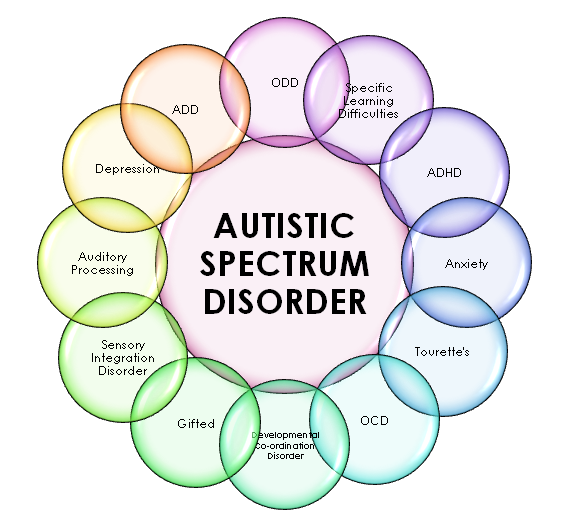
The autism spectrum is, by definition, a spectrum—fluid, dynamic, and endlessly varied. No two autistic children are alike, and neither are their educational needs. This variability is why the IEP vs. 504 debate isn’t a binary choice but a spectrum of its own. The decision hinges on a single, pivotal question: *How deeply do your child’s needs intersect with their ability to access the standard curriculum?*
For children with high-support needs—those who require specialized instruction, speech therapy, occupational therapy, or a significantly modified curriculum—an IEP is often the only viable option. These children may struggle with foundational academic skills, exhibit significant behavioral challenges, or require a structured environment that a traditional classroom cannot provide. An IEP doesn’t just accommodate their differences; it reimagines their entire educational experience. It’s the difference between a child drowning in a sea of expectations and one who is given a life preserver—and taught to swim.
On the other end of the spectrum are children whose autism primarily manifests in social, sensory, or executive function challenges. These children may excel academically but struggle with transitions, sensory overload, or peer interactions. For them, a 504 Plan might be sufficient—at least initially. The accommodations provided by a 504 Plan can alleviate the most pressing barriers to learning, allowing these children to focus on their strengths while gradually building the skills they need to navigate the world around them. However, it’s crucial to recognize that needs can evolve. What starts as a 504 Plan may, over time, reveal the need for the more robust support of an IEP.
Then there are the children who fall somewhere in the middle—those whose needs are complex but not immediately apparent. Perhaps they have average or above-average intelligence but struggle with task initiation, working memory, or emotional regulation. For these children, the line between an IEP and a 504 Plan blurs, and the decision becomes less about which plan is “better” and more about which one aligns with their current—and future—needs. The key is to approach this decision with flexibility, recognizing that your child’s educational plan may need to evolve as they grow.

It’s also worth considering the long-term implications of this decision. An IEP can open doors to services and supports that extend beyond the classroom, including transition planning for adulthood, vocational rehabilitation, and even funding for assistive technology. A 504 Plan, while valuable, doesn’t offer the same breadth of resources. For families who anticipate their child’s needs will grow in complexity, an IEP may provide a more sustainable path forward. Conversely, for families who want to minimize disruption or are still exploring their child’s potential, a 504 Plan can serve as a gentle introduction to the world of accommodations—one that can be expanded upon if necessary.
The Unspoken Costs: Emotional, Financial, and Social
Choosing between an IEP and a 504 Plan isn’t just a logistical decision—it’s an emotional one. The process of securing either plan can be fraught with stress, frustration, and even guilt. Parents often grapple with the fear that they’re “giving up” on their child by accepting an IEP, or conversely, that they’re not advocating strongly enough by settling for a 504 Plan. The truth is, neither choice is a reflection of your child’s worth or potential. It’s simply a recognition of where they are in their journey—and where they need support to go next.
There’s also the financial cost to consider. While both an IEP and a 504 Plan are provided free of charge through the public school system, the journey to obtain them can incur hidden expenses. Private evaluations, advocacy services, and legal counsel can add up quickly, particularly if you encounter resistance from the school district. For some families, these costs are a barrier to securing the support their child needs. It’s a cruel irony that the families who can least afford to fight are often the ones who need to fight the hardest.
Socially, the decision can also carry weight. There’s a stigma attached to special education services, one that whispers that an IEP or 504 Plan is a crutch rather than a tool. But this couldn’t be further from the truth. The right plan doesn’t diminish your child’s abilities; it amplifies them. It’s a declaration that your child deserves an education that meets them where they are, not where the system expects them to be. The unspoken cost of *not* choosing the right plan, however, is far greater—a child who feels unseen, unsupported, and ultimately, unfulfilled.
Perhaps the most profound cost is the emotional toll on your child. A child who is constantly struggling to keep up, who is punished for behaviors they can’t control, or who feels like a square peg in a round hole is a child at risk. The right educational plan can alleviate that suffering, not by erasing challenges, but by providing the tools to navigate them. It’s a gift that keeps on giving—a foundation upon which your child can build confidence, resilience, and a sense of belonging.
As the final school bell of the year rings, take a moment to reflect on the journey your child has undertaken. Whether they’ve thrived under the structured support of an IEP, found solace in the accommodations of a 504 Plan, or navigated the murky waters of the system with a mix of both, their resilience is a testament to your advocacy. The choice between an IEP and a 504 Plan isn’t just about paperwork or legal jargon—it’s about sculpting an educational experience that honors your child’s uniqueness while equipping them for the world beyond the classroom.
Remember, this isn’t a decision you make once and forget. It’s a living, breathing process that evolves as your child does. What works today may not work tomorrow, and that’s okay. The goal isn’t perfection; it’s progress. It’s about ensuring that your child’s educational journey is one of growth, not just survival. So take a deep breath, trust your instincts, and know that you’re not just choosing a plan—you’re choosing a future. And that future? It’s brighter than you think.