Have you ever wondered how a seemingly simple task like buttoning a shirt or using a pencil might present an enormous challenge for some children? For individuals on the autism spectrum, everyday activities can be intricate puzzles requiring deliberate practice and tailored assistance. Occupational therapy (OT) serves as a pivotal bridge in navigating these complexities, fostering vital life skills that empower independence and enhance overall quality of life.
Understanding Occupational Therapy in the Context of Autism
Occupational therapy is a specialized field dedicated to helping individuals develop, recover, or maintain meaningful daily activities—known as “occupations”. When addressing the unique needs of children with autism spectrum disorder (ASD), OT goes beyond standard therapeutic interventions. It meticulously targets fine and gross motor skills, sensory processing challenges, and social interactions to cultivate functional autonomy.
Children with autism often face hurdles due to sensory sensitivities, delayed motor development, or difficulties with executive functioning. Occupational therapists adopt a holistic approach, scrutinizing the child’s environment, developmental stage, and personal interests. This comprehensive evaluation informs a bespoke therapeutic plan that integrates adaptive techniques and sensory integration strategies to surmount barriers.
Enhancing Fine Motor Skills: The Small Steps with Big Impact
One of the quintessential facets of OT for autism is the cultivation of fine motor skills—those subtle movements involving the fingertips and hands that underpin tasks such as writing, eating, and dressing. These skills are crucial for academic success and daily self-care but are often underdeveloped in children with ASD.
Therapists employ engaging, functionally relevant activities such as manipulating play dough, threading beads, or using adaptive tools. These exercises simultaneously stimulate hand strength, coordination, and dexterity. Not only do they nurture motor skills, but they also encourage patience and perseverance, qualities that transcend into other realms of development.
Addressing Sensory Processing Challenges
Sensory processing difficulties can be among the most vexing aspects of autism, where stimuli such as bright lights, loud noises, or certain textures can provoke overwhelming responses. Occupational therapy plays an instrumental role in helping children modulate these sensory inputs through a carefully curated sensory diet—activities designed to provide the precise sensory experiences a child needs to stay regulated.
Interventions may include tactile play, vestibular activities like swinging, or proprioceptive input such as joint compressions. By habituating the nervous system gradually, therapists help children gain better control over their reactions, thereby reducing anxiety and improving participation in everyday tasks.

Promoting Executive Function and Cognitive Flexibility
Beyond physical skills, occupational therapy is intricately involved in supporting executive functions—the brain’s ability to organize, plan, and execute tasks. Children with autism may struggle with transitioning between activities, sequencing steps, and adjusting to unexpected changes, which can impede independence.
Therapists use structured routines and visual supports like schedules or cue cards to scaffold cognitive processes. These tools cultivate self-regulation and problem-solving capabilities, empowering children to tackle daily challenges with greater confidence.
Fostering Social and Communication Skills Through Occupational Therapy
Although traditionally linked with speech and behavioral therapies, social development is also a domain where occupational therapists contribute significantly. By integrating social skills into group activities, play therapy, or role-playing scenarios, OT facilitates improved interaction, turn-taking, and eye contact.
Furthermore, therapeutic play enables children to explore emotions and nonverbal cues, weaving the fabric of social understanding. Tailoring these interventions to individual sensory profiles ensures that social learning is accessible and effective, helping children form meaningful connections.

Building Adaptive Life Skills for Greater Independence
Ultimately, occupational therapy aims to equip children with the adaptive skills necessary for everyday life. This includes personal hygiene, dressing, feeding, and safe mobility—competencies that promote autonomy and self-esteem.
Therapists work closely with families to establish realistic goals and practice routines at home and school. The integration of technology, such as visual timers or apps, often enhances this process, making learning more engaging and accessible. As children master these fundamental skills, they gain a sense of accomplishment that fuels motivation across multiple domains.
Collaborative Approaches: Involving Families and Educators
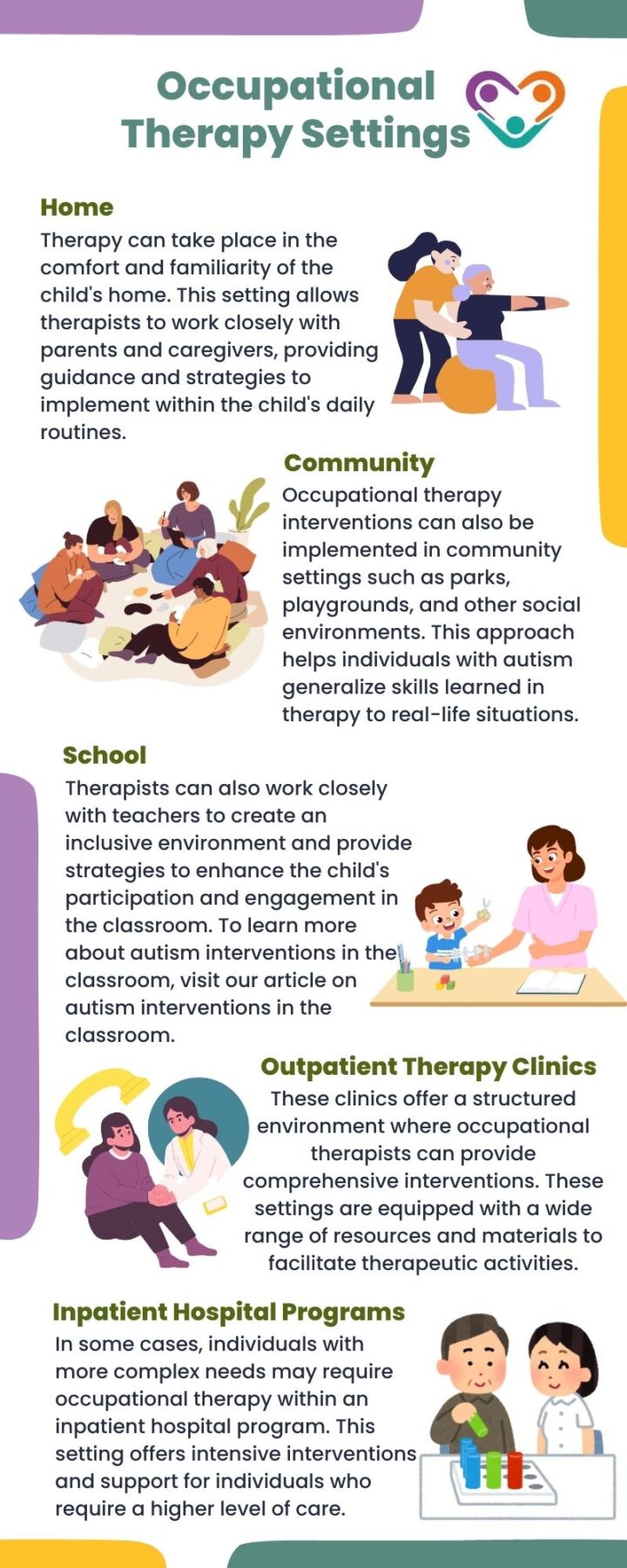
A vital ingredient in successful occupational therapy for autism is a collaborative framework. Engaging parents, caregivers, teachers, and other professionals ensures consistency and reinforcement of therapeutic strategies.
Training and education empower caregivers with techniques to support skill generalization, troubleshoot challenges, and celebrate progress. This partnership transforms therapy from a clinical setting to a continuous, dynamic process embedded within the child’s natural environment.
Occupational therapy is not merely about acquiring isolated skills; it is about building a resilient foundation upon which children with autism can flourish. By addressing motor abilities, sensory regulation, cognitive processes, social nuances, and adaptive behaviors, OT orchestrates a harmonious blend of interventions tailored for lifelong success.
In overcoming the intricate challenges posed by autism, occupational therapy opens doors to new possibilities—transforming everyday tasks into meaningful achievements, and empowering individuals to participate fully in the world around them.