Delving into the complex terrain of neurodevelopmental variations, the diagnosis of autism in children unfolds as a meticulous, multi-dimensional endeavor. It invites caregivers, clinicians, and educators alike to transcend conventional perceptions about behavior and cognition, fostering an enriched understanding that extends beyond surface observations. The journey toward identifying autism spectrum disorder (ASD) is not merely a clinical protocol; it is a nuanced narrative of discovery and profound insight into atypical social communication and behavioral patterns.
The Evolution of Autism Diagnosis: From Myth to Methodology
Historically shrouded in misconception and stigma, autism diagnosis has undergone a transformative evolution. Early interpretations often conflated the condition with generalized developmental delay or emotional disturbance. Today, diagnostic frameworks are anchored in rigorous clinical research and refined criteria that acknowledge autism’s diverse manifestations. This paradigm shift has propelled the adoption of standardized tools and multidisciplinary assessments that capture the intricate tapestry of ASD’s behavioral signatures.

Recognizing Early Indicators: The Subtle Signals of ASD
Before formal evaluation, the recognition of atypical developmental trajectories often emanates from subtle behavioral cues observable in infancy or toddlerhood. These early signs include diminished eye contact, lack of joint attention, delayed language milestones, or an atypical fixation on objects. Such indicators, while not definitive, serve as critical harbingers that prompt further investigation. Notably, the heterogeneity of presentation means that some children exhibit predominantly social communication challenges, while others display pronounced restrictive or repetitive behaviors, or a combination thereof.
The Multidisciplinary Diagnostic Process: An Intricate Collaboration
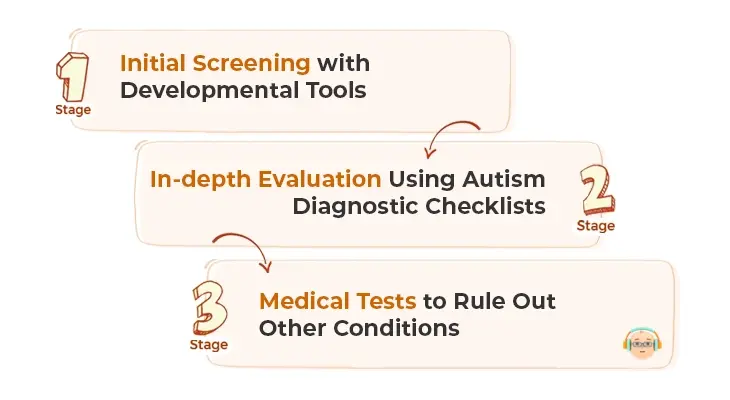
Diagnosing autism necessitates an orchestrated collaboration among a constellation of specialists, including developmental pediatricians, child psychologists, speech-language pathologists, and occupational therapists. This interdisciplinary approach ensures a holistic appraisal, capturing the multifaceted nature of the child’s developmental profile. The diagnostic odyssey commences with a comprehensive clinical interview that explores medical history, developmental milestones, and behavioral concerns as reported by caregivers.

Subsequent to the interview, direct observation is pivotal. Clinicians employ standardized diagnostic instruments designed to elicit and assess core autism features. These tools include the Autism Diagnostic Observation Schedule (ADOS) and the Autism Diagnostic Interview-Revised (ADI-R), which offer structured frameworks to gauge social reciprocity, communication skills, play behavior, and repetitive activities. The integration of caregiver reports and direct assessments cultivates a nuanced understanding of symptom consistency across contexts.
Neuropsychological Evaluation and Differential Diagnosis
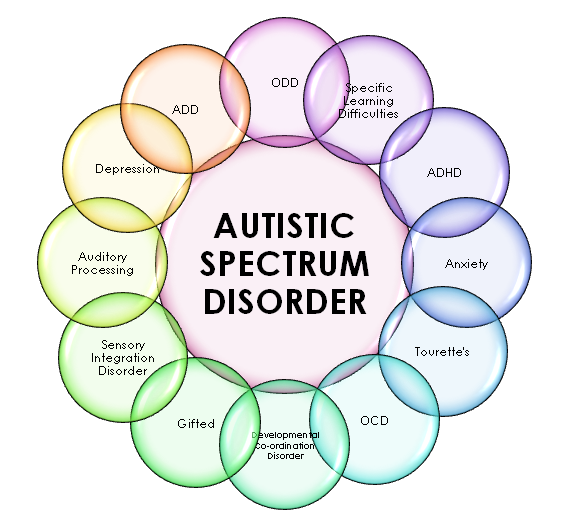
Beyond behavioral assessments, neuropsychological testing can illuminate cognitive strengths and challenges that accompany autism. Intellectual functioning, executive skills, sensory processing, and adaptive behavior are scrutinized to delineate the child’s unique profile. This depth of analysis is indispensable for distinguishing ASD from other neurodevelopmental disorders such as attention-deficit/hyperactivity disorder (ADHD), language disorders, or intellectual disabilities, given symptom overlap.
Moreover, emerging research underscores the importance of considering comorbidities such as anxiety, epilepsy, and gastrointestinal issues, which can complicate the clinical picture. A thorough evaluation aims not only to confirm the diagnosis but also to identify ancillary conditions impacting the child’s well-being and development.
Harnessing the Power of Early Diagnosis: Implications and Interventions
The ramifications of timely and accurate diagnosis extend far beyond labeling; they fundamentally alter trajectories. Early identification opens portals to tailored interventions that leverage neuroplasticity, facilitating improved social communication, adaptive skills, and behavioral regulation. Customized therapy—ranging from applied behavior analysis (ABA) and speech therapy to occupational therapy—capitalizes on each child’s distinct capabilities and challenges.
Equally important is the psychosocial impact on families. A definitive diagnosis provides clarity and a framework for understanding behaviors that might have previously been perplexing or misattributed. This empowerment fosters advocacy, informed decision-making, and access to crucial support networks and educational accommodations.
The Future of Autism Diagnosis: Integrating Innovation and Empathy
As the frontier of autism research advances, diagnostic paradigms are poised for revolutionary refinement. Emerging technologies, including machine learning algorithms analyzing behavioral patterns and biomarkers, promise to enhance precision and reduce diagnostic latency. However, the human element—empathy, nuanced observation, and contextual understanding—remains irreplaceable.
Ultimately, the diagnostic process is a gateway to reframing autism not as a deficit but as a distinct neurodiverse expression. This shift in perspective nurtures inclusivity and respect, inspiring society to celebrate varied modes of thought and interaction.
Understanding how autism is diagnosed in children reveals a landscape rich with complexity and hope. It challenges preconceived norms and invites a deeper exploration of what it means to humanly connect. Each diagnostic encounter is an opportunity—a chance to unlock potential, advocate for tailored supports, and transform lives through informed compassion.